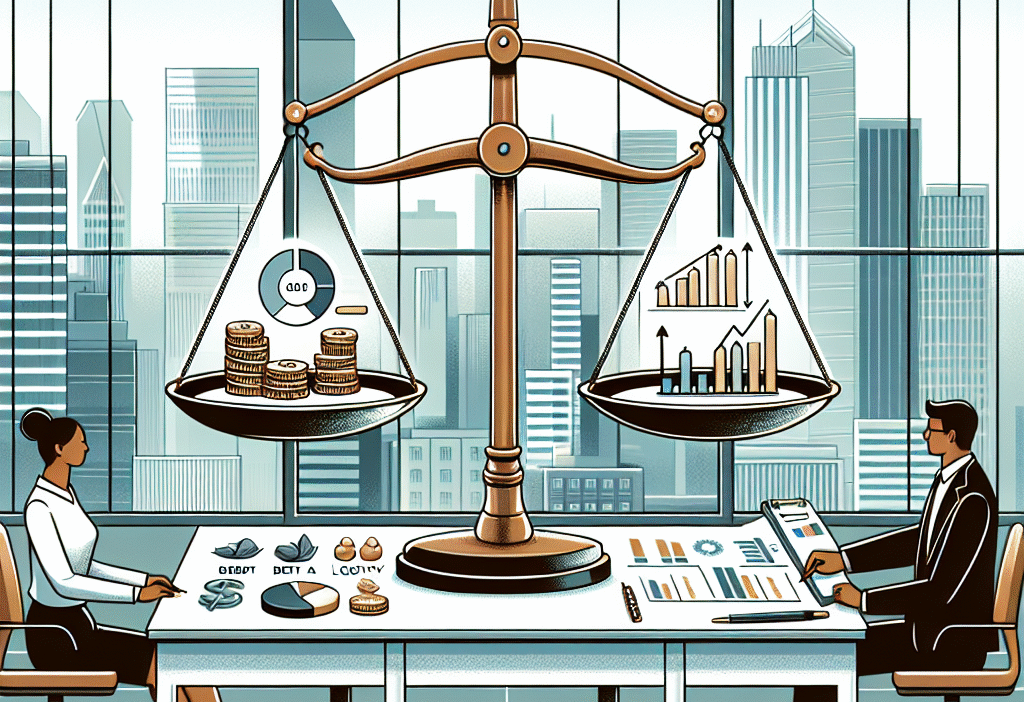
Understanding Capital Structure: Essential Decisions That Shape Business Success
Introduction
In today’s complex financial landscape, Understanding Capital Structure: Key Decisions That Shape Business Success is more crucial than ever for entrepreneurs, finance professionals, and anyone looking to ensure long-term growth for their business. Capital structure—the mix of debt and equity that a company uses to finance its operations—serves as the backbone of any organization. It shapes not only the financial health of a business but also influences its strategic decisions, risk management, and ultimately, its market competitiveness.
Imagine a bicycle: its wheels, frame, and gears must work in harmony for optimal performance. Similarly, a company’s capital structure must align with its strategic goals, market conditions, and risk appetite. Throughout this article, we’ll delve into the multiple facets of capital structure, discuss its implications on business operations, and highlight the key decisions every manager must consider.
Why Capital Structure Matters
Capital structure affects a company’s operational flexibility, cost of capital, and risk profile. A well-optimized structure can result in improved cash flows, enhanced shareholder value, and greater competitive advantages. Conversely, a poor structure can jeopardize a company’s viability and profitability.
By understanding the intricacies of capital structure, businesses can make informed decisions that foster sustainable growth. In this guide, we will cover:
- The components of capital structure.
- Key decisions influencing capital structure.
- How these decisions impact business success.
- Practical frameworks and tools for capital structure optimization.
So, whether you’re a budding entrepreneur or an established corporate executive, this comprehensive article will provide you with powerful insights to navigate the complexities of capital structure effectively.
Defining Capital Structure
What is Capital Structure?
Capital structure refers to the manner in which a corporation finances its overall operations and growth through various sources of funds. The main components include:
- Debt Financing: This includes loans and bonds, amounting to borrowed capital that must be repaid over time, typically with interest.
- Equity Financing: This consists of funds raised through the sale of shares in the company. Common stock, preferred stock, and retained earnings fall under this category.
The Capital Structure Equation
The capital structure can be illustrated with the following equation:
[
\text{Total Capital} = \text{Total Debt} + \text{Equity}
]
This simple equation encapsulates how a company sources funds for its projects, affecting both its financial stability and growth potential.
Key Components of Capital Structure
Understanding the components of capital structure is vital for making informed financial decisions.
1. Debt Financing
Debt financing refers to borrowing funds that must be repaid with interest. Common forms of debt include:
- Bank Loans: Traditional loans from financial institutions.
- Bonds: Debt securities issued to investors.
- Convertible Bonds: Bonds that can be converted into a company’s equity at a later date.
Advantages:
- Interest payments on debt are often tax-deductible.
- Debt financing does not dilute ownership.
Disadvantages:
- Regular repayments can strain cash flow.
- Excess debt increases financial risk.
| Debt Financing Types | Advantages | Disadvantages |
|---|---|---|
| Bank Loans | Tax-deductible interest | Impact on cash flow |
| Bonds | No ownership dilution | Increased financial risk |
| Convertible Bonds | Potential to attract investors | Can lead to equity dilution |
2. Equity Financing
Equity financing is raising capital by selling company shares. It represents ownership in the firm and includes:
- Common Stock: Shares that provide voting rights but are subordinate to debt.
- Preferred Stock: Shares that typically have fixed dividends and priority over common shares in asset liquidation.
Advantages:
- No mandatory repayments.
- Strengthens the balance sheet by enhancing equity.
Disadvantages:
- Ownership dilution.
- Dividend payments may be expected by shareholders.
| Equity Financing Types | Advantages | Disadvantages |
|---|---|---|
| Common Stock | Voting rights | Dividend expectations |
| Preferred Stock | Priority in liquidation | Ownership dilution |
Balancing Debt and Equity: The Optimal Capital Structure
Determining the right mix of debt and equity is key. This balance can drive a company toward sustainable growth while managing risks effectively. The optimal capital structure enhances shareholder value and supports long-term financial health.
“The best capital structure is one that minimizes the cost of capital while maximizing value.” – Financial Expert
Key Decisions in Shaping Capital Structure
1. Determining the Right Mix of Debt and Equity
One of the most critical decisions is finding the right balance between debt and equity. Factors influencing this include:
- Business Risk: Companies in stable industries can take on more debt than those in volatile markets.
- Interest Rate Environment: Low-interest rates can make debt financing more attractive.
- Market Conditions: Current market trends and investor sentiment can sway the decision.
2. Choosing Financing Sources
Businesses face choices when leveraging financial resources. Options include:
- Private Placement vs. Public Offering: Deciding whether to raise funds through private investors or share sales in public markets.
- Short-term vs. Long-term Financing: Choosing between short-term loans (e.g., lines of credit) or long-term bonds.
3. Cost of Capital Considerations
Understanding the cost associated with various components is essential:
- Cost of Equity: Higher risk often necessitates a higher return for equity stakeholders.
- Cost of Debt: Typically lower than the cost of equity, but involves repayment obligations.
4. Tax Implications
The tax treatment of debt versus equity plays a vital role. Debt financing carries tax advantages, as interest payments can be deducted. This makes it a cost-effective way to fund operations compared to equity.
5. Cash Flow Management
Cash flow is the lifeblood of a business. Debt financing requires regular payments, affecting cash flow management. Thus, companies must ensure they can meet these obligations while pursuing growth.
Impact of Capital Structure on Business Success
1. Risk Management
A well-structured capital arrangement allows businesses to mitigate risks. High levels of debt can lead to financial distress, but a balanced approach can provide flexibility and resilience.
2. Business Valuation
Investors often evaluate a company’s capital structure when assessing value. A favorable capital mix can enhance market perception and increase investor confidence.
3. Cost of Capital
The capital structure has a profound influence on the overall cost of capital. A lower cost allows businesses to pursue more projects, fostering growth.
4. Investment Decisions
Strategically optimizing capital structure enables companies to make informed capital expenditure decisions, ranging from expansions to new product lines.
5. Shareholder Value
Finally, a well-optimized capital structure can lead to increased shareholder returns. By balancing risk and opportunities, businesses can maximize long-term value for owners.
Visual Aid: The Impact of Capital Structure on Cost of Capital
Here’s a simplified chart showing how different debt-equity ratios may affect the overall cost of capital.
| Debt-Equity Ratio | Cost of Capital (%) | Expected Return on Equity (%) |
|---|---|---|
| 0:100 | 10 | 15 |
| 30:70 | 8 | 13 |
| 50:50 | 7 | 12 |
| 70:30 | 9 | 14 |
This visual guide helps elucidate the relationship between the capital structure mix and the cost of capital, impacting overall business health.
Frameworks for Analyzing Capital Structure
1. Modigliani-Miller Theorem
The Modigliani-Miller theorem posits that, under certain conditions, a firm’s value is unaffected by its capital structure. However, in real-world applications, factors such as taxes, bankruptcy costs, and agency costs come into play.
2. Trade-off Theory
This theory suggests that companies strive for an optimal capital structure by weighing the benefits of debt tax shields against the costs of potential financial distress.
3. Pecking Order Theory
According to this theory, businesses prefer internal financing (retained earnings) over external financing due to asymmetric information. If external financing is necessary, debt is preferred over equity.
Conclusion
Understanding capital structure is not just a financial exercise; it’s a strategic decision that shapes the very future of a business. By mastering the nuances of capital structure—managing the mix of debt and equity, navigating risks, and capitalizing on market conditions—leaders can unlock incredible potential for growth.
Key Takeaway
To navigate the complexities of capital structure effectively, remember: “Every decision made in building a business’s capital structure can resonate throughout its lifecycle.” So, prioritize informed decision-making, optimize your financial resources, and watch your business thrive.
FAQs
1. What is capital structure?
Capital structure refers to the mix of debt and equity that a company uses to finance its operations and growth.
2. Why is capital structure important?
It influences a company’s risk profile, cost of capital, and overall financial health, ultimately shaping its business success.
3. What are the main types of capital?
The main types include debt financing (loans, bonds) and equity financing (stocks, retained earnings).
4. How can a company optimize its capital structure?
By balancing debt and equity based on market conditions, business risk, and cash flow considerations.
5. What is the trade-off theory in capital structure?
It suggests that firms seek to balance the tax advantages of debt against the costs of financial distress to find an optimal capital structure.
In the competitive world of business, having knowledge about capital structure can be your competitive edge. Embrace it, and let it shape your routes to explosive growth! 🌟