
Can online teaching be as engaging and effective as traditional classroom instruction? As educators increasingly adopt digital tools, this question becomes more pressing.
Effective online teaching involves creating opportunities for students to connect with the instructor and with each other. It also means making all course materials accessible online. And, it’s important to establish clear expectations for online learning.
The concept of a digital classroom has become integral to modern education. This is even more true with the relevance of UGC NET PAPER1 in shaping online teaching methodologies.
Key Takeaways
- Effective online teaching strategies enhance student engagement.
- Clear expectations are key for successful online learning.
- Digital classrooms need accessible course materials.
- UGC NET PAPER1 influences online teaching methodologies.
- Student-instructor interaction is vital in online education.
Understanding UGC NET PAPER1
For educators, understanding UGC NET PAPER1 is key. It’s a test that checks if you’re ready to teach and do research. It’s a big deal for those who want to improve their teaching skills.
Overview of the Exam Structure
The UGC NET PAPER1 exam tests your teaching and research skills. It has multiple-choice questions. These questions cover topics like teaching methods, research ethics, and how to communicate well.
The exam pattern includes:
- 100 multiple-choice questions
- No negative marking
- Duration of 1 hour and 30 minutes
- No sectional cutoff, but overall cutoff is applicable
Key Topics Covered in UGC NET PAPER1
The UGC NET PAPER1 syllabus is broad. It covers important topics for teachers. Some of the key areas include:
- Teaching Aptitude
- Research Aptitude
- Comprehension
- Communication
- Mathematical Reasoning and Aptitude
- Logical Reasoning
- Data Interpretation
- Information and Communication Technology (ICT)
- People and Development: Education
Importance of UGC NET for Educators
The UGC NET exam is vital for educators. It shows if you’re good enough for Assistant Professor jobs in Indian schools and colleges. It also gives you a Junior Research Fellowship (JRF) to do research in your field.
Here’s why UGC NET is important for educators:
- It opens up new career paths
- It lets you grow in research and academics
- It proves you’re an expert in your subject
The Role of Technology in Online Teaching
Online education is growing fast. Technology plays a big role in making teaching effective. It changes how teachers teach and students learn.
Essential Tools for Virtual Classrooms
Virtual classrooms need many tools for learning. These include:
- Video conferencing software like Zoom or Google Meet
- Interactive whiteboards for writing on screen
- Screen sharing for showing things
- Chat boxes and Q&A tools for talking with students
Engaging Learning Platforms
Learning Management Systems (LMS) like Moodle, Blackboard, and Canvas are key for online courses. They offer a place for all course materials, assignments, and talking with students.
| Platform | Key Features | User Base |
|---|---|---|
| Moodle | Customizable courses, quizzes, and assignments | Universities and schools worldwide |
| Blackboard | Discussion boards, grading tools, and mobile access | Large educational institutions |
| Canvas | Easy to use, analytics, and integrations | Growing user base across various institutions |
Assessing Student Performance Digitally
Online, checking how students do needs new ways. Teachers use digital tools like quizzes, peer reviews, and projects to see if students get it.
Key strategies for digital assessment include:
- Using proctoring tools to keep things fair
- Implementing rubrics for fair grading
- Giving feedback quickly through digital means
With these technologies, teachers can make sure assessments are fair and complete.
Creating an Effective Online Curriculum
To make online learning great, teachers need to create a solid curriculum. They must think about making the course fun, full of information, and easy for everyone to get into.
Designing Course Materials That Resonate
It’s key to make course materials that speak to students. This happens by using backward design first. Then, the content is made to fit the learning goals. Teachers should also use evidence-based teaching strategies to keep students interested and understanding.
Good course materials should be to the point, easy to read, and look good. Using different teaching methods, like case studies and interactive activities, keeps students hooked and helps them learn more deeply.
Incorporating Multimedia in Lessons
Adding multimedia to lessons can really improve learning. Videos, animations, and interactive simulations can make hard ideas clear and make learning fun.
Teachers should make sure multimedia is good quality, fits the lesson, and works for all students. This means providing text for videos and making sure interactive parts work on all devices and browsers.
Ensuring Accessibility for All Students
Making sure all students can access the course is very important. This means making materials for students with disabilities, like text for images, and making sure everything is easy to use.
Teachers should also think about the different ways students learn. By having a variety of materials and activities, they can make sure everyone has a fair chance to do well.
Engaging Students in a Virtual Environment
To make online learning fun, teachers need to use many strategies. They must find ways to grab students’ attention and keep them interested all the way through the course.
Interactive Teaching Techniques
Interactive teaching is key in a virtual classroom. It includes live polls, quizzes, and discussions. These methods help create a lively learning space where students can really get involved.
Benefits of Interactive Teaching:
- Students are more likely to join in
- They remember what they learn better
- Learning becomes a more enjoyable experience
Encouraging Participation in Discussions
Getting students to talk in online discussions is very important. Teachers can do this by building a friendly online community. They can ask interesting questions and give students chances to share their thoughts.
Using Gamification to Enhance Learning
Gamification adds game-like elements to learning. This can be through points, badges, and leaderboards. It makes learning fun and exciting, encouraging students to take part more.
| Gamification Elements | Benefits |
|---|---|
| Point Systems | Motivates students to complete tasks |
| Badges | Recognizes student achievements |
| Leaderboards | Fosters healthy competition among students |
By using these methods, teachers can make online learning more engaging. This not only gets students more involved but also makes learning better for them.
Building a Strong Online Community
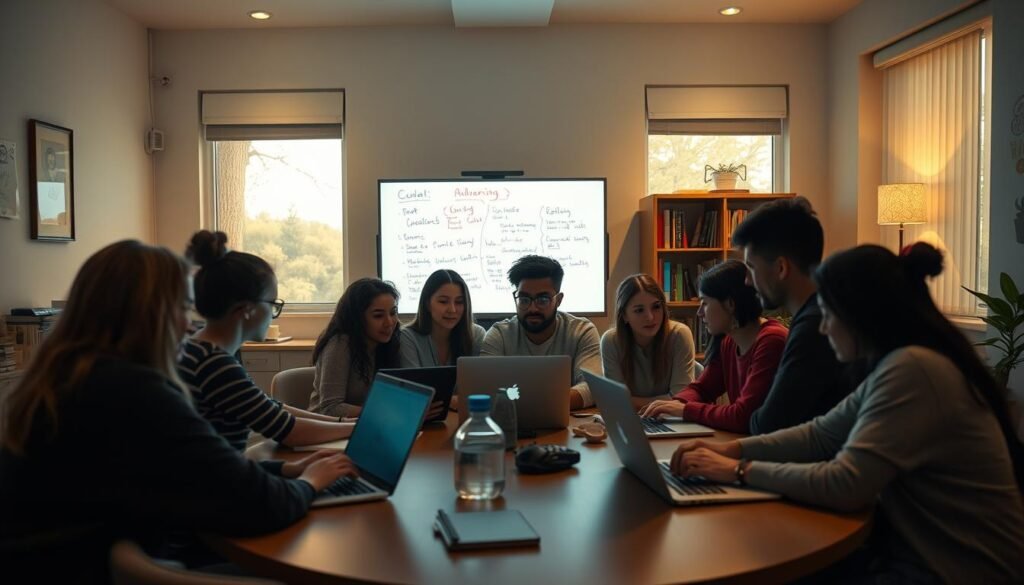
Online community building is key in today’s education. It boosts student engagement and teamwork. A strong online community makes students feel connected, supported, and eager to learn.
Fostering Collaboration Among Students
Teaching students to work together is vital. Educators can do this by setting up group projects. Collaborative learning helps students understand better and improves teamwork and communication skills.
To help students collaborate, teachers use digital tools like discussion forums and group chats. These tools make it easy for students to work together, no matter where they are.
Utilizing Social Media for Engagement
Social media can greatly help build an online community. Teachers can create private groups for students to discuss and share. Social media platforms also help share important updates and keep students informed.
But, teachers must set rules for social media use. This keeps the community productive and respectful. They also need to think about privacy and security.
Establishing Communication Protocols
Clear communication rules are essential for a strong online community. Teachers should tell students how and when to communicate. This includes setting times for responses and the right channels to use.
Keeping students updated is also important. Teachers can use emails and course announcements to stay in touch. Good communication makes students feel supported and connected.
Assessing Student Learning Online
Online learning is growing fast. This means we need better ways to check if students are learning. Teachers must create valid, reliable, and safe tests for this.
Developing Effective Online Assessments
Creating good online tests means using many types of questions. This includes multiple-choice, open-ended, and project-based tests. It’s important to make sure these tests really show what students know.
Teachers can use both formative and summative tests. Formative tests check how students are doing as they learn. Summative tests check what students have learned at the end.
| Assessment Type | Description | Benefits |
|---|---|---|
| Formative Assessments | Ongoing evaluations during the learning process | Identifies areas for improvement, informs instruction |
| Summative Assessments | Evaluations at the end of a lesson or course | Measures overall student learning, evaluates course effectiveness |
Providing Constructive Feedback
Giving feedback is key in online teaching. Feedback should be on time, specific, and helpful. It helps students know their good points and areas to work on.
Teachers can use many ways to give feedback. This includes audio or video, written comments, and peer review. The goal is to make feedback clear, short, and relevant to what students are learning.
Addressing Academic Integrity in Online Tests
Keeping academic integrity in online tests is tough. Teachers must find ways to stop cheating and make sure work is real. This includes using proctoring tools, making tests that need deep thinking, and teaching the value of honesty.
Tools like proctoring can watch students during tests. Tests that need deep thinking and application of knowledge also help. Teachers should talk about the importance of honesty and offer help to students.
Promoting Self-Directed Learning
Promoting self-directed learning is key in online education. It lets students guide their own learning paths. This boosts their autonomy and deepens their understanding of the subject.
Encouraging Student Autonomy
Encouraging student autonomy is essential in self-directed learning. By letting students choose their learning, educators help them feel responsible and motivated. This can be done by setting clear goals, giving assignment choices, and encouraging reflection.
Creating Resourceful Learning Environments
A supportive learning environment is vital for self-directed learning. It should offer a range of learning materials like online textbooks, videos, and simulations. Educators can also set up online communities for students to share and collaborate.
Utilizing Online Learning Modules
Online learning modules are great for self-directed learning. They offer structured paths with clear goals and outcomes. By adding multimedia like videos and quizzes, learning becomes engaging and interactive for all.
In conclusion, to promote self-directed learning, we need a few key strategies. We must encourage student autonomy, create supportive learning environments, and use online modules. These steps empower students to manage their learning and succeed academically.
Time Management Tips for Online Instructors
Online teachers need to manage their time well. This helps them do their teaching and administrative tasks. They must balance their work to keep students engaged and productive.
Balancing Teaching and Administrative Tasks
Online teachers have to handle many tasks at once. They need to focus on what’s most important for their students. Effective prioritization means focusing on tasks that help students learn and feel good about their education.
Using tools like task lists or project management software can help. For example, making a weekly schedule for teaching, office hours, and admin tasks can make things more efficient.
Scheduling Effective Office Hours
Office hours are key for helping students. Scheduling effective office hours means picking times when students need help the most. Instructors can use online calendars to book appointments and remind themselves when they’re available.
It’s also good to tell students when office hours are. This can be done through course syllabi and announcements. This way, students know when to ask for help, which can make them feel less stressed and more satisfied.
Strategies to Avoid Burnout
Burnout is a big risk for online teachers. Their work is flexible but demanding. To avoid burnout, instructors can take care of themselves. This includes setting boundaries, taking breaks, and staying active.
Connecting with other teachers is also helpful. Sharing experiences and advice can offer support and solutions. This can make teaching less stressful and more rewarding.
By using these time management tips, online teachers can work better, feel less stressed, and teach more effectively. This benefits their students by creating a better learning environment.
Leveraging Data Analytics in Online Education
Data analytics is a key tool for online educators. It helps them tailor lessons and boost student success. By using data, teachers can see how students learn and perform.
Understanding Student Analytics
Student analytics looks at how students interact online. It tracks things like how often they log in, how long they spend on lessons, and their scores. This helps teachers spot trends and make better choices.
For example, if many students are having trouble with a topic, teachers can change their approach. They might add extra help, tweak the curriculum, or offer special support.
Tailoring Instruction Based on Data
Data-driven teaching makes learning more personal. Teachers use data to see where students need help and adjust their lessons. This makes learning more engaging and boosts grades.
Teachers can also create special learning plans for each student. They pick resources and activities based on what each student needs. This makes online learning more effective.
Tools for Tracking Student Progress
There are many tools to help track student progress. Learning Management Systems (LMS) have analytics built in. They let teachers see how students are doing in real-time. Specialized tools offer even more insights.
Tools like learning analytics platforms and student information systems are popular. They help teachers spot students who might need extra help and see if their teaching methods work. This helps improve learning outcomes.
Data analytics makes online learning better. As online education grows, using data to make decisions will become even more important.
Overcoming Challenges in Online Teaching
In online education, it’s key to tackle challenges to make learning fun and effective for everyone. Teachers must adapt to digital classrooms and find ways to handle the tough parts. This helps create a great learning space for all.

Navigating Technical Issues
Technical problems can really mess up online learning. Teachers should know their digital tools well. They need to know how to fix common tech issues and have a plan for emergencies.
Key strategies for navigating technical issues include:
- Regularly check your digital tools and internet
- Teach students how to use digital tools clearly
- Have a backup plan for when things go wrong
Handling Diverse Learning Styles
Online classrooms have students with many different learning styles. Teachers can use various methods to meet these needs. This might include videos and interactive tools to help students understand better.
Strategies for handling diverse learning styles include:
- Use different types of learning activities
- Let students choose how they learn
- Encourage students to learn from each other
Providing Support for Struggling Students
It’s important to help students who are struggling in online classes. Teachers can use tools and methods to keep an eye on student progress. This helps them offer the right help when needed.
Effective ways to provide support include:
- Check student progress regularly
- Offer one-on-one help or tutoring
- Create a safe space for students to ask for help
By using these strategies, teachers can face and solve many online teaching challenges. This makes learning more inclusive, fun, and effective for everyone.
Enhancing Communication Skills for Online Educators
The move to online learning has made it clear how important good communication skills are for teachers. It’s not just about sharing information. It’s about connecting with students, knowing what they need, and adjusting teaching methods to meet those needs.
Best Practices for Virtual Communication
Teachers should follow some key practices for online communication. First, messages need to be clear and simple to avoid misunderstandings. Using video conferencing tools helps by adding a personal touch, which is key for trust and understanding. Teachers should also pay attention to their tone and language, making sure it’s inclusive and respectful.
Keeping students updated and giving feedback is also essential. Teachers can use different tools to share course materials, upcoming tasks, and any schedule changes. Active engagement through forums and live sessions makes students feel more connected to the course and their peers.
Building Rapport Across Screens
Creating a connection with students online takes effort from teachers. One good way is to personalize interactions by using students’ names and recognizing their contributions. Sharing personal stories or experiences related to the course material can also make students feel more connected.
Being open and available for one-on-one talks can also strengthen the teacher-student bond. Using office hours or virtual meetups for individual chats can offer students the support they need, making them feel valued and understood.
The Importance of Active Listening
Active listening is key in online teaching. It means fully focusing on what the other person is saying, understanding their point of view, and responding thoughtfully. In online learning, active listening can be shown through detailed feedback on assignments and engaging in meaningful discussions on forums or during live sessions.
By listening actively, teachers can better understand their students’ needs, address their concerns more effectively, and create a supportive learning environment. This can lead to happier students and better learning results.
Establishing a Positive Online Learning Environment
A positive online learning environment boosts student engagement, motivation, and success. To make this happen, teachers need to use several key strategies. These strategies help create a supportive and inclusive online community.
Setting Classroom Norms and Expectations
Setting clear classroom norms and expectations is key. It means setting rules for how students should behave, participate, and communicate online. This helps students know what’s expected of them and how to use the online classroom well.
Clear guidelines reduce confusion and anxiety. This lets students focus on their studies. Also, getting students involved in setting these norms makes them feel more responsible and connected to the online classroom.
Encouraging Inclusivity and Diversity
It’s important to make the online classroom welcoming to everyone. Teachers can do this by adding diverse views to the curriculum, using inclusive language, and being culturally sensitive. This makes learning richer and ensures all students feel valued and respected.
Using multimedia resources that show different cultures and experiences helps too. Teachers should also make sure the language and materials are for everyone, not just a few.
Recognizing and Celebrating Student Achievements
It’s important to celebrate students’ successes to keep them motivated. Teachers can use virtual badges, certificates, or public recognition in forums to do this. It boosts individual students and creates a sense of community.
By celebrating achievements, teachers create a positive space. This encourages students to aim high and feel part of a strong, supportive community.
Professional Development for Online Educators
The world of online education is always changing. Online educators must keep up with new teaching methods and technologies. This ensures they can offer top-notch education. They do this by learning continuously, joining professional groups, and sharing tips with others.
Continuous Learning and Training Opportunities
For online educators, never stopping learning is key. They take part in workshops, webinars, and courses to improve their skills. These programs cover the newest trends and tech in online teaching.
- Workshops on innovative teaching methodologies
- Webinars on using technology in the classroom
- Courses on designing effective online curricula
Joining Professional Networks and Organizations
Being part of professional networks and groups is also vital. These groups let educators meet others, swap stories, and learn together. Some top networks for online teachers include:
| Network | Description | Benefits |
|---|---|---|
| Online Learning Consortium | A community dedicated to advancing online education | Access to resources, conferences, and networking opportunities |
| International Society for Technology in Education (ISTE) | A professional organization focused on technology in education | Professional development opportunities, resources, and networking |
Sharing Best Practices with Peers
Sharing what works with others is a great way to grow. Online teachers can swap stories, successes, and hurdles on forums, social media, and at conferences.
By always learning, joining groups, and sharing tips, online teachers can get better at their job. As online education keeps changing, it’s critical for teachers to keep up with their development.
Future Trends in Online Education
Online education is changing fast. We need to look at what’s coming next. New tech, changing needs, and fresh teaching methods will shape the future.
Predictions for E-Learning Growth
E-learning is growing fast. More people want flexible, easy-to-get education. Online courses will offer many subjects for different learners. New learning technologies will make learning better and more fun.
Mobile learning will also grow. Mobile devices are key to learning now. Teachers will have to change how they teach for mobile screens and internet.
The Impact of Artificial Intelligence
Artificial Intelligence (AI) will change online education a lot. AI tools will make learning fit each student’s needs. This means better learning and happier students.
AI will help teachers too. It can do tasks, give feedback, and spot where students need help. As AI gets better, we’ll see even more cool uses in education.
Adapting to Changes in Learning Technologies
New learning technologies keep coming. Teachers must keep up and use new tools. They’ll need to find ways to handle any problems that come up.
Teachers who keep learning and adapting can give students the best online education. As things change, staying open to new ideas is key.
Resources for Online Teaching Success
Online teaching needs ongoing support and the right tools. Teachers can improve their skills and keep up with new trends. This is done by using different tools and programs.
Recommended Reading and Materials
There are many publications and materials for online teachers. They cover topics like how to design lessons, use technology, and keep students interested. For UGC NET PAPER PRESENT PAPER1, there are special study materials and guides.
Online Courses for Educators
Online courses can make teachers better at their job. Sites like Coursera, edX, and Udemy have lots of courses for online teaching. These courses help teachers learn new things and follow the best online teaching practices.
Government and Institutional Support Programs
Many government and school programs help online teachers. They offer training, funding, and technical help. Teachers can use these resources to get better at online teaching and help online education grow.
FAQ
What is the significance of UGC NET PAPER1 in online education?
UGC NET PAPER1 is key for educators. It boosts their teaching skills and knowledge. This helps in making online education more effective.
How can technology be leveraged to create effective online learning environments?
Technology helps in making virtual classrooms engaging. It allows digital assessment of student performance. Also, it offers interactive learning through various tools and platforms.
What are the key elements of creating an effective online curriculum?
A good online curriculum has engaging course materials. It includes multimedia and ensures accessibility. It also uses evidence-based teaching strategies.
How can educators engage students in a virtual environment?
Educators can engage students through interactive techniques. They can encourage participation in discussions. Also, they can use gamification to make learning fun.
What strategies can be used to build a strong online community?
To build a strong online community, foster collaboration. Use social media and establish effective communication protocols.
How can educators assess student learning online effectively?
Effective online assessment involves developing valid and reliable assessments. Provide constructive feedback and address academic integrity.
What is the importance of self-directed learning in online education?
Self-directed learning promotes student autonomy. Educators can encourage this by creating resourceful learning environments. They can also use online learning modules.
How can online instructors manage their time effectively?
Online instructors can manage their time by balancing teaching and administrative tasks. Schedule effective office hours and avoid burnout.
What is the role of data analytics in online education?
Data analytics helps educators understand student behavior. It allows them to tailor instruction based on data. It also tracks student progress using various tools.
How can educators overcome challenges in online teaching?
Educators can overcome challenges by navigating technical issues. They can handle diverse learning styles. Also, they can provide support for struggling students.
What are the best practices for virtual communication in online education?
Best practices for virtual communication include building rapport across screens. Use clear and concise language. Practice active listening.
How can educators establish a positive online learning environment?
Educators can establish a positive online learning environment by setting classroom norms. Encourage inclusivity and diversity. Recognize student achievements.
What is the importance of professional development for online educators?
Professional development is key for online educators. It provides continuous learning and training opportunities. It helps them stay updated with the latest teaching methodologies.
What are the future trends in online education?
Future trends in online education include the growth of e-learning. The impact of artificial intelligence will also be significant. Adapting to changes in learning technologies is important.
Where can online educators find resources for online teaching success?
Online educators can find resources for online teaching success through recommended reading and materials. They can also take online courses for educators. Government and institutional support programs are also available.