As we face growing environmental challenges, a big question emerges: How can environmental protection laws shape the future of environmental education? The answer is in the connection between laws and how we teach. Environmental education is key to raising a generation ready to face environmental problems.
Environmental protection laws are vital in this effort, guiding what we teach and how. By looking at their impact, we see how they help prepare tomorrow’s guardians.
Key Takeaways
- Environmental protection laws significantly influence environmental education.
- Legislation shapes the curriculum and teaching methods in environmental education.
- Effective environmental education is key to solving environmental problems.
- The connection between environmental laws and education helps create an informed generation.
- Understanding this relationship is essential for improving environmental education.
Understanding Environmental Protection Laws
It’s key to know the legal side of protecting the environment. Laws are made to keep natural resources safe, cut down pollution, and protect different species.
Definition and Purpose
Environmental laws are rules made to protect our planet. They aim to stop harm to nature by controlling human actions. For example, the Canadian Environmental Protection Act, 1999 (CEPA), shows a big effort to keep the environment healthy.
Key Legislation in the United States
The U.S. has strong environmental laws. The Clean Air Act, Clean Water Act, and Endangered Species Act are some. They help lower pollution, save water, and protect endangered animals. The Clean Air Act has greatly cut down air pollution by setting emission standards.
Historical Context of Environmental Laws
Environmental laws have grown as people have become more aware of environmental issues. The first Earth Day in 1970 was a big moment. It led to the EPA’s creation and key environmental laws. Knowing this history helps us understand today’s laws and their role in education.
The Role of Environmental Education
Environmental education is key in facing our planet’s challenges. It helps us understand and act on environmental issues. This education is vital for the future.
Importance for Future Generations
Teaching kids and teens about the environment is essential. It boosts their knowledge and encourages them to care for the planet. By adding environmental topics to school, we teach them to live sustainably.
Key benefits of environmental education for future generations include:
- Understanding environmental challenges and their effects.
- Learning to think critically about environmental issues.
- Adopting practices that protect our natural resources.
Integrating Environmental Topics in Curriculum
Adding environmental topics to school subjects is vital. This way, students get a full picture of environmental issues. For example, science can teach about ecological impacts, while social studies can cover environmental laws.
Hands-on learning experiences are also important. Field trips and local projects help students connect with nature. These activities make learning more meaningful and engaging.
Inspiring Stewardship and Sustainable Practices
Teaching students to care for the environment is our main goal. By learning about conservation, they can make better choices. We aim to instill values of sustainability and responsibility.
“Education is the most powerful tool which you can use to change the world.” – Nelson Mandela
This quote highlights education’s power to create change. As teachers, we play a big role in shaping the next generation’s environmental awareness.
The Link Between UGC NET Paper1 and Environmental Education
Environmental education is key in UGC NET Paper1. It shapes future educators and researchers. As environmental issues grow, understanding these themes is vital for educators.
Overview of UGC NET Paper1
UGC NET Paper1 is a big test for those wanting to be Assistant Professors or do research. It covers teaching skills, research methods, and more.
Key Components of UGC NET Paper1:
- Teaching Aptitude
- Research Methodology
- Comprehension
- Logical Reasoning
Relevance to Social Sciences and Education
The UGC NET Paper1 syllabus includes social sciences and education. Environmental education is becoming more important because of its wide reach and the need for sustainability.
Environmental themes are now part of social sciences and education. This shows a global move towards caring for the environment. It’s important for teaching future educators about environmental issues.
Preparing Candidates for Environmental Themes
The UGC NET Paper1 tests candidates on environmental themes. It looks at their teaching skills, research abilities, and understanding of environmental issues. They need to show they can teach about these topics well.
Key Areas of Focus:
- Understanding environmental issues and their impact on society
- Developing effective teaching methodologies for environmental education
- Conducting research in environmental education and related fields
By focusing on environmental themes, UGC NET Paper1 helps create a new generation of educators. They will be ready to tackle environmental challenges in the future.
The Benefits of Environmental Protection Laws
Environmental protection laws play a key role in promoting sustainability and raising public awareness. They help address environmental challenges and encourage a culture of stewardship.
Enhancing Public Awareness
These laws have greatly helped increase public awareness of environmental issues. For example, laws requiring environmental impact assessments for new projects have taught the public about the possible effects. This awareness has made citizens more informed and able to make environmental decisions.
Supporting Research and Innovation
Environmental protection laws also support research and innovation. They provide a framework for managing the environment, leading to the development of new technologies and practices. For instance, pollution control regulations have spurred innovation in clean technologies, creating new industries and jobs.
| Benefit | Description | Impact |
|---|---|---|
| Public Awareness | Increased awareness through environmental impact assessments | Informed citizenry |
| Research and Innovation | Encouragement of new technologies and practices | Development of clean technologies |
| Community Engagement | Participation in environmental decision-making | Empowered communities |
Promoting Community Engagement
Environmental protection laws also promote community engagement in environmental issues. By requiring public consultations and participation in decision-making, these laws empower communities. This leads to more effective and sustainable environmental outcomes.
Understanding the role of environmental protection laws can also help when preparing for exams like the UGC NET mock test. It shows how these laws promote public awareness and community engagement.
Challenges in Environmental Education
The field of environmental education is filled with challenges. These challenges make it hard to inspire change. Despite its importance, it faces many obstacles that block its success in promoting sustainability and awareness.
Misconceptions about Environmental Issues
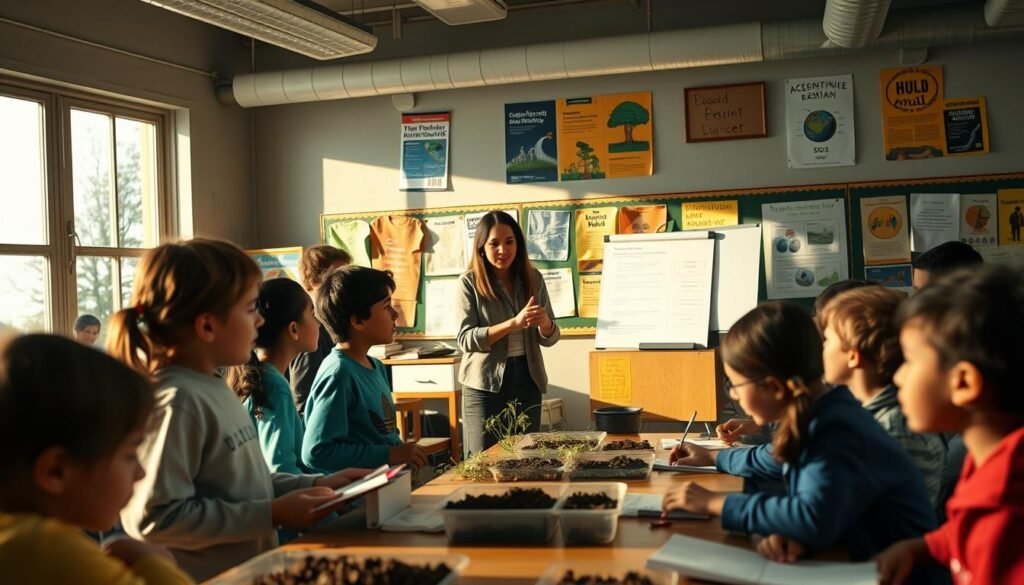
One big challenge is the spread of wrong ideas about environmental issues. Many people have incorrect views on climate change, conservation, and sustainability. For example, some think protecting the environment goes against economic growth, which is not true. Correcting these misconceptions needs a big effort to share accurate and unbiased info.
Environmental education can help by adding correct and current info to lessons. Using UGC NET previous year papers can help understand the needed knowledge and shape educational content well.
Funding and Resource Limitations
Funding and resource limits are another big challenge. Environmental education programs often lack enough money, which limits their ability to use effective teaching methods. With fewer resources, teachers must get creative in making materials and programs that are both interesting and informative.
To tackle these issues, educators and policymakers need to team up to find funding and find ways to teach affordably. This could mean working with local groups and using technology to improve teaching.
Engaging Diverse Audiences
Reaching out to different groups is also a challenge. Communities vary in their awareness and concern for the environment. Educational programs must be tailored to meet these different needs. This means understanding the local situation and creating content that is relevant and interesting for various groups.
By taking a detailed approach to environmental education, teachers can better connect with different audiences. This might include using local examples and studies in educational materials. This makes the content more real and effective.
In summary, environmental education faces many challenges, but solving these is key to promoting sustainability and awareness. By understanding these challenges and working together, we can find ways to improve environmental education.
Strategies for Effective Environmental Education
Effective environmental education needs a mix of strategies to grab learners’ attention. We aim to teach the next generation to care for our planet. It’s key to use methods that teach and motivate students to act.
Experiential Learning Opportunities
Experiential learning, like outdoor programs, boosts environmental education. Students learn to love nature and understand how it works. This hands-on approach helps them see the world in a new light.
These activities include field trips and projects. They link what students learn in class to real life. This makes learning fun and meaningful.
Use of Technology in Education
Technology is now a big part of teaching the environment. Digital tools make hard topics easy to grasp. They make learning fun and interactive.
For example, virtual trips and online lessons offer deep learning experiences. They add to what students learn in class. This makes learning more engaging.
Collaboration with Local Organizations
Working with local groups is another great way to teach the environment. Partnerships with community groups and schools offer real-world lessons. Students get to see environmental efforts up close.
These partnerships bring in guest speakers and field trips. They make learning more interesting and help students feel part of the community. This enriches their education.
As teachers get ready for exams like the UGC NET Paper 1, using these strategies helps. They can teach environmental themes better. This helps students understand and care for our planet more deeply.
Success Stories in Environmental Protection Education
Educational efforts in environmental protection have brought about many success stories. These stories inspire a new generation to care for the environment. They show how education can help overcome challenges and promote sustainability.
Case Studies from Schools
Many schools have added environmental education to their lessons. For example, a school in India started a waste management project. It cut down the school’s waste and taught students about recycling and sustainability.
This shows how environmental education can be a part of school learning. It helps young people learn about living sustainably.
Community-Led Initiatives
Community efforts have been key in raising environmental awareness. A rural community started a reforestation project. It helped the local ecosystem and taught people about biodiversity.
These efforts show the power of community-led environmental education. They can make a big difference at the local level.
National Programs with Impact
National programs have also played a big role in environmental education. The UGC NET preparation course includes environmental studies. It helps future teachers learn about environmental issues.
These programs show the value of a focused approach to environmental education. They help reach more people and make a lasting impact.
In summary, the success stories in environmental education show the power of working together. By learning from these examples, we can improve our environmental education efforts. This will help create a more sustainable future.
Incorporating Policy into Education
Teaching environmental policy helps students become active citizens. They learn about policy, legislation, and advocacy. This gives them insight into environmental issues and ways to solve them.
Importance of Teaching Environmental Policy
Environmental policy is key in education. It teaches students about the link between human actions and the environment. It also shows them how laws protect the environment.
Key aspects of teaching environmental policy include:
- Understanding the historical context of environmental legislation
- Analyzing current environmental policies and their impacts
- Developing advocacy skills to influence environmental decision-making
Understanding Legislation and Advocacy
Legislation and advocacy are vital in environmental policy. They help enforce environmental protection. Students should learn about laws like the EPA’s and how to influence policy through advocacy.
| Legislation | Description | Impact on Environmental Education |
|---|---|---|
| Clean Air Act | Regulates air emissions from stationary and mobile sources | Highlights the importance of air quality management |
| Clean Water Act | Regulates discharges into waters and sets water quality standards | Emphasizes the need for water conservation and pollution control |
Real-world Applications for Students
Teachers can make environmental policy more interesting by using real-world examples. This includes case studies, guest lectures, and projects where students create their own policies.
By linking theory to practice, students gain a better understanding of environmental policy. They learn how to tackle environmental challenges.
The Impact of Climate Change on Education
Climate change affects education in many ways. It changes what we teach and how we teach it. Schools must update their lessons and methods to meet these new challenges.
Changes in Curriculum Focus
Climate change means we need to focus more on sustainability and the environment. We should teach about climate science, green practices, and environmental laws. The UGC NET syllabus can help make these topics part of higher education.
- Incorporating climate change into science and social science curricula
- Promoting project-based learning on sustainability topics
- Encouraging interdisciplinary approaches to environmental education
Addressing Climate Crisis in Classrooms
Teaching about the climate crisis needs a hands-on approach. Teachers can use real-life examples and studies to teach about climate change. This helps students learn and prepares them to face climate challenges.
Some good ways to teach include:
- Using experiential learning to connect students with environmental issues
- Leveraging technology to access climate-related data and resources
- Fostering critical thinking and problem-solving skills
Preparing Leaders for Tomorrow
Preparing future leaders to tackle climate change is key. Schools should teach leadership, sustainability, and caring for the environment. This way, students can become active in making changes.
Leadership programs focused on the environment are very important. They help students think outside the box and find new ways to solve climate problems.
The Role of Educators in Environmental Advocacy
Teachers play a key role in teaching about the environment. They do more than just teach. They inspire students to help protect our planet.
Training Teachers in Environmental Topics
Good environmental education starts with teachers who know their stuff. Teacher training programs are essential. They should cover topics like ecology and sustainable practices.
Using UGC NET study material helps teachers understand environmental issues better. This knowledge is vital for teaching students about the environment.
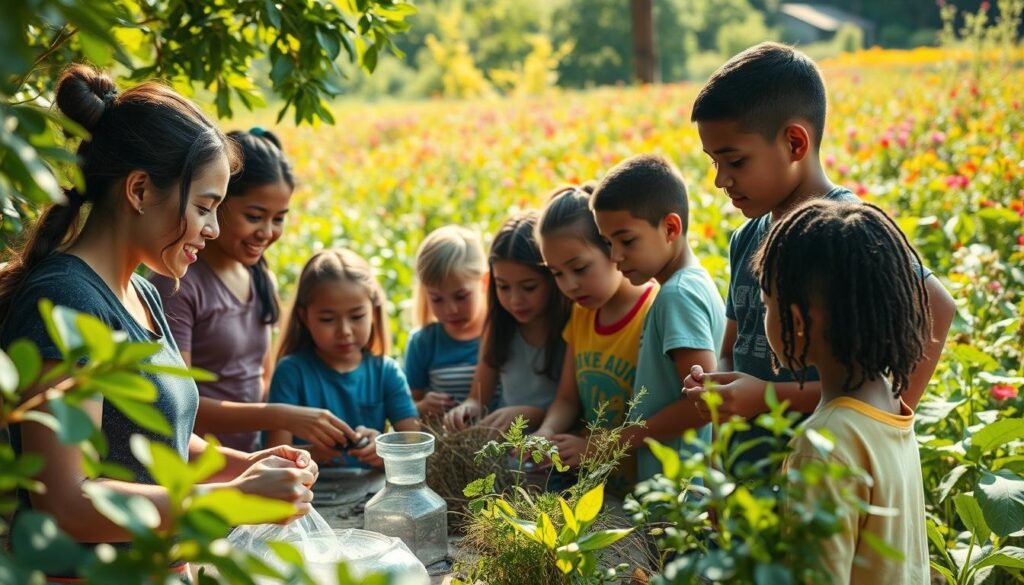
Fostering Critical Thinking Skills
Teaching students to think critically is important. Educators should encourage students to look at environmental issues from different angles. This helps students form their own opinions based on evidence.
By teaching critical thinking, educators prepare students to tackle environmental problems. This makes students more aware and active in environmental issues.
Building a Community of Practice
Creating a community of educators is key. It helps share knowledge and resources in environmental education. Workshops and online forums are great ways to bring teachers together.
This community spirit boosts educators’ ability to promote environmental awareness. It inspires students to care for the environment too.
Future Trends in Environmental Education
The future of environmental education is changing in exciting ways. We’re seeing new trends that will make it more impactful. It’s important to understand these changes and how they’re shaping our education.
Incorporating Indigenous Knowledge
One big trend is adding Indigenous knowledge to environmental education. Indigenous communities have lived in harmony with nature for generations. Their knowledge can give us a deeper understanding of the environment.
This approach makes learning more diverse and culturally rich. It teaches students about the connection between humans and nature.
Emphasizing Global Perspectives
Another key trend is focusing on global views in environmental education. Environmental problems are now worldwide, so it’s essential to teach students about them. This includes how different countries handle these issues.
Learning globally helps students become aware of their role in the world. It prepares them to tackle environmental problems that don’t stop at borders.
Advancements in Educational Methods
Education is also getting a tech boost. Tools like virtual reality and online platforms are making learning fun and easy. These tools help students dive into complex topics in new ways.
These advancements also make learning more personal. They meet students where they are, making education more effective and meaningful.
In summary, the future of environmental education is bright. It will include Indigenous knowledge, global views, and new teaching methods. These changes will make education more relevant and impactful, readying students for the environmental challenges ahead.
The Significance of UGC NET Exam for Educators
In India, the UGC NET exam is a big deal for teachers. It checks their knowledge in subjects like environmental education. Passing this exam opens doors to many teaching jobs.
Assessing Knowledge of Environmental Issues
The UGC NET exam tests teachers’ knowledge of environmental issues. It’s important for teaching students about the environment. The exam makes sure teachers know about environmental concepts and policies.
Some key things the exam looks at include:
- Environmental policies and laws
- Ecological principles and biodiversity
- Climate change and its impacts
- Sustainable development practices
Career Opportunities Following the Exam
Passing the UGC NET exam leads to many teaching jobs. Teachers can work in universities and colleges. They can also do research and make policies.
Some career paths include:
- Assistant Professor positions in universities and colleges
- Research opportunities in environmental studies
- Policy-making roles in educational institutions
Enhancing Professional Development
Preparing for the UGC NET exam helps teachers improve. They learn new things and get better at teaching. Using the UGC NET mock test helps them see what they need to work on.
This way, teachers not only pass the exam but also help with environmental education and research.
Engaging Families in Environmental Education
Engaging families in environmental education helps teach sustainability and care for the environment. This teamwork is key to building a community that understands and acts on environmental issues.
Strategies for Home Involvement
Families can greatly support environmental education at home. Simple actions like recycling, saving water, and using less energy teach children important lessons. Gardening and exploring outdoors also help kids learn about nature and why it’s important to protect it.
- Encourage recycling and proper waste disposal
- Implement energy-saving practices
- Engage in outdoor activities that promote environmental awareness
Community Workshops and Events
Community workshops and events are great for families to learn about the environment together. They can include seminars on climate change and activities like clean-up drives and planting trees. These events educate and help families feel connected to their community and the environment.
Key benefits of community workshops include:
- Raising awareness about local environmental issues
- Promoting community-led environmental initiatives
- Providing a platform for families to engage in environmental activities together
Communication Between Schools and Families
Good communication between schools and families is essential for environmental education. Schools can share their environmental efforts with families and involve them through updates and volunteer chances.
Strategies for improving communication include:
- Regular newsletters or emails about environmental activities
- Parent-teacher meetings with a focus on environmental education
- Volunteer opportunities for families in school environmental projects
By using these strategies, we can make sure environmental education is a team effort. It involves schools, families, and communities working together.
The Impact of Technology on Environmental Learning
Technology is changing how we learn about the environment. It offers new digital tools and ways to work together. This makes learning fun and interactive for students.
Digital Resources for Educators
Teachers now have more tools than ever to teach about the environment. Online databases, virtual labs, and educational software give students lots of information and hands-on learning. These tools make hard topics easier to understand.
Virtual labs let students do experiments online. This is great for studying things that can’t be done in class. Online platforms also have videos, podcasts, and quizzes for different learning styles.
Using Social Media for Environmental Awareness
Social media is a big help in spreading the word about the environment. Platforms like Twitter, Instagram, and Facebook let teachers and groups reach more people. They can share news fast and get support for green causes.
Teachers use social media to talk about environmental issues. They share tips on living green and start discussions. Social media also helps get people involved in saving the planet.
Online Platforms for Collaboration
Online platforms help people work together from anywhere. Collaborative projects and online forums let everyone share ideas and work on projects. This way, people learn from each other and feel connected.
For example, big environmental projects can be done online. Everyone can share their work and learn from each other. This makes learning better and helps people feel like they’re part of something bigger.
By using technology, learning about the environment can be more fun and effective. It prepares students to tackle big environmental problems in the future.
Conclusion: A Collective Responsibility
Environmental education is a team effort needed for a sustainable future. It combines laws and education to teach future generations. This is vital for protecting our planet.
Collaborative Efforts for a Sustainable Future
Teachers, policymakers, and the community must work together. This teamwork helps create a strong environmental education system. It includes teaching about environmental laws and UGC NET preparation.
Fostering Lifelong Environmental Stewardship
To encourage caring for the environment, we need different approaches. These include hands-on learning, community involvement, and technology. These methods help people take action to protect nature.
Shaping the Future of Education
Environmental education is key to our planet’s future. By adding environmental topics to school curricula and supporting UGC NET preparation, we can raise environmentally aware people. They will be ready to face the world’s challenges.
FAQ
What is the significance of environmental education in today’s world?
Environmental education is key for spreading awareness about our planet. It encourages us to live sustainably and teaches future generations to care for the Earth.
How do environmental protection laws influence environmental education?
Laws on environmental protection shape how we learn about the environment. They set standards, support research, and help people understand environmental issues.
What is the role of UGC NET Paper1 in environmental education?
UGC NET Paper1 helps prepare teachers to teach about the environment. It covers topics in social sciences and education, focusing on environmental themes and issues.
What are some effective strategies for promoting environmental education?
Good ways to teach about the environment include hands-on learning and using technology. Working with local groups and adding environmental topics to the curriculum also helps.
How can educators be supported in teaching environmental topics?
Teachers need training on environmental topics and help to think critically. Building a community of teachers also supports their work in environmental education.
What is the impact of climate change on education?
Climate change requires changes in what we teach in schools. It’s important to address the climate crisis and prepare students to face environmental challenges.
How can families be engaged in environmental education?
Families can get involved by participating in school activities and workshops. Communication between schools and families helps everyone work together to teach about the environment.
What is the significance of the UGC NET exam for educators?
The UGC NET exam tests educators’ knowledge of environmental issues. It offers career opportunities and helps teachers grow professionally.
How can technology be leveraged for environmental learning?
Technology helps with environmental education through digital tools and social media. It also supports online collaboration, making learning more effective.
What are some future trends in environmental education?
Environmental education will focus more on Indigenous knowledge and global perspectives. It will also use new educational methods to teach about the environment.