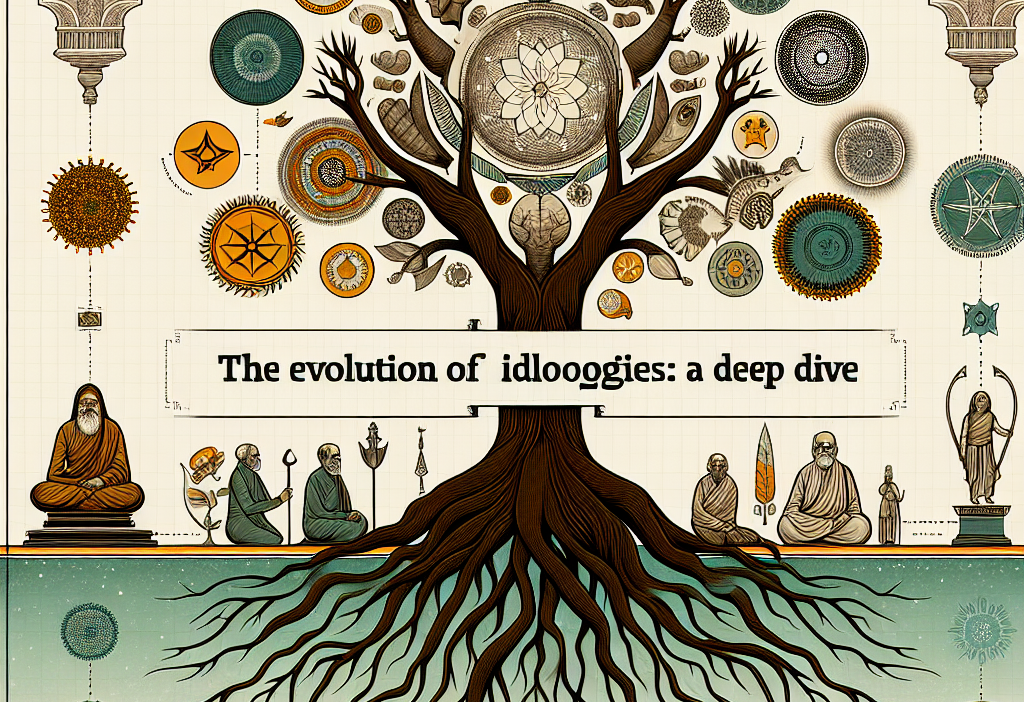
The Evolution of Ideologies: A Deep Dive into the Indian National Congress
Introduction
In the grand tapestry of India’s struggle for independence, the Indian National Congress (INC) stands out as a pivotal institution, embodying the nation’s evolving ideologies. 🌍 As we traverse through the epochs of this journey, we witness a kaleidoscope of thoughts, beliefs, and strategies that shaped India’s socio-political landscape.
The objective of this article is to take you on an extensive exploration of The Evolution of Ideologies: A Deep Dive into the Indian National Congress. Here, we’ll illuminate the INC’s transformation from its inception in 1885 to its current state, examining the factors that influenced its ideological underpinnings. This article is designed to engage you through insightful analysis, offer actionable insights, and enhance your understanding of India’s political evolution.
The Genesis: Early Beginnings of the Indian National Congress (1885-1905)
The Indian National Congress was founded in 1885 during a time when the British Raj was consolidating its power in India. Initially, the Congress aimed to provide a platform for educated Indians to voice their concerns regarding British policies. The early leaders, such as Dadabhai Naoroji and W.C. Banerjee, envisioned a moderate approach to political reform, focusing on constitutional methods to achieve self-rule. 🎓
Key Features of Early Ideologies
Moderate Nationalism: Early Congress leaders advocated for gradual reforms and believed in engaging with the British government through petitions and resolutions.
Social Reform: Alongside political ambitions, there was a strong emphasis on social reforms, such as the abolition of untouchability and the promotion of women’s education.
- Economic Critique: The leaders articulated economic grievances, highlighting how colonial policies hampered India’s economic growth. Naoroji famously introduced the concept of "drain of wealth" to describe the economic exploitation of India.
Emergence of Discontent (1905-1915)
As the early experiments with moderate politics yielded little fruit, a wave of disillusionment surged through the Congress ranks. The partition of Bengal in 1905 acted as a catalyst, leading to a stronger push for radicalism.
The Rise of Extremism
This era saw leaders like Bal Gangadhar Tilak advocating for a more confrontational approach. “Swaraj is my birthright,” he famously proclaimed, emphasizing the need for immediate self-rule. The shift towards radicalism was characterized by:
Protests and Boycotts: The Swadeshi movement emphasized self-sufficiency and rejecting British goods.
- Youth Involvement: The youth, inspired by revolutionary ideologies, began to play a significant role in the independence movement.
Table 1: Key Figures and Their Contributions
| Leader | Ideology | Contribution |
|---|---|---|
| Dadabhai Naoroji | Moderate Nationalism | Introduced "Drain of Wealth" |
| Bal Gangadhar Tilak | Radicalism | Advocated for Swaraj |
| Annie Besant | Theosophical Nationalism | Promoted women’s rights and education |
The Gandhi Era: A New Direction (1915-1947)
With Mahatma Gandhi’s arrival, the direction of the Congress took a monumental shift. His philosophies of Satyagraha (truth force) and Ahimsa (non-violence) infused the movement with new life.
The Impact of Gandhi’s Ideologies
Non-violence: Gandhi’s non-violent approach to activism marked a watershed moment in the freedom struggle, appealing to the masses and uniting diverse social groups.
Civil Disobedience: The Salt March of 1930 became a symbol of resistance against colonial rule, galvanizing support at both national and international levels.
- Inclusivity: Gandhi’s vision encompassed Indians from all strata and communities, aiming for a united front against British colonialism.
Table 2: Major Movements Led by Gandhi
| Movement | Year | Significant Outcome |
|---|---|---|
| Champaran Movement | 1917 | Gained recognition of tenant rights |
| Non-Cooperation Movement | 1920 | Launched mass mobilization against British rule |
| Quit India Movement | 1942 | Called for immediate independence |
Post-Independence Ideologies: 1947 and Beyond
The Indian National Congress emerged as the ruling party post-independence, grappling with the challenges of nation-building and governance. The ideological framework began to evolve as the nation faced communal tensions, economic challenges, and the need for social justice.
Nehru’s Socialism
Under Jawaharlal Nehru, the INC adopted a societal-focused approach, emphasizing:
Planned Economy: Promoting state intervention in the economy through five-year plans.
- Secularism: Nehru’s emphasis on secularism aimed to foster unity in a religiously diverse country.
The Role of Indira Gandhi
The legacy continued under Indira Gandhi, who projected a more authoritative and populist faction of the Congress. Her leadership marked:
Nationalization: Strategic nationalization of key industries like banks and insurance.
- Emergency (1975-1977): The controversial imposition of emergency showcased a drastic shift towards a centralist approach.
Chart 1: Ideological Evolution of the Indian National Congress
| plaintext | ————————————– |
|---|---|
| Moderate Nationalism | |
| ↑ | |
| Radicalism (Tilak) | |
| ↓ | |
| Mahatma Gandhi’s Ideologies | |
| ↓ | |
| Post-Independence | |
| Nehru’s Socialism | |
| ↓ | |
| Indira Gandhi’s Era | |
| ————————————– |
Current Perspectives and Challenges
As we fast forward to the present, the INC must navigate a complex political landscape. Faced with competition from regional parties and a resurgent Bharatiya Janata Party (BJP), the Congress is tasked with redefining its ideologies to reclaim relevance.
Modern Ideological Frameworks
Progressive Politics: Engaging youth and marginalized communities, aiming for inclusive growth.
Digital Engagement: Leveraging social media platforms for outreach and dialogue.
- Environmental Sustainability: Incorporating climate action into the political discourse.
Future Outlook
The Evolution of Ideologies: A Deep Dive into the Indian National Congress teaches us that flexibility and responsiveness to societal needs are crucial for any political entity. The Congress must balance its rich legacy with modern demands to avoid becoming obsolete.
Conclusion
The journey of the Indian National Congress is a captivating narrative of evolving ideologies that reflect the aspirations, struggles, and innovations of a nation. From its early moderate beginnings to Gandhi’s powerful influence and its struggles in contemporary politics, the INC illustrates the need for adaptability in political thought.
As we navigate the complexities of modern governance, let us remember that ideologies are not static; they evolve in response to the changing fabric of society. Empowered with this knowledge, may we, as engaged citizens, contribute to shaping the future ideologies that guide our nation.
Frequently Asked Questions (FAQs)
What is the Indian National Congress?
The Indian National Congress is a political party in India that played a significant role in the country’s struggle for independence and has continued to influence Indian politics post-independence.Who were the key leaders of the Indian National Congress?
Key leaders include Mahatma Gandhi, Jawaharlal Nehru, Indira Gandhi, and Bal Gangadhar Tilak, each influencing the Congress’s ideologies and strategies at different times.What are the significant movements associated with the INC?
Significant movements include the Non-Cooperation Movement, the Civil Disobedience Movement, and the Quit India Movement.How has the INC’s ideology evolved over time?
The INC’s ideology evolved from moderate nationalism to radical approaches and finally incorporated socialist and secular frameworks post-independence.- What challenges is the INC facing today?
The INC faces challenges like regional party competition and the need to connect with younger and diverse voter bases to remain relevant in contemporary politics.
The Evolution of Ideologies: A Deep Dive into the Indian National Congress has been a journey through time showcasing vital shifts in political thought and action. Engage with us on this subject further by exploring more of our resources at MyJRF!