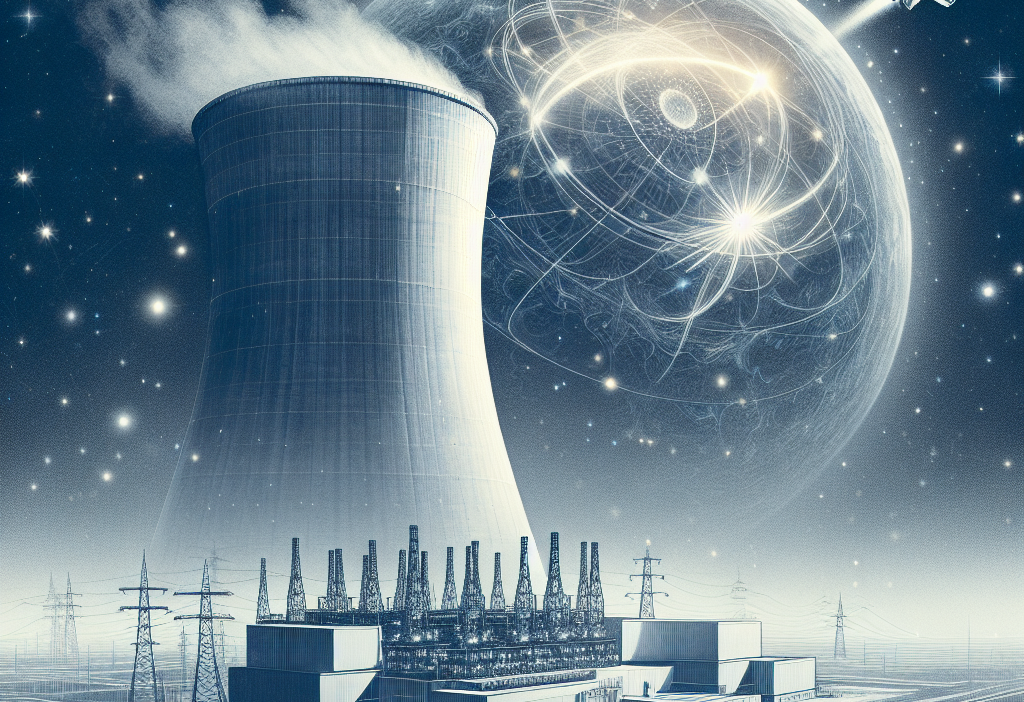
India’s Civil Nuclear and Space Programs: Pioneering Paths to Energy and Exploration 🌌
Introduction
In a world grappling with energy demands and the thirst for exploration, India’s civil nuclear and space programs have emerged as beacons of innovation and ambition. These programs not only reflect India’s technological prowess but also its vision for sustainable development and cosmic discovery. As the nation strides confidently into the future, the emphasis on nuclear energy as a viable power source and space exploration as a frontier for scientific understanding underscores the transformative journey that is underway. This article delves deeply into these pioneering paths, highlighting their significance, advancements, challenges, and future potential, ultimately illuminating the profound impact these programs have on India and beyond.
The Significance of Civil Nuclear Energy in India
India’s civil nuclear program is not just a facet of energy production; it is a fundamental pillar supporting the nation’s quest for energy security, economic growth, and environmental sustainability. With increasing energy consumption driven by a growing population and rapid industrialization, nuclear energy serves as a clean alternative to fossil fuels, helping reduce carbon emissions significantly.
1. Overview of India’s Nuclear Energy Landscape
India’s journey in nuclear energy began in the early 1940s, with the establishment of the Atomic Energy Commission in 1948. Fast forward to today, and the nation ranks as the third-largest nuclear producer in Asia, following China and Japan. The strategy revolves around developing indigenous technology and partnering with other nations to leverage advanced nuclear technologies.
Table 1: Growth of Nuclear Power Plants in India (1990-2023)
| Year | Number of Reactors | Total Installed Capacity (MW) |
|---|---|---|
| 1990 | 7 | 1,650 |
| 2000 | 9 | 2,800 |
| 2010 | 20 | 4,780 |
| 2020 | 22 | 6,780 |
| 2023 | 24 | 7,975 |
2. Key Policies and Initiatives
The Indian government has put forth several initiatives to bolster its nuclear energy ambitions. The Nuclear Power Corporation of India Limited (NPCIL) plays a pivotal role in managing the construction and operation of nuclear power plants. Key policies include:
- Nuclear Liability Act (2010): Creating a legal framework for liability in case of nuclear accidents.
- Make in India Initiative: Aimed at facilitating domestic manufacturing in nuclear technology.
- International Collaborations: Partnerships with the United States, France, and Russia for technology exchange and cooperation.
3. Challenges and Future Prospects
While the prospects for India’s civil nuclear program are promising, challenges such as public perception, regulatory hurdles, and supply chain issues for fuel procurement persist. Nonetheless, with advancements in small modular reactors (SMRs) and gene research, the future looks optimistic. The goal is to achieve 25% of the total energy mix sourced from nuclear power by 2050.
India’s Space Program: Reaching for the Stars 🚀
India’s space program, spearheaded by the Indian Space Research Organisation (ISRO), stands as a testament to the nation’s relentless pursuit of scientific excellence and exploration. By successfully launching missions that not only aim to explore the universe but also to enhance life on Earth, India is repositioning itself as a global leader in space technology.
4. Milestones in India’s Space Exploration
ISRO’s journey began in 1969 with the vision of establishing a dedicated space infrastructure. Over the decades, India achieved several milestones:
- Aryabhata (1975): India’s first satellite, marking the entry into space technology.
- Chandrayaan-1 (2008): The first Indian mission to the Moon that discovered water on the lunar surface.
- Mangalyaan (2013): India’s mission to Mars, making it the first Asian nation to reach Mars orbit and the fourth space agency globally to do so.
Chart 1: Major ISRO Missions Timeline
| Year | Mission | Objective |
|---|---|---|
| 1975 | Aryabhata | India’s first satellite |
| 2008 | Chandrayaan-1 | Lunar exploration |
| 2013 | Mangalyaan | Mars exploration |
| 2019 | Chandrayaan-2 | Advanced lunar study |
| 2022 | Gaganyaan | Manned spaceflight program |
5. Current Projects and Future Endeavors
ISRO has an ambitious agenda for the coming years. Notable projects include:
- Gaganyaan: The first crewed mission that aims to send Indian astronauts into space by 2024.
- Chandrayaan-3: Following the partial success of Chandrayaan-2, this mission aims for a soft landing on the Moon.
- NavIC: India’s own regional satellite navigation system enhancing accuracy for users across the Indian subcontinent.
6. Socioeconomic Impact of India’s Space Program
The benefits of India’s space endeavors extend far beyond mere exploration. From enhancing weather forecasting capabilities to improving agricultural productivity and disaster management, ISRO’s applications have transformed several sectors:
- Telecommunication: Launch of communication satellites expanding telecommunication access to remote areas.
- Earth Observation: Satellites that monitor environmental changes, urban development, and agricultural trends.
The Intersection of Nuclear Energy and Space Exploration
While civil nuclear energy and space exploration may seem distinct, they converge on several fronts. Both require significant technological advancements, robust infrastructure, and skilled human capital.
7. The Role of Nuclear Technology in Space Exploration
Nuclear technology plays a vital role in powering space missions. For example, Radioisotope Thermoelectric Generators (RTGs) are crucial for long-duration space missions, providing continuous power where solar energy is insufficient.
8. Dual-Use Technologies
Furthermore, innovations developed for nuclear energy often find applications in space. Radiation shielding technologies, for instance, are necessary for spacecraft design to protect astronauts from cosmic radiation.
Conclusion
As we observe the evolving landscape of India’s civil nuclear and space programs, it’s evident that these endeavors are not merely about energy generation or extraterrestrial exploration; they reflect a broader vision of sustainability, innovation, and self-reliance. ☀️ As India continues to carve its niche on the global stage, its commitment to advancing civil nuclear energy and pioneering space missions will play a crucial role in shaping a prosperous future for generations to come.
Whether you’re an enthusiast of science, technology, or just curious about the future, India’s advancements in these fields reaffirm that energy and exploration can coexist, driving humanity toward new horizons.
FAQs
1. What is the primary objective of India’s civil nuclear program?
The main goal is to establish a sustainable and secure energy source while reducing dependency on fossil fuels and minimizing environmental impact.
2. How has ISRO contributed to global space technology?
ISRO has developed cost-effective and innovation-driven technologies that have been adopted in various global space missions, showcasing India’s capability as a leader in space exploration.
3. What are the challenges facing India’s nuclear energy sector?
Challenges include regulatory hurdles, public perception, and the need for advanced technologies to ensure safety and efficiency.
4. When is the Gaganyaan mission scheduled to launch?
The crewed Gaganyaan mission is targeted for launch in 2024, marking India’s entry into human spaceflight.
5. How does the Indian government support its nuclear and space programs?
The government supports these programs through strategic investments, policy frameworks, and international collaborations, enhancing research and infrastructure.
By illuminating the intricate details of India’s Civil Nuclear and Space Programs: Pioneering Paths to Energy and Exploration, we’re not just exploring technological advancements; we’re also inspiring generations to look up to the stars and responsibly harness the Earth’s resources. 🌍✨