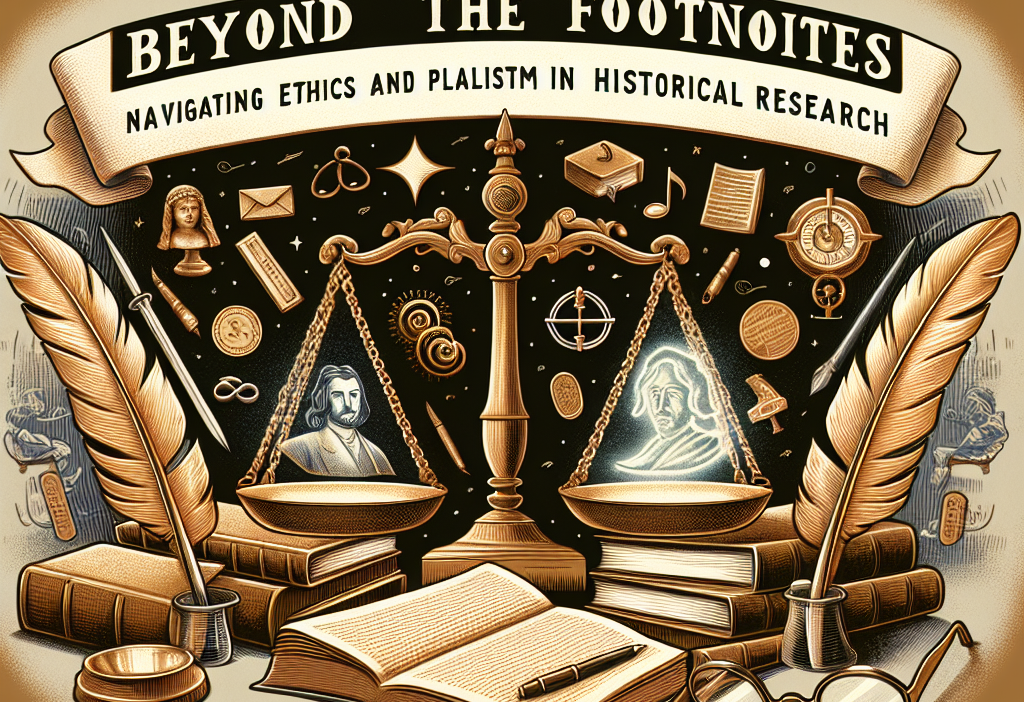
Beyond the Footnotes: Navigating Ethics and Plagiarism in Historical Research
Introduction
In the captivating world of historical research, the journey often goes beyond merely collecting data and assembling narratives. It requires scholars to navigate a complex landscape filled with ethical considerations and the potential pitfalls of plagiarism. 🔍 As researchers strive to shed light on the past, the integrity of their work is paramount. This article delves into these critical issues, offering valuable insights and actionable strategies to help historians and students navigate ethics and avoid plagiarism in their work.
Whether you are a seasoned researcher or a newcomer to historical inquiry, understanding these ethical frameworks is essential. We will cover:
- The ethical foundations of historical research
- The various forms of plagiarism and how to avoid them
- Best practices for proper citation and attribution
- The role of technology in researching ethically
- Case studies highlighting ethical dilemmas
- Frequently asked questions about plagiarism and ethics
By the end of this article, you’ll be well-prepared to conduct your historical research with integrity and confidence. Let’s embark on this enlightening journey!
The Ethical Foundations of Historical Research
Understanding Historical Integrity
The essence of historical research lies in its commitment to truth and accuracy. 📜 Historians adhere to ethical principles that guide their methodologies, ensuring that they respect the work of others while contributing to a shared understanding of the past.
Core Ethical Principles:
- Honesty: Presenting information truthfully without fabrication or distortion.
- Integrity: Upholding moral principles in your research practices and findings.
- Accountability: Being responsible for your research outcomes and their implications.
- Respect for Sources: Valuing the work and ideas of others, particularly when they provide foundational knowledge for your own research.
The Importance of Ethics in Historical Research
Ethics serve as the backbone of credible historical research. By adhering to ethical principles, researchers can:
- Foster trust with their audiences, leading to increased credibility.
- Create a robust and nuanced understanding of historical events.
- Promote transparency and accountability in scholarly practices.
Forms of Plagiarism: Recognizing and Avoiding Them
Plagiarism is a severe ethical violation in academia, and it can take many forms. To navigate this minefield effectively, researchers must be vigilant.
Common Types of Plagiarism
- Direct Plagiarism: Copying someone else’s work word-for-word without citation.
- Self-Plagiarism: Repurposing your previously published work as if it were new without proper acknowledgment.
- Mosaic Plagiarism: Piecing together phrases from various sources without using quotation marks or citations.
- Accidental Plagiarism: Unintentionally failing to cite sources appropriately.
How to Avoid Plagiarism
To avoid crossing the ethical line, historians can adopt several best practices:
- Use Quotation Marks: Whenever quoting directly, be sure to enclose the text in quotation marks and provide attribution.
- Paraphrase Effectively: Rewrite source material in your words, but still give credit.
- Keep Detailed Notes: Maintain meticulous records of all sources, including direct quotes, paraphrases, and ideas.
- Utilize Plagiarism Checkers: Implement tools such as Turnitin or Grammarly to identify unintentional plagiarism in your work.
Proper Citation and Attribution: Best Practices
Citing sources appropriately is not just good practice; it’s a fundamental aspect of ethical research. Proper citation acknowledges others’ contributions while reinforcing the credibility of your work.
Choosing the Right Citation Style
Different academic disciplines favor various citation styles. Here are some commonly used formats in historical research:
- Chicago Style: Often preferred in history, allows for footnotes and endnotes.
- MLA (Modern Language Association): Common in humanities disciplines, focusing on author-page citation.
- APA (American Psychological Association): Used frequently in social sciences, emphasizing the date of publication.
Creating a Comprehensive Bibliography
Your bibliography or works cited page should include every source you’ve referenced throughout your research. Items to include are:
- Author(s)
- Title of the work
- Publication year
- Publisher
- Relevant page numbers
Role of Technology in Ethical Research
In an age where information is at our fingertips, technology serves as both an ally and a potential adversary in historical research.
Positive Contributions of Technology
- Access to Resources: Digital archives and databases like JSTOR or Project MUSE provide extensive access to historical documents and scholarly articles.
- Collaboration Tools: Platforms like Google Docs enable scholars to collaborate while maintaining clarity and transparency about contributions.
- Plagiarism Detection Software: These tools strengthen ethical adherence by helping researchers identify and rectify potential issues before publication.
Cautionary Measures
However, technology can also lead to ethical pitfalls:
- Overreliance on Digital Sources: Researchers must critically evaluate online sources for credibility and accuracy.
- Improper Citation of Digital Material: Online resources often lack clear authorship or publication dates, which complicates ethical citation practices.
Ethical Dilemmas in Historical Research: Case Studies
Navigating ethical dilemmas can prove challenging for historians. Here, we examine three hypothetical scenarios that highlight the complexities involved in ethical research.
Case Study 1: Fabricated Data
Imagine a historian reports findings from a recently "discovered" document that, upon further inspection, turns out to be entirely fabricated. This situation raises serious ethical concerns about the integrity of the research process and its impact on public knowledge. To avoid situations like this, researchers must verify all sources thoroughly.
Case Study 2: Self-Plagiarism
A scholar submits multiple papers formatted similarly and containing significant overlap in content, treating each as distinct. While they may believe this approach is acceptable if cited appropriately, it’s typically viewed as unethical. Researchers should prioritize originality in their submissions.
Case Study 3: Misrepresentation of Sources
In another scenario, a historian cites a secondary source that inaccurately represents primary documents. When another researcher relies on this misrepresentation, the error compounds. Historians should diligently pursue the original sources whenever possible to ensure accuracy.
Conclusion: The Path Ahead
Navigating the intricate landscape of historical research requires vigilance, integrity, and a deep commitment to ethical principles. As you tread this path, remember the importance of transparency, accountability, and respect for others’ contributions. By adhering to these guiding tenets, you can avoid the pitfalls of plagiarism and engage in meaningful discourse about our shared history.
To ensure your research stands the test of time, take proactive steps—such as refining your citation practices and utilizing technology wisely. The integrity of your findings not only enhances your credibility but also contributes to the scholarly community as a whole.
Actionable Insight: Embrace a Culture of Ethics
Adopt a mindset that values original thought and respects the work of others. Make ethical considerations a cornerstone of your research practice, and encourage your peers to do the same.
FAQs Section
Q1: What is plagiarism in historical research?
Plagiarism occurs when a researcher presents someone else’s work or ideas as their own without proper attribution. It can significantly undermine the integrity of historical research.
Q2: How can I ensure my citations are correct?
Use citation guides specific to your chosen format (e.g., Chicago, MLA, APA) and consider citation management tools like Zotero or Mendeley for accuracy.
Q3: Is self-plagiarism acceptable?
Generally, self-plagiarism is discouraged. While you may cite your own previous work, presenting it as new without acknowledgment can be viewed as unethical.
Q4: Can technology help in avoiding plagiarism?
Yes! Various plagiarism detection tools can identify unintentional similarities in your work and suggest corrections, ensuring your research is original.
Q5: What are some ethical dilemmas in historical research?
Common ethical dilemmas include fabricated data, misrepresenting sources, and recycling previous work without acknowledgment. Researchers must navigate these carefully.
By embracing ethical practices and valuing the work of others, scholars can contribute meaningfully to the discourse surrounding our past. As you venture beyond the footnotes of your research, remember: the path of integrity leads to a richer understanding of history for everyone. 🌍