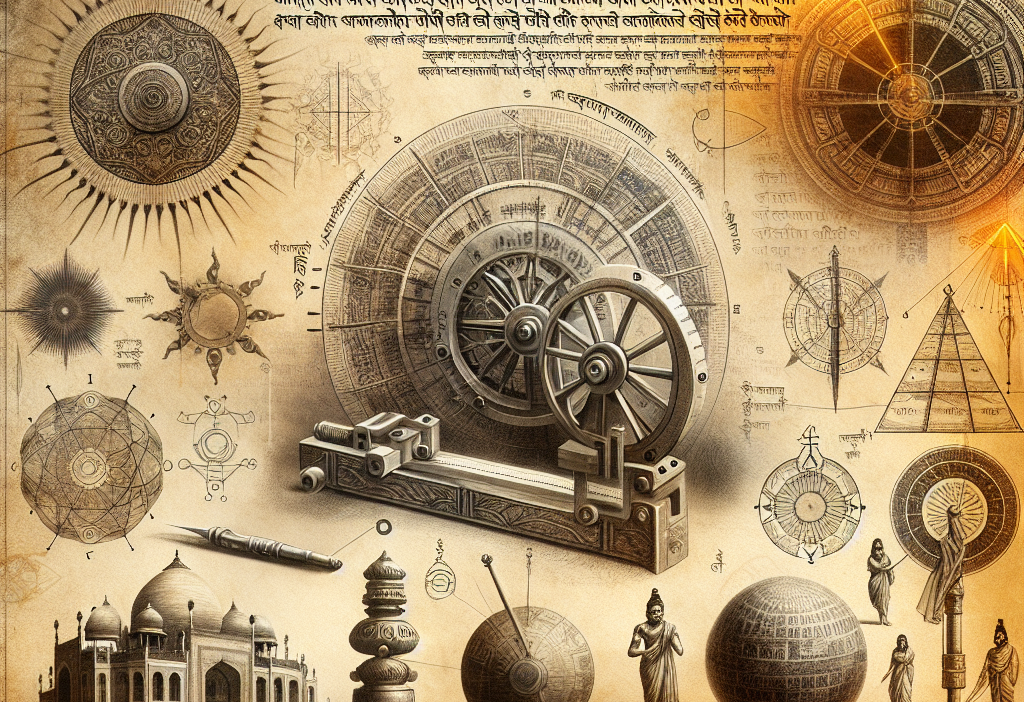
Ancient Innovations: Unveiling the Scientific Marvels of India’s Past
Introduction
Imagine a world without the conveniences of modern science and technology. What if I told you that many of today’s innovations have their roots in ancient civilizations? India, with its rich historical tapestry, is a treasure trove of scientific marvels that shaped not only the subcontinent but the world.
In this article, Ancient Innovations: Unveiling the Scientific Marvels of India’s Past, we’ll traverse through time to explore the advanced scientific concepts, inventions, and practices that originated from ancient India. From groundbreaking mathematical theories to ingenious medical practices, we will highlight the critical contributions made by this incredible civilization. By the end, you’ll not only gain a deeper appreciation for these innovations but also understand their relevance to our contemporary world. Get ready to be inspired! 🌍
Ancient Mathematics: The Birthplace of Zero and Beyond
The Concept of Zero
One of the most significant contributions of ancient India to the world is the concept of zero. This seemingly simple number has revolutionized mathematics, allowing for advanced calculations and a number system that can accommodate a vast array of functions.
- Historical Context: The oldest recorded mention of zero is found in the Bakhshali manuscript, dating back to the 7th century.
- Impact: The introduction of zero into the numeral system allowed more complex calculations and was a precursor to algebra.
Decimal System
In addition to zero, ancient India also introduced the decimal system. The formalization of place value makes arithmetic operations more manageable and forms the backbone of modern mathematics.
- Key Figures: Mathematicians like Aryabhata and Brahmagupta played crucial roles in developing these systems.
- Use Case: The decimal system laid the foundation for arithmetic, geometry, and calculus, which are essential in various fields today, including engineering, economics, and computer science.
Medical Marvels: Ayurveda
The Philosophy of Healing
Ayurveda, translating to “the science of life,” is an ancient Indian holistic healing system that dates back over 3,000 years. It encompasses various aspects of health: physical, mental, and spiritual.
- Core Principles: Ayurveda is based on the balance of three energies, or doshas: Vata, Pitta, and Kapha. An imbalance leads to sickness.
- Remedies: Utilizing natural herbs, dietary adjustments, and yoga practices, Ayurveda promotes well-being in a preventive manner.
Evidence of Efficacy
Numerous studies have validated Ayurvedic practices, demonstrating their effectiveness in managing chronic illnesses such as diabetes and arthritis.
| Aspect | Ayurveda | Modern Medicine |
|---|---|---|
| Focus | Holistic healing | Symptoms treatment |
| Approach | Preventive care | Reactive care |
| Treatment Methods | Herbal remedies, yoga, meditation | Pharmaceuticals, surgery |
Architectural Wonders: Engineering Feats
The Indus Valley Civilization
The Indus Valley Civilization, one of the earliest urban cultures, showcased advanced engineering and urban planning techniques.
- Drainage Systems: The cities had sophisticated drainage systems that included covered drains and individual household latrines connected to community toilets.
- Urban Planning: Streets were laid out in a grid pattern, a concept that later influenced city planning worldwide.
Temple Architecture: A Blend of Science and Art
The temples of ancient India, such as those in Khajuraho and Hampi, illustrate remarkable achievements in engineering and artistry.
- Astronomical Alignments: Many temples were designed with astronomical considerations, indicating advanced knowledge of celestial events.
- Acoustic Engineering: These structures also incorporated acoustics, allowing sounds to resonate in unique ways during rituals.
Astronomy: Pioneers of Cosmic Understanding
Aryabhata’s Astronomical Insights
Aryabhata, one of the earliest and most influential mathematicians and astronomers, made groundbreaking discoveries about the cosmos.
- Heliocentric Theory: Aryabhata proposed that the Earth rotates on its axis and revolves around the sun, a concept not widely accepted in his time.
- Calculating Eclipses: He accurately predicted solar and lunar eclipses, showcasing advanced observational techniques.
Siddhanta of Brahmagupta
Brahmagupta expanded on Aryabhata’s work and described methods for calculating planetary positions and distances.
- Contributions: His treatises include rules for addition, subtraction, multiplication, and division of fractions—crucial for astronomical calculations.
Metallurgy: The Science of Metals
Iron Pillar of Delhi
The Iron Pillar of Delhi stands testament to the advanced metallurgical skills of ancient India.
- Corrosion Resistance: The pillar has resisted corrosion for over 1,600 years, indicating superior metal crafting techniques and knowledge of alloys.
- Historical Significance: It serves as a symbol of India’s historical brilliance in ironwork.
Wootz Steel
Another innovation is Wootz steel, which was known for its superior quality and sharpness, crucial for weaponry and tools.
- International Trade: Wootz steel was exported worldwide, influencing sword-making techniques in many cultures, including the Middle East.
Sustainable Practices: Ancient Wisdom Meets Ecology
Water Harvesting Techniques
Ancient India employed various water harvesting and management techniques crucial for agriculture in arid regions.
- Stepwells: Ingenious structures that not only provided a reliable water source but also served as community gathering spots.
- Check Dams: Built to capture rainwater, these structures prevented soil erosion and revitalized groundwater levels.
Organic Farming
Long before the term “organic farming” was coined, ancient texts detailed methods for sustainable farming that ensured long-term soil fertility.
- Methods: Crop rotation, companion planting, and natural pest control techniques are just a few examples illustrating sustainability.
Philosophical Innovations: The Quest for Knowledge
The Concept of Anvikshiki
Anvikshiki is an ancient Indian philosophy that promotes analytical thinking and critical inquiry.
- Structured Reasoning: It encourages questioning, debate, and reasoning, laying the foundation for a scientific temper.
- Education Systems: Ancient universities like Nalanda and Takshashila exemplified the principles of Anvikshiki, drawing scholars from all over the world.
Mathematics, Logic, and Philosophy
The intersections between mathematics and philosophy in ancient Indian texts inspire contemporary thinkers.
- Key Texts: The Sulba Sutras delved into geometric principles, showcasing how mathematics was intertwined with rituals and beliefs.
Conclusion
The incredible journey through Ancient Innovations: Unveiling the Scientific Marvels of India’s Past reveals a civilization rich in scientific thought, ingenuity, and holistic approaches to life. From mathematics and medicine to astronomy and architecture, India’s ancient innovations have profoundly influenced the present day.
As we continue to navigate an increasingly complex world, let us draw inspiration from these scientific marvels, ensuring that knowledge, creativity, and sustainability guide our future. Remember, innovation is not just about creating something new; it’s also about recognizing the wisdom of the past.
FAQs
1. What is the significance of the concept of zero?
Zero revolutionized modern mathematics by providing a cornerstone for numerical systems and enabling advanced calculations.
2. How is Ayurveda different from modern medicine?
Ayurveda focuses on holistic healing through natural methods, while modern medicine often emphasizes treating specific symptoms and conditions.
3. What were some achievements in ancient Indian architecture?
Ancient Indian architecture featured advanced engineering techniques, such as sophisticated drainage systems and astronomical alignments in temple design.
4. How did Aryabhata contribute to astronomy?
Aryabhata proposed theories about the Earth’s rotation and accurately predicted eclipses, showcasing advanced observational skills.
5. What does Anvikshiki represent in ancient Indian philosophy?
Anvikshiki promotes analytical thinking and critical inquiry, laying the groundwork for scientific inquiry and education in ancient India.
By delving into ancient innovations, we renew our appreciation for the depth of understanding and ingenuity that exists within our cultural heritage. Let these stories of the past inspire new generations, fostering a continuous quest for knowledge and innovation.