What drives human growth and change across our lives? This question is at the core of developmental psychology. It explores the complex ways humans grow from birth to old age.
Developmental psychology looks at physical, cognitive, and psychosocial growth. It helps us understand how we grow, what affects this growth, and how to make life better.
We will explore the many stages and processes that shape our lives. From child development to lifespan development, we’ll dive into the details of cognitive development.
Key Takeaways
- Understanding human growth and change across the lifespan is key to better lives.
- Developmental psychology studies physical, cognitive, and psychosocial growth.
- It offers insights to improve human development.
- Human development is shaped by many factors.
- Knowing developmental processes helps tackle challenges.
What is Developmental Psychology?
Developmental psychology explores how humans grow from birth to old age. It aims to understand the complex ways we develop.
Definition and Scope
It’s the study of human growth from birth to death. It looks at physical, mental, and social growth. This field covers many areas, like cognitive development, learning languages, and how we interact with others.
It also looks at the debate between nature and nurture. Knowing how these factors interact helps us create better support for people at all ages.
Historical Background
The study of developmental psychology started with thinkers like Sigmund Freud and Jean Piaget. Freud talked about psychosexual stages, and Piaget explained how our minds grow.
“The development of the individual is a product of the interaction between the organism and its environment.” –
Today, the field has grown. It now includes many theories about cognitive, social, and emotional growth.
Key Theories and Models
Many important theories have shaped developmental psychology. These include:
- Piaget’s Cognitive Development Theory: Looks at how children’s minds grow.
- Erikson’s Psychosocial Stages: Talks about the challenges we face at different life stages.
- Vygotsky’s Sociocultural Theory: Highlights how culture and social interaction shape our minds.
These theories help us understand human development. They guide research and practice in the field.
Major Theorists in Developmental Psychology
Key thinkers like Jean Piaget, Erik Erikson, and Lev Vygotsky have greatly helped us understand human growth. Their work has deepened our knowledge of how we think, feel, and interact with others at every stage of life.
Jean Piaget’s Cognitive Development Theory
Jean Piaget said children go through stages of thinking. Piaget’s stages are sensorimotor, preoperational, concrete operational, and formal operational. Each stage is a new way of understanding the world, and kids must go through them in order.
- Sensorimotor Stage: Kids from birth to 2 years learn by touching and moving.
- Preoperational Stage: From 2 to 7 years, kids start using symbols and words but can’t think logically yet.
- Concrete Operational Stage: At 7 to 11 years, kids can think logically about real events.
- Formal Operational Stage: After 11, people can think about abstract ideas and reason well.
Erik Erikson’s Psychosocial Stages
Erik Erikson’s theory talks about the social and emotional challenges we face in life. He said we go through eight stages, each with a unique challenge that must be overcome for healthy growth.
- Trust vs. Mistrust: From birth to 1 year, babies learn to trust their caregivers.
- Autonomy vs. Shame and Doubt: At 1 to 3 years, kids start to be independent and feel self-assured.
- Initiative vs. Guilt: Between 3 and 6 years, kids start to take on more responsibilities and try new things.
- Industry vs. Inferiority: From 6 to 12 years, kids feel proud of what they achieve and grow in competence.
Lev Vygotsky’s Social Development Theory
Lev Vygotsky’s theory highlights the importance of social interactions in learning. He believed that learning happens best when we work together with others who know more than us.
The Zone of Proximal Development (ZPD) is a key idea in Vygotsky’s work. It’s the area where a child can learn something new with the help of someone more experienced.
By looking at what these major thinkers have said, we can better understand how we grow and change throughout our lives.
Stages of Human Development
The journey of human development has many stages. Each stage has its own physical, cognitive, and emotional milestones. Knowing these stages helps us understand human growth and what affects it.
Infancy and Toddlerhood
Infancy and toddlerhood are times of fast growth. Infants start to move and learn, while toddlers want to do things on their own. Language development begins with sounds and grows into words.
Important milestones include:
- Learning to sit, stand, and walk.
- Understanding that things exist even when we can’t see them.
- Starting to talk with sounds and simple words.
Early Childhood
Early childhood brings big steps in language development and social skills. Kids start to play with others, learning to share and care. They also get better at solving problems and remembering things.
Some big achievements are:
- Talking more clearly and using words in sentences.
- Learning to work with others through play.
- Getting smarter at solving problems and remembering things.
Middle Childhood and Adolescence
Middle childhood and adolescence see more growth in thinking and social skills. Adolescence is special because of big physical changes and the start of finding one’s identity.
Important features include:
- Thinking more deeply and solving problems better.
- Making close friends and learning to work together.
- Feeling different emotions and trying to figure out who they are.
Adulthood and Aging
Adulthood is about growing in many ways, like starting a career and building a family. Aging means getting older, but it also brings chances for growth in thinking and feeling.
Key aspects are:
- Building a career and finding a place in the world.
- Creating lasting relationships and starting a family.
- Dealing with the changes that come with getting older.
Cognitive Development Across the Lifespan
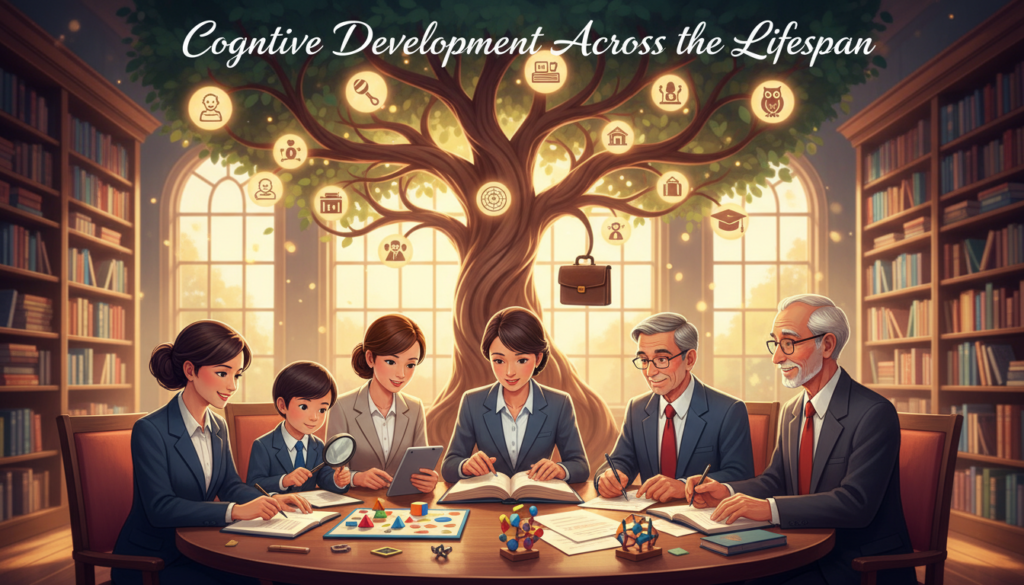
Cognitive development is a field that looks at how we learn, solve problems, and grow mentally. It’s shaped by our genes, environment, and culture. This process starts at birth and continues until we’re old.
Language Acquisition
Learning language is key to cognitive development, starting when we’re babies. Kids go from making sounds to speaking full sentences quickly. Both our genes and our surroundings play a part in this.
Key milestones include recognizing sounds, understanding simple words, and making complex sentences. The help of caregivers and the language around us greatly affects how we learn to speak.
Problem-Solving Skills
Problem-solving is another important part of growing mentally. As we get older, we learn to think more deeply and solve problems better. Our genes and what we experience around us shape this skill.
Children get better at tackling tough tasks, like puzzles or dealing with friends. Adaptive problem-solving strategies help them learn from their experiences and adapt to new situations.
Memory and Learning
Memory and learning are vital to mental growth, changing a lot as we age. Babies start with simple memory skills, which grow into more complex abilities as they get older.
Working memory, or the ability to hold and use information, is key for learning and solving problems. As we age, our memory and learning abilities change. This is influenced by our health, lifestyle, and how mentally active we stay.
- Encoding and retrieval processes improve with age.
- Strategies for memory enhancement, such as mnemonics, can be developed.
- Lifelong learning opportunities support cognitive health.
Emotional and Social Development
Understanding emotional and social development is key to knowing how we form bonds and handle feelings. These aspects of growth help us connect with others and keep our emotions in check.
Attachment Theory
Attachment theory, by John Bowlby and Mary Ainsworth, shows how early bonds shape our emotional and social growth. The quality of attachment between a child and their caregivers greatly affects their future relationships.
A secure attachment leads to better emotional control and social skills. On the other hand, insecure attachments can hinder emotional and social growth. Bowlby said, “The child’s tie to the mother is a product of a number of activities characteristic of the human species, and not the result of a single instinctual response.”
“The child’s tie to the mother is a product of a number of activities characteristic of the human species, and not the result of a single instinctual response.” – John Bowlby
| Attachment Style | Characteristics | Outcomes |
|---|---|---|
| Secure | Responsive, sensitive caregiving | Better emotional regulation, social competence |
| Insecure-Avoidant | Neglectful, unresponsive caregiving | Difficulty with emotional intimacy, trust issues |
| Insecure-Anxious | Inconsistent, unpredictable caregiving | Anxiety, clinginess, emotional dysregulation |
Socialization and Identity Formation
Socialization teaches us the norms, values, and behaviors of our group. It’s vital for forming our identity. Family, culture, and social interactions shape who we are.
Many agents, like family and teachers, help shape our identity. They can either support or challenge our beliefs, affecting our growth.
Emotional Regulation
Emotional regulation is about managing our feelings in different situations. It’s key for emotional health and social interactions. We learn these skills through experience and guidance.
Mastering emotional regulation is vital for emotional strength and healthy relationships. It means knowing our emotional triggers and learning to manage them.
Factors Influencing Development
Human development is complex, influenced by genetics, environment, culture, and family dynamics. Knowing these factors helps us understand how people grow and change over their lives.
Genetics vs. Environment
The debate between nature (genetics) and nurture (environment) is long-standing in developmental psychology. Studies show both genetics and environment are key in shaping development. For example, genes can affect traits like intelligence and mood, while environment, like family and socio-economic status, can either help or hinder these traits.
The relationship between genetics and environment is complex. Epigenetics shows how environment can change gene expression without changing DNA. This shows the importance of both nature and nurture in developmental psychology.
Cultural and Societal Influences
Cultural and societal influences are also key in shaping development. Different cultures have different norms, values, and practices that affect development. For example, some cultures value individualism, while others value collectivism. These differences can impact socialization, identity, and emotional regulation.
- Cultural norms and values impact parenting styles and family dynamics.
- Societal expectations can influence educational outcomes and career choices.
- Cultural practices can affect how individuals perceive and experience developmental milestones.
Family Dynamics
Family dynamics are critical in human development. The family environment is the first and most important context for socialization, emotional, and cognitive growth. Factors like parenting style, sibling relationships, and family structure can all affect development.
For example, authoritative parenting, which is warm, responsive, and disciplined, is linked to positive development. On the other hand, adverse family conditions, like neglect or conflict, can hinder healthy development.
Developmental Milestones
Developmental milestones are important signs of progress in children’s growth. They show how kids are doing in physical, cognitive, and social/emotional areas. These milestones help us understand and support children’s growth.
Physical Milestones
Physical milestones show a child’s growth in physical skills. Some key milestones include:
- Sitting up without support
- Walking independently
- Reaching puberty
These milestones show a child’s brain and muscle development. For example, sitting up alone usually happens around 6-7 months. Walking on their own usually starts around 12-14 months.
Cognitive Milestones
Cognitive milestones show a child’s growing thinking and problem-solving skills. Some important milestones include:
- Recognizing and responding to familiar objects and people
- Demonstrating an understanding of cause-and-effect relationships
- Developing language skills, including babbling and eventually forming sentences
These milestones are key to a child’s ability to understand and interact with their world.
Social and Emotional Milestones
Social and emotional milestones are vital for forming relationships and managing feelings. Key milestones include:
- Forming attachments to caregivers
- Developing social skills, such as sharing and cooperation
- Regulating emotions, such as managing anger or frustration
These milestones are essential for a child’s social and emotional health. They help kids form healthy relationships and manage their feelings.
Challenges in Developmental Psychology
Developmental psychology faces many challenges. These include developmental disorders, trauma, and mental health issues. These problems can greatly affect how a person grows and develops.
Developmental Disorders
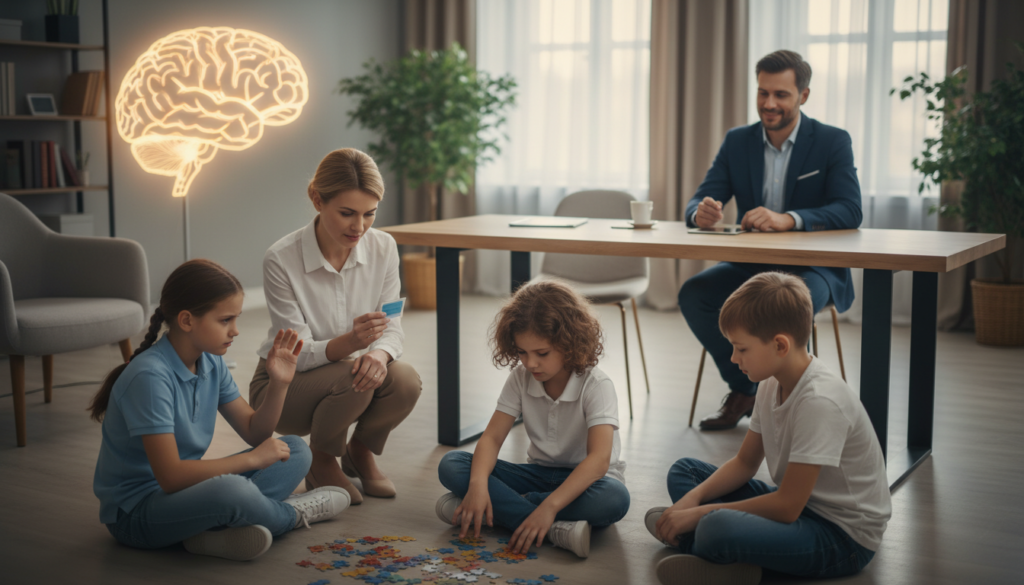
Disorders like autism spectrum disorder (ASD) and attention deficit hyperactivity disorder (ADHD) are big hurdles. They can make it hard for people to interact, learn, and make friends. Finding out what causes these disorders is key to helping people.
Early treatment for ASD can really help kids. Knowing what causes ADHD can lead to better treatments.
Impact of Trauma on Development
Trauma can deeply affect a person’s growth. It can mess with their emotions, social skills, and thinking. Childhood trauma can have lasting effects, shaping a person’s life path.
Research shows that trauma can change a child’s brain. This can make it hard for them to control their feelings and handle stress. It’s important to understand how trauma affects development to help those affected.
Mental Health Issues
Mental health problems like anxiety and depression are big concerns. They can make it hard for people to live their lives, keep friends, and reach their goals.
Early help and support are vital for mental health issues. We need to make mental health services available. We also need to raise awareness and reduce the stigma around mental illness.
By tackling these challenges, developmental psychology can make a big difference. It can help people live better lives and grow in a healthy way.
Research Methods in Developmental Psychology
To understand human development, researchers use many study designs. Each has its own strengths and weaknesses. Developmental psychology relies on various methods to study how people grow and change over their lives.
Longitudinal Studies
Longitudinal studies follow the same subjects over years. This method shows how people change and stay the same, giving insights into their development.
Advantages: These studies give a detailed look at how traits or behaviors evolve. They help predict future changes.
Limitations: They are long, expensive, and can lose participants, which might skew results.
Cross-Sectional Studies
Cross-sectional studies look at different ages at one time. By comparing these, researchers can see how development changes.
Advantages: These studies are faster and cheaper. They offer a quick look at development across ages.
Limitations: They might be affected by cohort effects, where age group differences are due to experiences, not development.
Experimental Designs
Experimental designs change variables to see their effect on development. This method is key for proving cause and effect.
Advantages: They help show how factors influence development.
Limitations: Ethical issues often limit these designs, as they might involve harmful changes.
| Research Method | Description | Advantages | Limitations |
|---|---|---|---|
| Longitudinal Studies | Observing the same subjects over time | Detailed view of developmental changes | Time-consuming, costly, participant dropout |
| Cross-Sectional Studies | Examining different age groups at one point | Quick, less expensive, snapshot of development | Cohort effects, may not capture individual changes |
| Experimental Designs | Manipulating variables to observe effects | Causal inferences about developmental factors | Ethical limitations, possible harm |
Application of Developmental Psychology
Understanding developmental psychology is key for education, family support, and therapy. It helps us grasp human growth and development at all ages. This knowledge lets professionals create and use effective solutions.
Education and School Psychology
Developmental psychology is vital in education. It shapes teaching methods and learning strategies. Educational psychologists use this knowledge to improve how children learn and grow.
For example, knowing about cognitive development helps teachers adjust their teaching. They use concrete objects for young children, as Jean Piaget suggested.
“The goal of education is to enable students to understand and interpret the world around them, fostering a love for lifelong learning.”
- Developmentally appropriate practices
- Individualized instruction
- Assessment and intervention strategies
| Educational Approach | Developmental Principle | Outcome |
|---|---|---|
| Personalized Learning | Cognitive Development | Improved Academic Performance |
| Social-Emotional Learning | Emotional Regulation | Enhanced Social Skills |
Parenting and Family Support
Developmental psychology helps parents understand child development. This knowledge lets parents support their children’s growth, promoting healthy development.
For example, knowing about attachment theory helps parents build strong bonds with their children. This is vital for their emotional and social growth.
Therapeutic Practices
Therapy benefits from developmental psychology. Therapists use this knowledge to understand clients’ past and current challenges. They tailor treatments to fit each client’s needs.
For example, therapists work with children using age-appropriate methods. They address issues like anxiety or behavioral problems.
- Assessment of developmental stage
- Design of stage-specific interventions
- Monitoring progress and adjusting interventions
Future Directions in Developmental Psychology
Developmental psychology is on the verge of a revolution. New methods and views are coming to light. These will change how we see human growth at all ages.
Neurodevelopmental research is making huge strides. Thanks to better neuroimaging and genetics, we now know more about how our brains and genes work together. This knowledge helps us understand how our environment affects us.
Advances in Neurodevelopmental Research
Studies are revealing how our brains grow and affect our thoughts and feelings. For example, fMRI scans have shown us how brain development links to our mental and emotional states.
- Neuroimaging has gotten better, allowing for more detailed brain studies.
- Genetic research has found markers linked to developmental issues.
- Combining brain data with psychology theories gives us a deeper look at growth.
Interdisciplinary Approaches
The future of developmental psychology includes interdisciplinary approaches. It combines psychology, biology, sociology, and more. This way, we get a fuller picture of how we grow by looking at all factors together.
For instance, mixing psychology with sociology helps us see how society affects us. Adding biology insights shows us the body’s role in growth.
Global Perspectives on Development
Another key area is global perspectives on development. For too long, Western views dominated. Now, we’re recognizing the need for diverse cultural views.
Studies with different cultures offer a richer view of growth. They show how culture shapes us. This knowledge helps create better, more fitting interventions and policies.
In summary, developmental psychology’s future looks exciting. Advances in brain research, teamwork across disciplines, and global views will deepen our understanding of human growth. As we explore these new paths, we’re bound to make major discoveries.
Conclusion: The Importance of Developmental Psychology
Developmental psychology is key to understanding how we grow and change over our lives. It looks at how genes, environment, and society work together. This field gives us important insights into how we behave.
Key Takeaways
Developmental psychology has shown us many important things. For example, how early life shapes us, the role of social interactions in forming our identity, and how trauma affects us. These discoveries help us create better ways to support people at all stages of life.
Implications and Future Directions
Research in developmental psychology keeps growing our knowledge of human development. As it grows, it will play a bigger role in society. It will help us make better choices in education, healthcare, and policy-making. By studying how development works, we can better support people at every age.