Can cultural differences in the classroom be a barrier to effective learning, or can they be harnessed to enrich the educational experience? In today’s interconnected world, inter-cultural communication is no longer a choice but a necessity.
Thanks to advancements in transportation, global media, and the world wide web, we are now more connected than ever to people worldwide. This interconnectedness means that countries and cultures can no longer operate in isolation, making inter-cultural understanding critical for economic survival and educational success.
In modern classrooms, this translates to an environment where students from diverse backgrounds come together, bringing with them a wealth of cultural perspectives. Navigating these differences effectively is key to creating an inclusive and productive learning environment.
Key Takeaways
- Inter-cultural communication is essential in today’s world.
- Modern classrooms are melting pots of diverse cultural backgrounds.
- Effective inter-cultural understanding can enhance the educational experience.
- Cultural differences, when managed well, can enrich learning environments.
- Navigating cultural differences is key to inclusive education.
Understanding Inter-Cultural Communication in Educational Settings
Today, schools are more diverse than ever. This makes it key to talk across cultural lines. Inter-cultural communication is about sharing info and ideas between people from different cultures.
Defining Inter-Cultural Communication
It’s about knowing and adjusting to various cultural norms and ways of talking. Teachers need to understand this to run their classrooms well.
Key Components and Processes
Verbal and non-verbal signs, cultural knowledge, and handling cultural differences are key. These help make communication work.
| Component | Description |
|---|---|
| Verbal Cues | Language and tone used in communication |
| Non-Verbal Cues | Body language, facial expressions, and gestures |
| Cultural Awareness | Understanding of different cultural norms and values |
Distinction from Cross-Cultural Communication
While cross-cultural communication looks at comparing styles, inter-cultural focuses on talking between people from different cultures.

The Evolution of Cultural Diversity in Indian Classrooms
Indian classrooms are getting more diverse thanks to global changes and population shifts. This brings both chances and hurdles for teachers.
Theoretical Frameworks Relevant to UGC NET Examination
Theories like Hofstede’s Cultural Dimensions Theory help understand inter-cultural communication in schools. These ideas are important for UGC NET test takers.
The Significance of Cultural Competence for Educators
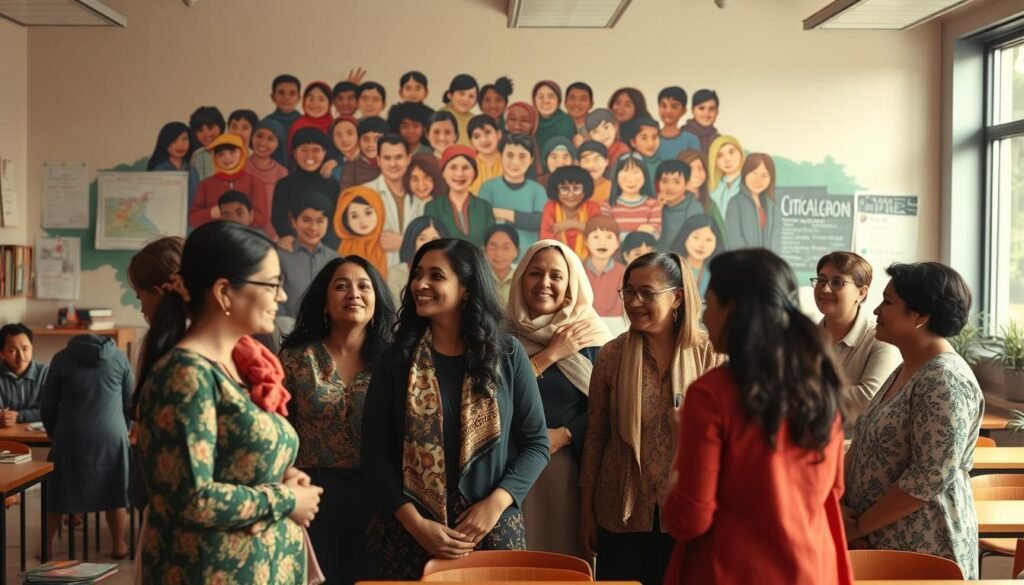
Cultural competence is key for today’s diverse classrooms. It helps educators understand and value their students’ backgrounds. This boosts learning and improves classroom vibes.
Building Cultural Awareness and Sensitivity
Starting with cultural awareness is essential. Teachers need to know their own biases and learn about their students’ cultures. This makes classrooms inclusive and welcoming for everyone.
Teachers can grow by attending workshops on cultural competence. They should also make their lessons reflect the diversity of their students.
Overcoming Ethnocentrism in Teaching Practices
Ethnocentrism makes it hard to connect with different cultures. Teachers must fight their own biases to create inclusive spaces. They should be open to various teaching styles and adapt to their students’ needs.
“Teachers who are culturally responsive are able to create learning environments that are inclusive and supportive of students from diverse backgrounds.”
Impact on Student Learning Outcomes and Classroom Dynamics
Cultural competence boosts student success and classroom harmony. When teachers understand their students, they teach better. This leads to happier classrooms and better grades.
| Aspect | Description | Benefit |
|---|---|---|
| Cultural Awareness | Understanding of diverse cultural backgrounds | Inclusive classroom environment |
| Overcoming Ethnocentrism | Recognition and adaptation of diverse teaching methods | Improved student engagement |
| Student Learning Outcomes | Effective teaching tailored to student needs | Enhanced academic performance |
Barriers to Effective Inter-Cultural Communication in Classrooms
The Indian educational setting faces unique hurdles in inter-cultural communication. It’s vital to grasp these barriers. In today’s classrooms, students from diverse backgrounds come together to learn.
Language and Linguistic Challenges in Indian Educational Context
Language diversity is a major obstacle in Indian classrooms. India has many languages and dialects across regions.
Key linguistic challenges include:
- Variations in language proficiency among students and teachers
- Differences in dialect and accent
- Use of technical or specialized vocabulary that may be unfamiliar to some students
| Linguistic Challenge | Impact on Communication | Potential Solution |
|---|---|---|
| Language Proficiency | Affects understanding and expression | Language support programs |
| Dialect and Accent | Can lead to misinterpretation | Cultural sensitivity training |
| Technical Vocabulary | May confuse students unfamiliar with terms | Glossaries and explanations |
Cultural Stereotypes and Implicit Biases
Cultural stereotypes and biases hinder effective communication. These biases affect how teachers interact with students from different backgrounds.
Examples of cultural stereotypes include:
- Assuming students from certain regions are more or less capable academically
- Expecting students to conform to certain cultural norms or behaviors
Socioeconomic Factors Affecting Communication Patterns
Socioeconomic factors shape classroom communication. Students from different backgrounds face varying access to resources and technology.
Socioeconomic factors influencing communication include:
- Access to technology and digital literacy
- Parental education level and involvement
- Economic constraints affecting educational resources
UGC NET PAPER1: Inter-Cultural Communication Components and Requirements
The UGC NET PAPER1 exam focuses a lot on inter-cultural communication. It’s key to know its parts well. This knowledge is essential for doing well on the exam.
Syllabus Breakdown for Communication Topics
The UGC NET PAPER1 syllabus has a big section on inter-cultural communication. It covers many topics about cultural diversity and how we communicate. Knowing the syllabus well helps you focus on important areas.
Unit-Wise Analysis of Cultural Communication Content
The syllabus is divided into units that cover different parts of inter-cultural communication. These units are:
- Cultural diversity and its impact on communication
- Theoretical frameworks relevant to inter-cultural communication
- Cultural competence and its significance in educational settings
Weightage and Importance in the Examination
It’s important to know how much inter-cultural communication counts in the UGC NET PAPER1 exam. This topic is very important. You need to show you really understand it.
| Topic | Weightage | Importance |
|---|---|---|
| Cultural Diversity | 20% | High |
| Theoretical Frameworks | 15% | Medium |
| Cultural Competence | 25% | High |
Previous Year Question Analysis on Cultural Communication
Looking at old questions on cultural communication helps you see patterns. This helps you prepare better.
Common topics in old questions include:
- Cultural stereotypes and biases
- Language and linguistic challenges
- Socioeconomic factors affecting communication
Expected Question Patterns and Preparation Strategies
Expect different types of questions, like multiple-choice, short-answer, and essays. To get ready, focus on understanding inter-cultural communication well. Practice with sample questions too.
Good preparation strategies are:
- Study the syllabus well and know what’s important
- Practice with old questions and sample papers
- Learn theoretical frameworks and cultural competence well
Developing Cultural Intelligence in the Classroom
To create a culturally responsive classroom, teachers need to grow their cultural intelligence. This means understanding, valuing, and working well with people from various cultural backgrounds. It’s key in today’s classrooms, where students come from many different cultures.
The Four Components of Cultural Intelligence
Cultural intelligence has four main parts: cognitive, physical, emotional, and motivational. The cognitive component is knowing about different cultures and their ways. The physical component is about changing how you act without words to fit different cultures. The emotional component is about feeling empathy and controlling your feelings when dealing with others from different cultures. Lastly, the motivational component is wanting to learn about and connect with different cultures.
Assessment Tools for Measuring Cultural Intelligence
There are many ways to check how well teachers understand different cultures. Surveys, self-assessment rubrics, and feedback from peers and students are some tools. These help find what needs work and show how teachers are getting better over time.
Practical Strategies for Enhancing Cultural Intelligence
To get better at cultural intelligence, teachers can try cultural immersion experiences. They can also go to workshops and make their teaching more diverse. Getting feedback from students and colleagues from different backgrounds is also helpful.
By knowing about cultural intelligence, using tools to check it, and using practical ways to improve, teachers can do a better job in diverse classrooms. This leads to better results for students and a more welcoming classroom for everyone.
Pedagogical Approaches for Culturally Diverse Classrooms
In today’s world, teaching in a way that respects all cultures is key. Classrooms are getting more diverse, so teachers need to change how they teach. This helps students from different backgrounds learn better together.
Culturally Responsive Teaching Methods
Culturally responsive teaching means using students’ cultural backgrounds in lessons. It makes learning more fun and welcoming for everyone.
Adapting Content to Cultural Contexts
Teachers can make lessons more interesting by using examples that show the diversity of their students. This makes learning feel more real and exciting.
Creating Inclusive Learning Environments
Creating a welcoming classroom is more than just the lessons. It’s about building a culture that values everyone’s differences. This can be done through open discussions and inclusive practices.
Inclusive Curriculum Design Principles
An inclusive curriculum shows the diversity of students by including many viewpoints and histories. It helps students feel connected and breaks down cultural barriers.
Differentiated Instruction Techniques for Cultural Diversity
Differentiated instruction means teaching in ways that fit each student’s needs. This includes flexible grouping, varied assessments, and personalized learning plans. These methods help meet the diverse needs of students in the classroom.
By using these pedagogical approaches, teachers can make learning better for everyone. It doesn’t matter where students come from, they can all learn and grow together.
Technology as a Tool for Inter-Cultural Communication
In today’s world, technology is key for talking across cultures. The NTA UGC NET exam shows how tech helps students from different places share and work together.
Digital Platforms for Cultural Exchange in Education
Digital tools have changed how students talk and learn from each other. Online forums, social media, and educational sites let students share and learn about different cultures.
Virtual Collaboration Across Cultural Boundaries
Virtual tools help students team up on projects. This builds teamwork and understanding between cultures. It also teaches important skills like communication and problem-solving.
| Collaboration Tool | Features | Benefits |
|---|---|---|
| Video Conferencing | Real-time communication, screen sharing | Enhanced interaction, improved understanding |
| Project Management Tools | Task assignment, progress tracking | Increased productivity, better organization |
Addressing Digital Divide in Inter-Cultural Communication
Technology brings many benefits, but we must tackle the digital gap. Making sure everyone has access to digital tools and internet is key for fair communication.
By using technology wisely, teachers can make learning more inclusive and culturally aware. This helps students communicate better across cultures.
Case Studies: Successful Inter-Cultural Communication Practices
Looking at real-life examples of successful inter-cultural communication can help a lot. It shows us how to overcome challenges in teaching diverse groups. It also gives us practical tips for better communication.
Indian Classroom Case Studies from Diverse Regions
India’s many cultures make teaching a big challenge. But, studies from different places show us how to do it well. For example, a school in Rajasthan found that using local traditions in class made learning more fun and welcoming for everyone.
In Delhi, a school used two languages to teach. This helped students from different backgrounds talk better together. It made communication in class much easier.
International Best Practices Applicable to Indian Context
Looking at what works in other countries can also help Indian teachers. For instance, a school in the US showed that teaching in a way that respects all cultures really helps students. Australia also found that adding indigenous knowledge to lessons is very beneficial.
These examples from abroad give us ideas for India. Like, teaching about different cultures through fun activities and using materials that show the diversity of students’ backgrounds.
Lessons Learned and Adaptable Strategies for UGC NET Candidates
UGC NET candidates can learn a lot from these examples. They teach us the value of being sensitive to culture, the need for inclusive lessons, and the power of teaching in multiple languages.
| Case Study | Key Strategies | Outcomes |
|---|---|---|
| Rajasthan School | Incorporating local cultural practices | Enhanced student engagement |
| Delhi Metropolitan School | Bilingual teaching methods | Improved communication among students |
| US Multicultural School | Culturally responsive teaching | Enhanced student outcomes |
By studying these examples, teachers and UGC NET candidates can gain a deeper understanding. They can use this knowledge to improve their own teaching methods.
Assessment Strategies for Inter-Cultural Competence
Assessing inter-cultural competence needs a mix of methods. This detailed check is key to see how well students communicate across cultures. It’s also vital for UGC NET preparation tips, as it shows how well theory works in real life.
Formative Assessment Techniques for Cultural Awareness
Formative assessments keep track of students’ growth in understanding different cultures. They include:
- Reflective journals to record experiences and insights gained from inter-cultural interactions.
- Peer feedback sessions to encourage dialogue and understanding among students from diverse backgrounds.
- Self-assessment rubrics that help students evaluate their own inter-cultural competence.
Summative Evaluation Methods for Inter-Cultural Skills
Summative assessments check how well students have learned about different cultures at the end of a course. Methods include:
| Method | Description |
|---|---|
| Group Projects | Assessing students’ ability to work collaboratively in culturally diverse teams. |
| Presentations | Evaluating students’ ability to communicate effectively across cultural boundaries. |
| Research Papers | Analyzing students’ understanding of inter-cultural issues through written assignments. |
Authentic Assessment Approaches in Diverse Cultural Contexts
Authentic assessments are like real-life situations. They test students’ skills in practical ways. Examples include:
“Service-learning projects that engage students with diverse community groups, fostering inter-cultural understanding and competence.”
These methods not only check inter-cultural skills but also make learning relevant and meaningful.
By using these assessment strategies, teachers can fully check students’ inter-cultural skills. This gives insights for better learning and ugc net preparation tips.
Mastering UGC NET PAPER1 Questions on Inter-Cultural Communication
Inter-cultural communication is key in UGC NET PAPER1. It’s important to understand its details. Knowing the main ideas, terms, and models is essential.
Key Concepts and Terminologies to Master
It’s vital to know the basic concepts and terms well. This helps in answering questions right. Here are some important ones:
Essential Vocabulary and Definitions
Terms like cultural intelligence, inter-cultural competence, and cultural diversity are used a lot. Knowing these is important for UGC NET PAPER1.
Theoretical Models Most Frequently Tested
Theories like Hofstede’s Cultural Dimensions Theory and Hall’s Cultural Context Theory are often tested. It’s important to understand and apply these theories.
| Theoretical Model | Description | Key Components |
|---|---|---|
| Hofstede’s Cultural Dimensions Theory | A framework for understanding cultural differences | Power Distance Index, Individualism vs. Collectivism, Masculinity vs. Femininity, Uncertainty Avoidance Index |
| Hall’s Cultural Context Theory | Describes how cultures communicate differently | High Context, Low Context |
Practice Questions with Detailed Answer Explanations
Practicing with sample questions is key to mastering UGC NET PAPER1. Here’s an example:
- Question: What is the primary focus of Hofstede’s Cultural Dimensions Theory?
- Answer: It focuses on understanding cultural differences through dimensions like Power Distance Index and Individualism vs. Collectivism.
Common Mistakes to Avoid in Exam Responses
Many candidates make mistakes by not understanding the question or giving vague answers. To avoid this, do the following:
- Read the question carefully.
- Give specific examples or definitions.
- Use relevant theoretical models to support your answer.
By mastering key concepts, practicing with sample questions, and avoiding common mistakes, candidates can improve a lot in UGC NET PAPER1.
Research Perspectives on Inter-Cultural Communication in Education
Research on inter-cultural communication is key to understanding today’s classrooms. With more diversity in schools, teaching that works across cultures is more important than ever.
Current Research Trends Relevant to UGC NET Examination
Recent studies show how inter-cultural communication boosts student engagement and learning. This is vital for UGC NET test-takers, as it shows the role of cultural understanding in teaching.
Key areas of research include:
- Culturally responsive teaching practices
- Impact of cultural diversity on student outcomes
- Strategies for effective inter-cultural communication in classrooms
Influential Scholars and Their Contributions to the Field
Geneva Gay and Gloria Ladson-Billings have greatly influenced education. Their work on culturally responsive teaching guides both teaching and research.
Their research shows the importance of teachers knowing their own biases. It also stresses the need for teaching that welcomes and meets the needs of all students.
Applying Research Findings to Classroom Practice and Exam Preparation
Teachers can improve their teaching by knowing the latest research and scholar contributions. This means using culturally responsive teaching methods and keeping up with new studies on inter-cultural communication.
Using research in teaching can lead to better student results and a more welcoming classroom. These are key for success in teaching and passing exams.
Resources for Further Development of Inter-Cultural Communication Skills
Improving inter-cultural communication skills is a lifelong journey for educators. They can use many tools and materials to better manage diverse classrooms. This helps them improve their teaching methods.
Recommended Books and Academic Journals for UGC NET Preparation
There are many books and journals that help educators get ready for the UGC NET exam. Key texts include “Intercultural Communication: A Critical Introduction” by Ingrid Piller and “The Cultural Intelligence Difference” by David Livermore. Journals like the Journal of Intercultural Communication Research and International Journal of Intercultural Relations share the latest research and trends.
Online Courses and Training Programs for Educators
Online courses are flexible and easy to access for educators. Sites like Coursera, edX, and FutureLearn offer courses on inter-cultural communication. Notable programs include “Intercultural Communication” by the University of Pennsylvania on Coursera and “Cultural Competence in a Globalized World” on edX.
Professional Networks and Communities of Practice in India
Being part of professional networks and communities can greatly improve an educator’s skills. Organizations such as the Indian Association of Teachers of English (IATE) and the All India Association of Educators (AIAE) offer chances to network and grow professionally.
By using these resources, educators can keep improving their inter-cultural communication skills. This leads to better teaching and results for their students.
Conclusion: Embracing Cultural Diversity for Educational Excellence and Exam Success
Embracing cultural diversity is key for educational success and UGC NET exam victory. Educators and students must grasp the importance of cultural understanding in the classroom. This understanding is vital for effective communication across different cultures.
By learning the theories and strategies discussed here, people can improve their cross-cultural communication skills. This leads to a more welcoming and supportive learning space. Such an environment boosts student success and educational quality.
To ace UGC NET Paper 1, knowing about inter-cultural communication and diversity is a must. Mastering these subjects shows one’s ability to teach and communicate well in various cultural settings. This skill is essential for exam success.
As we progress, promoting cultural diversity and awareness in schools is vital. This ensures educators can serve students from all backgrounds well. A diverse and inclusive education system benefits everyone involved.
FAQ
What is the significance of inter-cultural communication in modern classrooms?
In today’s world, inter-cultural communication is key. It helps people from different cultures work together well. This makes learning environments more welcoming and fair for everyone.
How does cultural competence impact student learning outcomes?
Cultural competence is vital for teachers. It helps them meet the needs of students from various backgrounds. This leads to better learning, more student involvement, and a better classroom atmosphere.
What are the key components of cultural intelligence?
Cultural intelligence has four main parts: cognitive, physical, emotional, and motivational. These parts help people understand and work well with others from different cultures.
How can educators overcome ethnocentrism in their teaching practices?
Teachers can fight ethnocentrism by becoming more aware of different cultures. They should also be open to new ideas and teach in a way that values all cultures.
What are the common barriers to effective inter-cultural communication in classrooms?
Barriers include language issues, stereotypes, biases, and economic differences. To overcome these, teachers need training, the right curriculum, and community support.
How can technology enhance inter-cultural communication in education?
Technology helps by creating digital spaces for cultural sharing. It also supports virtual teamwork and helps teachers improve their cultural skills.
What are the key concepts and terminologies related to inter-cultural communication that I should master for UGC NET PAPER1?
Important terms include cultural competence, intelligence, communication, and responsive teaching. Knowing these is key to doing well on the UGC NET exam.
How can I effectively prepare for UGC NET PAPER1 questions on inter-cultural communication?
To prepare well, understand the syllabus and practice with old questions. Also, learn deeply about key concepts and terms in inter-cultural communication.
What resources are available for further development of inter-cultural communication skills?
There are books, journals, online courses, and professional networks. Using these can help you and others improve your skills and stay updated.
How can I apply research findings on inter-cultural communication to my classroom practice and UGC NET preparation?
Stay current with research and learn from scholars. This way, you can use their findings to improve your teaching and UGC NET prep, making your understanding of inter-cultural communication better.