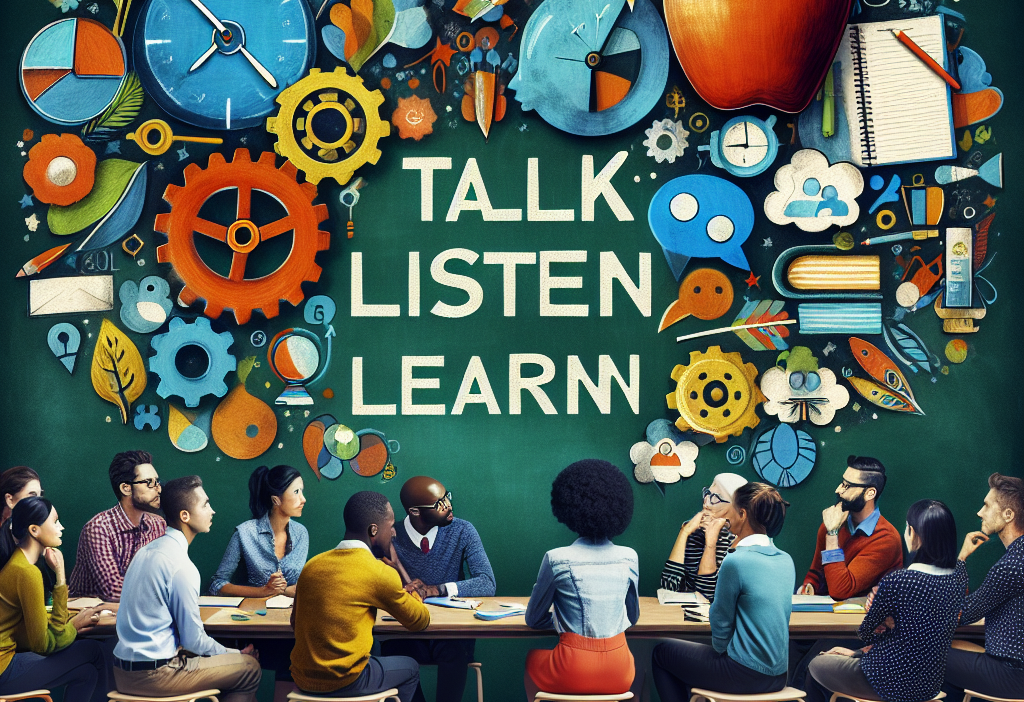
Talk, Listen, Learn: Fostering Effective Dialogue in Educational Settings
Introduction
In today’s rapidly evolving educational landscape, the emphasis on effective communication within classrooms is more vital than ever. Whether you’re a teacher, student, parent, or administrator, the ability to Talk, Listen, and Learn lays the foundation for a thriving educational experience. Establishing an environment where dialogue flourishes can transform the dynamics of learning and lead to substantial growth and understanding.
In this article, we will explore the intricate layers of fostering effective dialogue in educational settings. From the principles of active listening to actionable strategies and techniques that leaders can implement, we aim to provide comprehensive insights into how meaningful communication can enhance educational outcomes. 💬
The Importance of Dialogue in Education
The Role of Communication
At its core, education is about sharing knowledge and ideas. Dialogue serves as a bridge connecting students, educators, and the broader community. According to educational theorist Paulo Freire, “Dialogue is the encounter between men, mediated by the world—a world that they transform by transforming their dialogue.”
By embracing this perspective, we create learning environments that prioritize collaboration and critical thinking, ultimately leading to deeper comprehension and empathy among learners.
Key Benefits of Fostering Dialogue
- Enhanced Critical Thinking: Engaging in dialogue encourages students to articulate their thoughts, challenge assumptions, and explore varying viewpoints.
- Enhanced Critical Thinking: Engaging in dialogue encourages students to articulate their thoughts, challenge assumptions, and explore varying viewpoints.
- Improved Relationships: When individuals feel heard, trust and rapport build, creating strong interpersonal connections.
- Improved Relationships: When individuals feel heard, trust and rapport build, creating strong interpersonal connections.
- Increased Engagement: A classroom that values open dialogue fosters greater motivation and enthusiasm among students, making them active participants in their learning journey.
- Increased Engagement: A classroom that values open dialogue fosters greater motivation and enthusiasm among students, making them active participants in their learning journey.
- Culturally Responsive Education: Spaces that encourage diverse voices and perspectives promote inclusivity and respect for all backgrounds.
The ‘Talk, Listen, Learn’ Framework
Embracing the Talk, Listen, Learn framework offers a structured approach to fostering dialogue. This framework revolves around three primary elements:
- Talking: Encouraging open expression among students and educators.
- Listening: Creating an atmosphere where active listening is practiced and valued.
- Learning: Identifying key takeaways from conversations that can enhance educational practices.
Strategies for Fostering Effective Dialogue
1. Cultivating a Safe Environment
To foster effective dialogue, creating a safe and respectful environment is paramount. Here’s how to achieve this:
- Set Ground Rules: Establish clear guidelines for communication, emphasizing respect, confidentiality, and open-mindedness.
- Model Vulnerability: When educators share their experiences and challenges, it fosters trust and encourages students to open up, too.
2. Implementing Active Listening Techniques
Active listening is crucial for effective dialogue. Here are techniques to enhance listening skills among students and teachers:
- Focus Fully: Give full attention to the speaker. Avoid distractions and maintain eye contact.
- Reflective Listening: Paraphrase what the speaker has said to ensure understanding and show that their words are valued.
- Ask Open-Ended Questions: Encourage deeper exploration by prompting further discussion beyond yes or no answers.
3. Utilizing Facilitation Skills
Effective dialogue often requires skilled facilitation. Here are methods to enhance facilitation in educational settings:
- Encourage Participation: Actively invite quieter members to share their thoughts.
- Manage Dominance: If one participant dominates the conversation, gently redirect the dialogue to include others.
- Summarize Regularly: Periodically summarize key points to maintain clarity and focus.
4. Introducing Dialogue-Rich Activities
Incorporate activities that promote dialogue and discussion:
- Socratic Seminars: These encourage student-led discussions, enhancing critical thinking through open-ended questions and peer interaction.
- Socratic Seminars: These encourage student-led discussions, enhancing critical thinking through open-ended questions and peer interaction.
- Think-Pair-Share: Have students first reflect on a topic individually, then discuss their thoughts with a partner before sharing with the larger group.
Visual Enhancement: Dialogue Activity Chart
| Activity | Description | Objective |
|---|---|---|
| Socratic Seminars | Student-led discussions based on open-ended questions | Enhance critical thinking |
| Think-Pair-Share | Individual reflection followed by paired discussion | Foster collaboration |
| Fishbowl Discussions | A small group discusses while others observe, then switch roles | Build listening skills |
The Role of Technology in Fostering Dialogue
1. Online Platforms for Communication
With the rise of digital learning, leveraging technology can effectively enhance dialogue:
- Discussion Boards: Platforms such as Google Classroom or Edmodo allow students to engage in extended discussions beyond the classroom.
- Discussion Boards: Platforms such as Google Classroom or Edmodo allow students to engage in extended discussions beyond the classroom.
- Video Conferencing: Use tools like Zoom or Microsoft Teams to include remote participants in meaningful dialogue.
2. Social Media as a Learning Tool
Classroom social media groups can foster dialogue outside traditional settings. By encouraging students to annotate articles or share thoughts on videos, educators facilitate ongoing discussions that bridge classroom learning with real-world applications.
3. Interactive Learning Apps
Utilize interactive apps such as Flipgrid or Padlet that encourage students to record and share their thoughts on various topics, offering opportunities for peer feedback and engagement.
Overcoming Barriers to Effective Dialogue
1. Addressing Fear of Speaking
Many students may feel intimidated or anxious about speaking up. Here’s how to alleviate this:
- Normalize Mistakes: Construct a culture where mistakes are viewed as part of the learning process.
- Provide Positive Feedback: Reinforce contributions with constructive and supportive feedback.
2. Combatting Time Constraints
Busy curricula can inhibit discussions. To address this:
- Integrate Dialogue into Existing Lessons: Balance time by weaving in dialogue during lessons rather than treating it as a separate activity.
- Set Clear Objectives: Clearly define what you aim to achieve to maintain focused discussions within time limits.
3. Navigating Diverse Perspectives
Diversity can bring both richness and challenges to dialogue:
- Encourage Inclusive Practices: Create activities that allow diverse voices to be represented and respected.
- Train on Cultural Competency: Incorporate training for educators on understanding and embracing cultural differences in dialogues.
Conclusion
In summary, fostering effective dialogue through the Talk, Listen, Learn framework can transform educational settings into vibrant communities of growth and interaction. By cultivating a safe environment, implementing active listening techniques, utilizing facilitation skills, and embracing technology, educators and students can unlock the potential of their collective voices.
As you embark on this journey towards enhanced dialogue, remember that the essence of education lies not just in knowledge sharing, but in understanding one another.
“Education is the most powerful weapon which you can use to change the world.” — Nelson Mandela
Let’s leverage the power of dialogue to cultivate a generation that listens, learns, and ultimately leads!
FAQs Section
1. Why is active listening important in education?
Active listening helps students feel respected and valued, fostering a conducive environment for learning. It aids in comprehension and builds better relationships.
2. How can teachers encourage shy students to participate?
Teachers can create a comfortable environment, utilize small group discussions, and provide positive reinforcement to encourage participation.
3. What are some examples of dialogue-rich activities for students?
Examples include Socratic seminars, debates, and think-pair-share activities that promote collaborative learning and discussion.
4. How can technology enhance dialogue?
Technology can provide platforms for discussion, enable remote participation, and offer interactive tools for student engagement.
5. What strategies help combat the intimidation of speaking in class?
Normalizing mistakes, providing positive feedback, and setting small discussion groups can all help ease the fear of speaking.
By implementing these strategies and principles, educational stakeholders can significantly enhance dialogue in their environments. Let us work together to foster inclusive communication that drives meaningful learning!