

Introduction
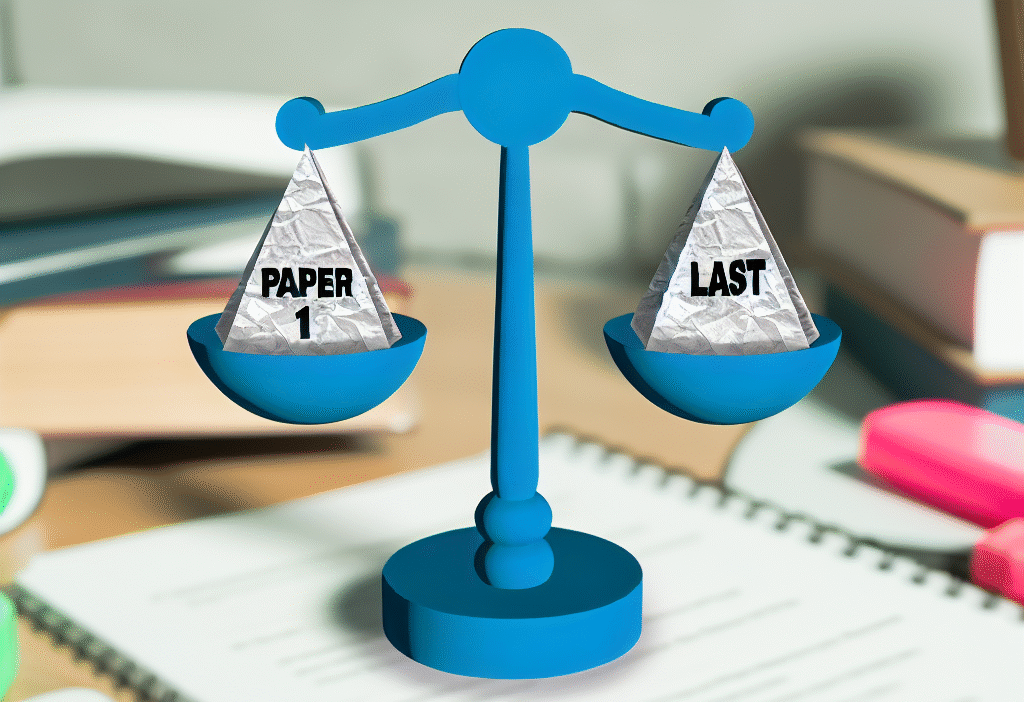
Have you ever found yourself staring blankly at an exam paper, contemplating whether to tackle Paper 1 first or save it for last? You’re not alone! This question haunts many students and can greatly influence your test performance. In this comprehensive guide, we will dive deep into the nuances of how to approach your examination strategy.
By the end of this article, you’ll grasp the pros and cons of each approach, explore effective strategies to manage your time wisely, and ultimately empower yourself to ace your exams with confidence. So, let’s explore this critical aspect of exam success: Tackling the Test: Should You Conquer Paper 1 First or Save it for Last? 🌟
The Importance of Exam Strategy
Exam strategy is an often overlooked but essential element for achieving academic success. With the pressure mounting during examination periods, students often feel overwhelmed by the sheer volume of material to be covered. Having a clear plan can alleviate some of that anxiety.
Why Exam Order Matters
- Cognitive Load: When you start with a challenging section, it can consume your mental energy, leaving you fatigued for subsequent sections.
- Time Management: Knowing when to allocate your time based on your strengths can make a big difference.
- Confidence Boost: Starting with a paper you find easier can build momentum and boost your confidence heading into the more challenging sections.
Paper 1: The Case for Conquering First
Advantages of Tackling Paper 1 First
Fresh Mind: Starting with Paper 1 when your focus is at its peak sets a positive tone for the entire exam.
Maximize Confidence: If Paper 1 is your strong suit, it can boost your self-assurance going into other sections.
- Free Up Time: Completing an easier section first may leave you more time for the heavier lifting in subsequent papers.
Real-Life Example
Imagine you’re taking a math exam. If the first paper consists of straightforward calculations and the second contains complex problem-solving. Starting with Paper 1 allows you to secure those easy points swiftly, taking some pressure off the more challenging Paper 2.
Paper 1: Potential Pitfalls
While starting with Paper 1 might sound logical, it has its drawbacks:
Initial Anxiety: For some, the worry of total completion can cloud their judgment.
Fatigue: If Paper 1 is more challenging than anticipated, it may drain your energy for the following sections.
- Time Mismanagement: Getting trapped in questions can lead to poor time allocation throughout the rest of the exam.
Strategies for Starting with Paper 1
If you decide to tackle Paper 1 first, consider these strategies:
Skim the Questions: Quickly read through all questions to identify which ones you feel most confident answering.
Allocate Time Wisely: Divide your allowed time proportionally, leaving buffer time for review.
- Stay Calm: Employ calming techniques (deep breathing, positive affirmations) to ease initial nerves.
Listing Benefits of Saving Paper 1 for Last
Advantages of Tackling Paper 1 Last
Assessment of Overall Readiness: Completing more challenging sections first can give you a better sense of how prepared you are for the more straightforward Paper 1.
Reduced Pressure: Completing the harder sections means that you can approach Paper 1 without the looming stress of other papers.
- Adjustment to the Exam Environment: Sometimes, the first set of questions can throw you off. Diving into the challenging parts first can be a practical strategy for acclimatizing.
Real-Life Example
In a language exam, the first paper may require extensive writing, whereas the last one consists of vocabulary and grammar exercises. Handling the writing first might give you time to polish your strategies for the more straightforward second paper.
Potential Downsides of Saving Paper 1 for Last
Like any approach, there are risks involved in saving Paper 1 for later:
Mental Fatigue: After struggling through several intense papers, you may not approach Paper 1 with the necessary vigor.
Time Constraints: If time runs out, you may rush through Paper 1 and lose valuable marks.
- Misplaced Focus: Difficulty and fatigue in earlier papers might affect your performance despite Paper 1 being easier.
Strategies for Saving Paper 1 for Last
If you opt to postpone Paper 1, implement these strategies for success:
Initial Overview: Quickly scan all questions to get a feel for the entire test.
Strategic Time Management: Allow enough time to spend on Paper 1 while ensuring the harder section boundaries don’t lead to a last-minute panic.
- Visualizing Success: Picture yourself finishing strong with Paper 1 to reinforce your confidence.
Analysing the Best Approach
Factors to Consider
Your Strengths: Are you quicker at essays or problem-solving? Understand what fits your skills best.
Exam Format: Does Paper 1 carry more weight or complexity? Understanding the format can shape your strategy.
Time Limitations: Calculating the time required for each section is crucial.
- Anxiety Levels: Recognizing what triggers your anxiety can lead to a more personal strategy.
Conclusion
The decision of whether to tackle Paper 1 first or save it for last is deeply personal and should be made based on your individual strengths, exam content, and time management skills. By understanding the pros and cons of each approach, you can stay ahead of the game.
Remember: the key is to develop a strategy that resonates with you. Whether you start with the easier questions to build confidence or dive into challenging sections first to get them out of the way, ensure the strategy works for your unique circumstances.
With the right plan, Tackling the Test: Should You Conquer Paper 1 First or Save it for Last? can be transformed from a daunting question into a confident declaration, preparing you to not just participate in exams, but to excel!
FAQs
Is it better to tackle Paper 1 first if I’m anxious?
- Starting with the easier paper, Paper 1, might boost your confidence and ease anxiety.
What if I run out of time on Paper 1 later?
- Planning is key. Allocate time for each section based on its difficulty and your confidence levels.
Can my performance on one paper affect the next?
- Absolutely! If you’re fatigued or stressed from a prior harder section, it may impact subsequent papers.
Should I study differently based on this strategy?
- Tailor your study sessions to focus more on your weaknesses if you decide to tackle paper 1 last.
- What happens if I don’t finish Paper 1?
- Don’t panic! Focus on answering as many as you can and manage your time wisely throughout your test.
By leveraging insightful strategies and understanding your own strengths, you’re better equipped to approach any examination with confidence. 😊
Additional Resources
For further tips and strategies, visit MyJRF for a plethora of educational resources aimed at helping you navigate the complexities of academic assessments.