Resonating Around the World: The Global Influence of Indian Classical Music
Introduction
In the vast tapestry of world music, few genres resonate with the same spiritual depth and emotional richness as Indian classical music. 🎵 As centuries of tradition intertwine with modernity, the influence of Indian classical music is not only evident in its native soil but also resonates around the globe. This intricate art form stands as a beacon of cultural heritage, bridging the gap between diverse musical traditions and contemporary sounds.
In this comprehensive exploration, we will delve into the multifaceted impact of Indian classical music—from its historical roots and instrumental intricacies to its global adaptations and influence on various genres. We aim to provide readers with valuable insights into how Indian classical music is not just a relic of the past but a living, breathing entity that continues to inspire musicians and listeners worldwide.
What You Will Learn:
- The historical context and evolution of Indian classical music 🌍
- Major genres and their unique characteristics
- The role of Indian classical music in international collaborations
- Case studies of global artists who have incorporated Indian classical elements
- Future trends and the path of Indian classical music on the world stage
The Historical Journey of Indian Classical Music
Origins and Cultural Significance
Indian classical music traces its origins back over 3,000 years, rooted in the Vedic chants and spiritual practices of ancient India. These primordial sounds laid the groundwork for two distinct traditions: Hindustani (North Indian) and Karnatak (South Indian) music.
The Vedic Influence
In ancient times, music was believed to be a divine art form. The Vedas, India’s oldest sacred texts, describe the importance of sound and its spiritual significance. Through the centuries, this sacred tradition evolved, influenced by various cultural exchanges, invasions, and the melding of different musical styles.
The Evolution of Forms
Over time, Indian classical music has developed multiple forms, each with unique characteristics. Let’s break down the main forms:
Hindustani Music:
- Predominantly found in North India, Hindustani music is characterized by improvisational freedom and the use of raagas (melodic frameworks).
- Popular instruments include the sitar, tabla, and harmonium.
- Karnatak Music:
- Originating in South India, this style is more structured, with a focus on complex kriti (compositions).
- Instruments like the veena and mridangam are staples.
Cultural Festivals and Music
The lasting impact of Indian classical music is also reflected in numerous festivals, such as the Sawai Gandharva Bhimsen Mahotsav and Shankara Narayana Festival. These events gather thousands of enthusiasts, promoting cultural exchange and appreciation.
| Musical Tradition | Key Characteristics | Instruments |
|---|---|---|
| Hindustani | Free improvisation | Sitar, Tabla, Harmonium |
| Karnatak | Structured compositions | Veena, Mridangam |
Global Influence and Adaptations
Collaborations Across Borders
As our world becomes increasingly interconnected, Indian classical music has found its way into various genres, enriching them with its unique soundscapes.
Fusion with Western Music
Artists like Ravi Shankar, Zakir Hussain, and Anoushka Shankar have pioneered the fusion of Indian classical music with Western genres. Collaborations with famous musicians such as George Harrison of The Beatles have showcased the versatility and universal appeal of Indian music.
🔊 Example: Ravi Shankar’s collaboration with the legendary violinist Yehudi Menuhin produced works that not only educated audiences about Indian classical traditions but also introduced a Western perspective to traditional Indian compositions.
Influence on Global Music Genres
Indian classical music has undoubtedly influenced various musical genres worldwide. Here are a few notable mentions:
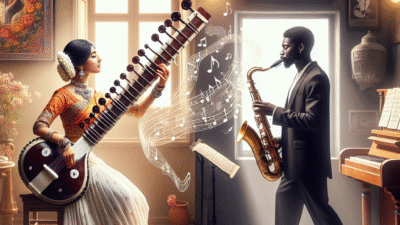
- Jazz: The improvisational nature of jazz bears similarities to Indian classical music, with artists like John McLaughlin incorporating raagas into jazz compositions.
- Pop and Rock: Indian instruments and melodies have made their way into various popular tracks, adding an ethnic layer to the mainstream sound.
The Rise of Indian Classical Music in Education
As the appreciation for Indian classical music spreads, numerous institutions worldwide offer courses and programs focusing on this genre. Universities in North America and Europe now have dedicated programs for learning the intricacies of raagas and talas.
| Genre | Notable Artists | Influence |
|---|---|---|
| Jazz | John McLaughlin, Miles Davis | Fusion of improvisational elements |
| Pop | Madonna, Coldplay | Use of Indian instruments and melodies |
| Rock | The Beatles, Rolling Stones | Incorporation of Indian musical themes |
The Modern Landscape: Festivals and Events
Celebrating Indian Classical Music
Around the globe, many festivals celebrate Indian classical music, providing platforms for artists and introducing new audiences to its charm. Notable examples include:
- The New York Indian Film Festival (NYIFF): Features music from Indian cinema, showcasing the influence of classical music.
- The National Centre for the Performing Arts (NCPA) in Mumbai: A hub for cultural exchange and performance, inviting international artists.
Online and Virtual Events
The COVID-19 pandemic has further accelerated the digital transformation of music consumption. Virtual concerts and online workshops have allowed musicians to reach audiences they could not have through traditional means.
“Art has the power to transform, to illuminate, to educate, and to motivate.” — Harvey Fierstein
Emerging Global Artists
The new generation of artists is also stepping into the arena, blending Indian classical elements with contemporary sounds. Artists like Shankar Tucker and Kiran Ahluwalia are embracing this blend, resonating with diverse audiences worldwide.
Case Studies: Artists Who Integrated Indian Elements
Ravi Shankar: The Pioneer
Ravi Shankar is one of the most prominent figures in bringing Indian classical music to the global stage. His collaborations and performances not only educated audiences but also paved the way for numerous future artists.
Anoushka Shankar: Continuing the Legacy
Anoushka Shankar has successfully carried forward her father’s legacy while making her mark. Her albums blend Indian classical music with modern aesthetics, appealing to a global audience. Her efforts symbolize the continuing evolution of Indian classical music.
Other Global Influencers
- Nitin Sawhney, a British-Indian musician, seamlessly mixes Indian music with jazz, funk, and electronica, showcasing the versatility of Indian classical traditions.
- Talvin Singh’s fusion of Indian classical music with drum ‘n’ bass has led to a new genre, further highlighting Indian music’s adaptability.
The Future of Indian Classical Music
The Digital Revolution
With the advent of platforms like Spotify and Apple Music, Indian classical music is more accessible than ever. This digital transformation offers emerging artists the opportunity to showcase their work globally.
Social Media Engagement
Social media platforms have become a vital tool for artists to connect with fans, share performances, and educate audiences. Short videos on platforms like Instagram and TikTok help to demystify Indian classical music for new listeners.
Educational Initiatives
Educational institutions are increasingly recognizing the value of Indian classical music, introducing it into their curricula. This ensures the continuity of tradition while fostering new talent.
Conclusion
Indian classical music is more than just a form of recreation; it is a shared cultural heritage that resonates around the world. As it continues to evolve and adapt through global collaborations, the potential for its influence is boundless.
By embracing both tradition and modernity, Indian classical music serves as a reminder that the arts can bring people together, transcending borders and bridging cultures. Whether you’re a seasoned aficionado or a curious newcomer, engage with this intricate world of sound and rhythm. Dive into the magical realm of Indian classical music and let its frequencies move you.
Call to Action
Join the journey of experiencing Indian classical music! Attend a local concert, explore online classes, or simply listen to a raaga at sunset. Discover for yourself why this beautiful art form resonates across continents. 🌎
FAQs
1. What are the two main forms of Indian classical music?
Answer: The two primary forms are Hindustani (North Indian) and Karnatak (South Indian) music, each with unique characteristics and instruments.
2. How has Indian classical music influenced modern genres?
Answer: Indian classical music has infused improvisational elements and instruments into jazz, pop, and rock genres, creating diverse musical fusions.
3. What are some popular instruments in Indian classical music?
Answer: Common instruments include the sitar, tabla, veena, harmonium, and mridangam.
4. How can I learn Indian classical music?
Answer: Many universities and online platforms offer courses on Indian classical music, making it accessible for beginners and seasoned musicians alike.
5. Why is Indian classical music important globally?
Answer: It represents a rich cultural heritage, promotes cultural exchange, and offers unique perspectives on music and creativity, resonating with diverse audiences.
For more insights and resources on Indian classical music, visit My JRF.
Visual Enhancement Links
Embrace the rhythmic journey of Indian classical music and witness its global resonance! 🎶