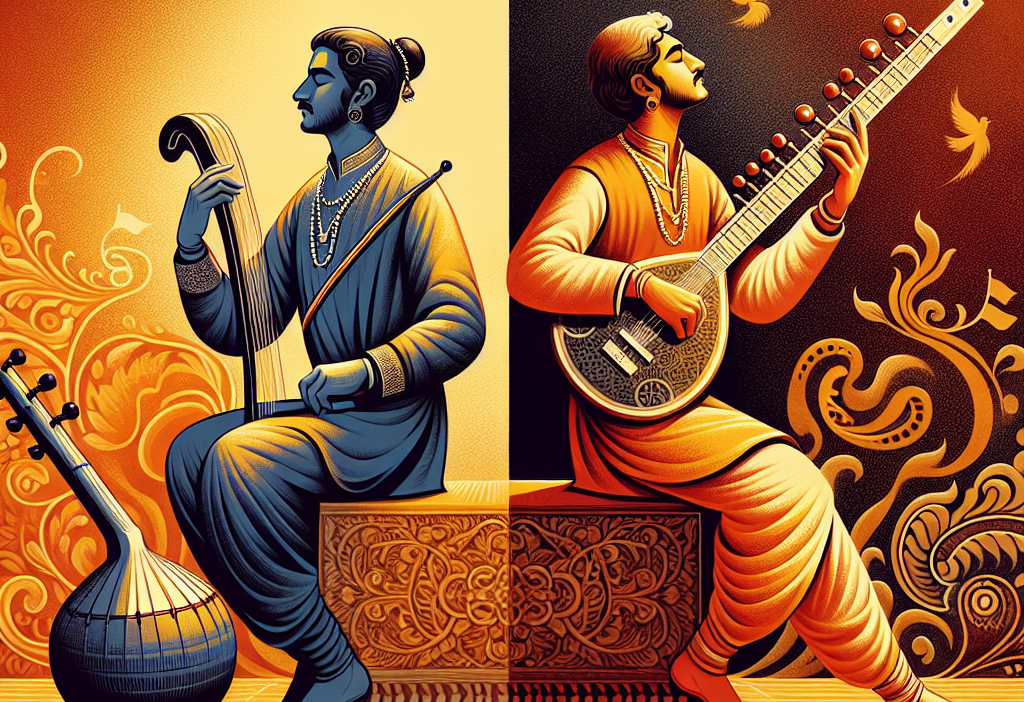
Dhrupad vs Khayal: Exploring the Heritage of Indian Classical Gharanas
Introduction
Imagine a resonant voice soaring through the alleys of time, carrying with it stories of devotion and artistry. Welcome to the world of Indian classical music, a cultural treasure trove that houses various musical traditions. Among these, Dhrupad and Khayal stand out as pivotal forms, each embodying unique characteristics, techniques, and philosophical foundations. 🎶
In the vibrant tapestry of Indian classical music, understanding the distinction between Dhrupad and Khayal is essential. This article delves deep into these two celebrated genres, their historical contexts, musical forms, and the gharanas (schools) that have preserved them through generations. Whether you’re an audiophile, a student of music, or someone keen on deepening your cultural knowledge, this comprehensive guide aims to enrich your understanding of Indian classical music.
1. Understanding Indian Classical Music
A Brief Overview 🎼
Indian classical music is broadly classified into two traditions: Hindustani (North Indian) and Carnatic (South Indian). Each of these traditions has a distinct approach to ragas (melodic frameworks) and talas (rhythmic cycles). Dhrupad and Khayal are two significant forms that emerged within the Hindustani tradition, each showcasing unique musical elements and philosophies.
The Significance of Gharanas
Gharanas play a crucial role in preserving and evolving musical traditions. Each gharana boasts its stylistic nuances, pedagogical methods, and performance practices. The gharanas are not merely schools of music; they are also reflections of cultural heritage, embodying historical narratives, spiritual philosophies, and regional color.
2. The Essence of Dhrupad
2.1 Historical Context
Dhrupad is one of the oldest forms of North Indian classical music, dating back to the 15th and 16th centuries. It evolved from ancient forms of Indian music, like Gastric, and was often associated with royal courts and spiritual gatherings.
2.2 Musical Structure
Dhrupad compositions are typically structured with a slow, contemplative approach that allows for deep improvisation. The essential components include:
- Alap: An exploratory introduction without rhythm, showcasing the raga.
- Dhrupad composition: Usually follows a four-line poetic structure, emphasizing devotion and spirituality.
- Tala: The use of rhythmic cycles, often intricate and complex.
Example Table: Dhrupad Components
| Component | Description |
|---|---|
| Alap | Introduction sans rhythm, exploring the raga’s essence |
| Dhrupad | A lyrical composition based on poetic verses |
| Tala | Rhythmic frameworks that guide the performance |
2.3 Key Characteristics
- Aesthetic: Dhrupad emphasizes spiritual themes, often drawing from mythology and philosophy.
- Technique: Utilizes a distinct singing style, characterized by powerful vocals and intricate, sustained notes.
- Instrumentation: Traditionally accompanied by instruments like Rudra veena, Pakhawaj, and Tanpura.
3. The Art of Khayal
3.1 Historical Context
Khayal emerged during the Mughal period and became increasingly popular in the 18th century. The term ‘Khayal’ means ‘imagination’ or ‘thought’, reflective of its improvisational nature and emotional expressiveness.
3.2 Musical Structure
Khayal compositions are often characterized by their flexibility and spontaneous creation. A typical Khayal performance includes:
- Alap: Initial exploration similar to Dhrupad, yet often less lengthy.
- Bandish: A fixed composition, which can be set in various tempos (Chhota Khayal – fast, and Bada Khayal – slow).
- Tala: More freedom in rhythmic patterns compared to Dhrupad.
Example Table: Khayal Components
| Component | Description |
|---|---|
| Alap | Short introduction exploring the raga |
| Bandish | Fixed melodic composition that expresses emotions |
| Tala | More flexible and varied than in Dhrupad |
3.3 Key Characteristics
- Emotional Expressiveness: Khayal focuses on the aesthetic presentation of emotions and moods (Rasa).
- Improvisation: It allows for greater improvisational freedom in the exposition of ragas.
- Instrumentation: Commonly accompanied by instruments like Harmonium, Tabla, and Sitar.
4. Dhrupad vs Khayal: The Key Differences
4.1 Approach to Performance
- Dhrupad: Emphasizes structured and disciplined performances focusing on the purity of ragas.
- Khayal: Encourages creativity and allows for spontaneity, often reflecting the performer’s imagination.
4.2 Philosophical Underpinnings
- Dhrupad: Rooted in spirituality and devotion, often associated with divine themes and texts.
- Khayal: Reflects secular themes, allowing for broader emotional narratives and personal expressions.
4.3 Popularity and Adaptation
- Dhrupad: Less commercially popular but revered among classical connoisseurs. Its practice remains traditional.
- Khayal: Widely embraced, often seen in contemporary performances, appealing to younger audiences and modern settings.
Example Chart: Dhrupad vs Khayal
| Features | Dhrupad | Khayal |
|---|---|---|
| Historical Context | Oldest form | Evolved in Mughal era |
| Structure | Fixed format | Flexible and spontaneous |
| Themes | Spiritual | Secular/Emotional |
| Improvisation | Limited | High |
| Audience Engagement | Niche | Broad and contemporary |
5. Gharanas and Their Contributions
5.1 Notable Dhrupad Gharanas
- Gwalior Gharana: One of the prominent gharanas known for preserving classical Dhrupad traditions.
- Darbhanga Gharana: Emphasizes devotional aspects and spiritual motifs in its compositions.
5.2 Notable Khayal Gharanas
- Gwalior Gharana: A significant player in both Dhrupad and Khayal styles, focusing on emotional depth and detailed ornamentation.
- Dagar Gharana: Renowned for its majestic style and approach to raga presentation, primarily in Dhrupad but has influenced Khayal as well.
5.3 Gharana Characteristics and Influences 🌍
| Gharana | Major Characteristics | Notable Artists |
|---|---|---|
| Gwalior | Rigorous training, emotional depth, stylistic versatility | Ustad Amanat Ali Khan |
| Dagar | Emphasis on vocal nuances, ornamentation, and meditative quality | Ustad Zakir Hussain |
| Darbhanga | Spiritual themes, introspective performances | Ustad Nasiruddin Saami |
6. The Modern Landscape: Dhrupad and Khayal Today
6.1 Evolving with Time 🌱
Both forms are witnessing adaptations in the modern musical arena. While Dhrupad remains more traditional, Khayal’s blend with various genres (fusion, jazz, etc.) is becoming increasingly popular.
6.2 Popular Festivals and Platforms
Many music festivals celebrate these art forms, providing a platform for emerging talents to showcase their skills:
- Dhrupad Mela: Focuses entirely on Dhrupad, attracting performers and audiences from around the globe.
- Khayal Festivals: Many cities host events dedicated to Khayal, allowing performers to experiment and present diverse interpretations.
6.3 Challenges Faced
- Dhrupad: Struggles with declining audiences and the challenge of maintaining the rigor of traditional practices.
- Khayal: As more fusion genres emerge, it faces the risk of losing its essence amidst the arising trends.
7. Conclusion
In conclusion, Dhrupad vs Khayal: Exploring the Heritage of Indian Classical Gharanas offers a glimpse into the intricate world of Indian classical music, where both forms coexist, each enriching the cultural landscape. While Dhrupad brings the gravitas of tradition and spirituality, Khayal infuses contemporary relevance and emotional expressiveness.
Understanding these two musical expressions not only broadens our musical horizons but also deepens our appreciation for the rich traditions that underpin them. So, whether you find solace in the meditative tones of Dhrupad or are moved by the dynamic improvisation of Khayal, there is a world of discovery awaiting you.
FAQs
1. What is Dhrupad music?
Dhrupad is one of the oldest forms of North Indian classical music, known for its structured format and spiritual themes.
2. How does Khayal differ from Dhrupad?
Khayal emphasizes improvisation and emotional expressiveness, while Dhrupad focuses on structure and tradition.
3. What are Gharanas in Indian classical music?
Gharanas are schools or families of music that preserve and pass down specific stylistic nuances, techniques, and traditions.
4. Can Dhrupad be performed with instruments?
Yes, Dhrupad is usually performed with traditional instruments such as the Rudra veena and Pakhawaj.
5. Is Khayal more popular than Dhrupad today?
Yes, Khayal has gained wider popularity, especially among younger audiences, while Dhrupad appeals to connoisseurs.
With this extensive exploration of Dhrupad and Khayal, we invite you to dive deeper into the seas of Indian classical music and uncover the gems waiting to be discovered! 🎤🎵