Introduction
In today’s fast-paced information age, where data is abundant and accessible, the ability to critically analyze information is more important than ever. Consider this: how often do we hear a story or a news item and immediately try to connect the dots based on perceived correlations? Often, these connections may not be as solid as they seem. This article explores the essential theme of "Connecting the Dots: Why False Cause Can Lead to Misleading Conclusions." We’ll delve deep into the phenomenon of false causality, its implications across various domains, and how our bias can skew our understanding of relationships between events.
So why should you care? Understanding the nuances behind false cause can empower you—whether you’re making personal decisions, evaluating news stories, or conducting research. Let’s unpack the complexities, clarify misconceptions, and merge logical reasoning with actionable insights! 😊
Understanding False Cause
What is False Cause?
False cause, or post hoc reasoning, refers to the fallacy in which one event is mistakenly identified as the cause of another simply because they occur in succession. The phrase “post hoc, ergo propter hoc” translates from Latin to “after this, therefore because of this.” Essentially, it implies that just because one thing follows another, it doesn’t mean that the first event caused the second.
Key Characteristics of False Causality
- Sequential Events: The occurrence of one event after another.
- Assumption of Causation: The assumption that the first event necessitates the second.
- Lack of Evidence: There’s often no substantial evidence to support the causative link, which leads to misleading conclusions.
Recognizing False Cause in Everyday Life
It’s easy to fall into the trap of false causality. For instance, suppose a person begins wearing a specific brand of wristbands and soon after, they experience better productivity at work. They might conclude that the wristbands caused their increased efficiency. However, numerous latent factors, such as a recent promotion or improved work environment, could just as likely be responsible.
Common Scenarios and Examples
- Media Representations: News stories often rely on misleading graphs or data to suggest a cause-and-effect relationship that doesn’t exist.
- Health Studies: Correlation does not imply causation—just because two variables show a correlation, like ice cream sales and drowning incidents, doesn’t mean one causes the other.
Beyond the Basics: Psychological Biases at Play
Cognitive Biases Influencing False Cause
Confirmation Bias: We often seek out evidence that supports what we already believe, ignoring information that contradicts it.
Anchoring Bias: Our thinking tends to be overly influenced by the first piece of information we encounter, framing all subsequent understanding.
- Availability Heuristic: If something readily comes to mind—like a well-publicized event—we’re more likely to see it as a cause.
A Deeper Dive: How Our Minds Play Tricks on Us
Understanding how cognitive biases can lead to the perception of causality helps us better recognize when we might be making faulty assumptions. For example, during flu season, a sudden decrease in ice cream sales in a region might be interpreted erroneously as having caused more flu-related illnesses, despite other contributing factors (e.g., weather changes).
The Pitfall of Misleading Conclusions
Implications in Different Domains
1. Science and Research
In scientific studies, false causality can undermine entire research projects. A well-cited instance is the correlation between the increased diagnosis of autism and the rise in vaccine administration—a claim that has been thoroughly debunked through rigorous research yet continues to influence public opinion.
Visual Aid: A chart summarizing key studies on vaccine-autism claims would enhance understanding here.
2. Business and Economics
In the realm of business, a company may attribute a sudden increase in sales to a new marketing strategy without considering external factors like economic growth or competitor pricing strategies.
Example: A beverage company launched a new ad campaign, and sales increased—this might lead to the conclusion that the campaign directly caused the sales boost, ignoring other factors like a seasonal demand increase.
3. Personal Relationships
In interpersonal dynamics, a person might assume that their friend’s shift in mood is a direct response to a disagreement, failing to consider outside influences like personal stressors unrelated to their friendship.
How to Avoid the False Cause Trap
Step-by-Step Guide to Critical Thinking
Examine the Evidence: Look for additional data that substantiates the cause-and-effect relationship.
Explore Alternatives: Consider other explanations for the observed relationship to avoid oversight.
Consult the Experts: Don’t hesitate to refer to literature or experts in the field when assessing causal claims.
- Think Long-Term: Immediate observations can be misleading. Analyzing data over an extended period can provide clearer insights.
Tools and Techniques
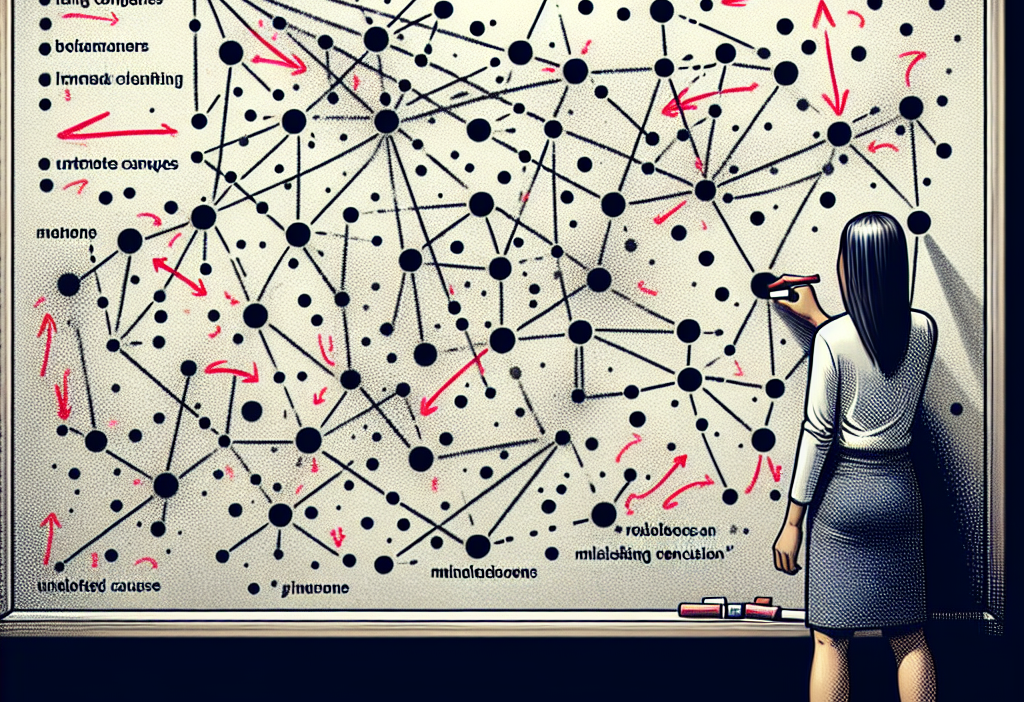
Mind Mapping: Visual tools can help break down complex situations and assess relationships logically.
- Socratic Questioning: Challenge your perceptions by asking ‘why’ and ‘how’ regarding the relationships you observe.
Engaging Tip: Would you ever trust your instincts alone when assessing causal relationships? Always seek additional validation! 😊
Conclusion
In conclusion, the importance of "Connecting the Dots: Why False Cause Can Lead to Misleading Conclusions" cannot be overstated. By recognizing the subtle mechanisms behind false causality, we protect ourselves from incorrect assumptions that affect decisions in daily life, research, business strategies, and relationships.
Empower yourself by enhancing your critical thinking skills, questioning assumptions, and seeking evidence. With these tools, you can become proficient at discerning true causative relationships from misleading correlations—making you not just a better decision-maker, but a more informed individual!
FAQs
What is a false cause?
- False cause is a fallacy where one event is incorrectly believed to cause another due to their sequential occurrence.
Why should I be aware of false cause?
- Being aware helps you avoid misleading conclusions, enhancing your critical thinking in news consumption, research, and daily life.
How can I identify false causality?
- Look for correlations without substantial evidence, explore alternative explanations, and question initial assumptions.
Can false cause be harmful?
- Yes, it can lead to poor decision-making in various domains including healthcare, personal relationships, and business strategies.
- Is it possible to completely avoid false cause reasoning?
- While it may not be entirely avoidable, being aware of cognitive biases and improving critical thinking skills can significantly reduce its occurrence.
Internal Linking
For further resources on enhancing critical thinking and understanding cognitive biases, check out this guide that provides a deeper dive into the subject.
Final Thoughts
As we continue to navigate our complex world filled with information, remember: always question, validate, and verify the dots you’re connecting. Each step you take towards deeper understanding builds a more nuanced view of reality, guiding you in your personal and professional decisions!
This structure and format provide a comprehensive yet engaging exploration of the topic while maintaining SEO best practices. Would you like to see more visual examples included, or do you have anything specific you’d like to focus on further?