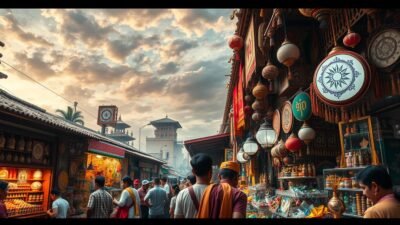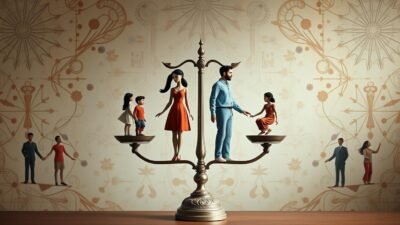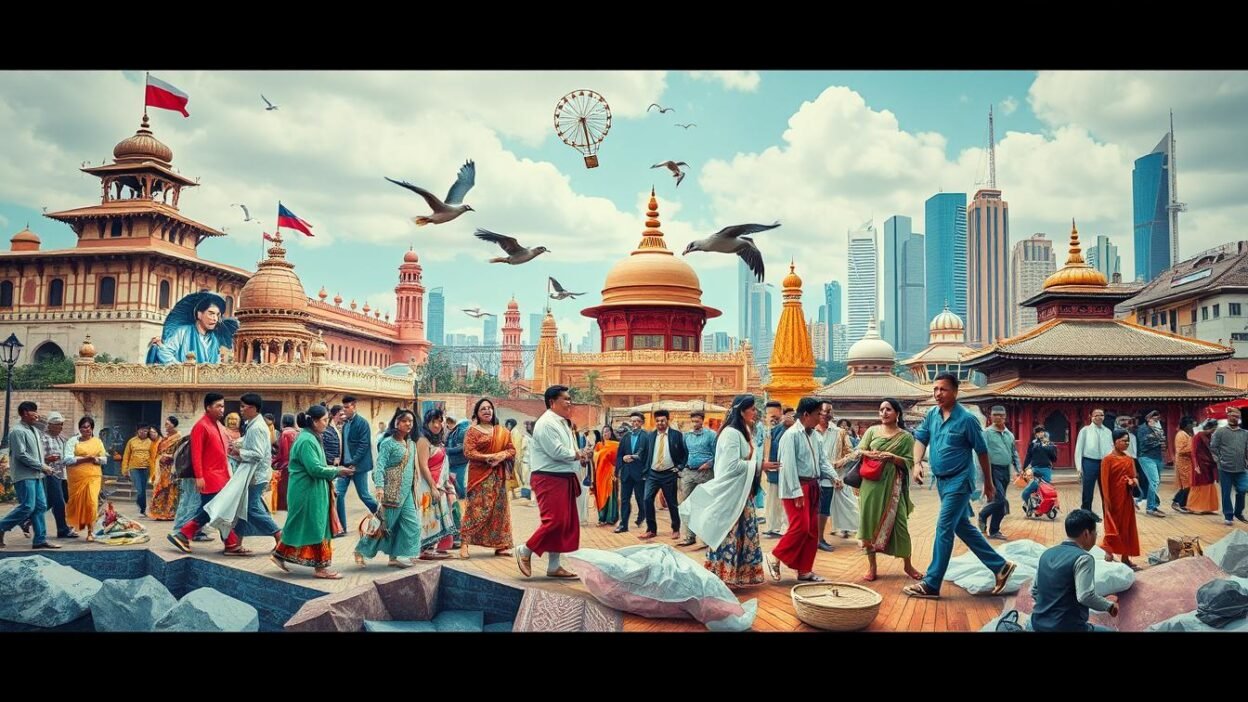
Do the rituals we perform today hold the same meanings as those practiced centuries ago? This question is central to sociology. It looks at how society changes its values, beliefs, and practices over time. This article dives into how social practices, like family structures and cultural norms, adapt to new historical, technological, and ideological shifts while keeping their core cultural identities.
In India, traditional practices show a mix of keeping things the same and changing. From religious customs to economic systems, each practice evolves due to internal and external forces. This part sets up a way to study these changes using sociological theories, historical evidence, and real-world examples.
Looking at case studies of India’s social practices, we see how society balances keeping things the same and changing. The discussion connects abstract sociological ideas with real-life examples, like changing gender roles or new digital-age rituals. It shows that traditions are not fixed but are living processes shaped by human actions and societal needs.
Preparing for the UGC NET exam can be a daunting task, but with the right resources, candidates can navigate the process effectively. Websites like MyJRF provide a comprehensive platform for aspiring educators, offering specialized guidance for UGC NET Paper 2 preparation and essential tips for acing UGC NET Paper 1. Additionally, understanding the revised syllabus provided by UGC is crucial for a targeted study approach. For official announcements and updates, candidates should regularly visit the UGC NET NTA portal, while the UGC’s job section and the main UGC website are invaluable for post-exam opportunities and academic resources. With these tools, candidates can maximize their preparation and set themselves up for success. Preparing for Paper 1 and UGC NET Paper 2 Education requires a strategic approach with quality resources. UGC NET Education aspirants can access structured video lectures that cover essential concepts comprehensively. For an in-depth understanding, check out teaching aptitude videos and research aptitude guidance to strengthen your foundation. Additionally, higher education system topics and communication skills preparation are crucial for scoring high. Explore logical reasoning tutorials and mathematical reasoning lectures for better problem-solving skills. Enhance your exam strategy with people, development & environment lessons and ICT in education modules. For previous year papers and practice sessions, explore mock test videos and exam strategy tips. Stay ahead in your preparation with teaching methodology insights and subscribe to Educators Plus for expert guidance.
Key Takeaways
- Social practices reflect ongoing interactions between cultural heritage and modern realities.
- Sociology provides tools to decode how traditions evolve without losing their cultural significance.
- Indian society exemplifies complex adaptations, balancing globalization with local customs.
- Change in social practices often stems from technological, political, or ideological catalysts.
- Understanding these transformations requires analyzing both historical contexts and contemporary challenges.
Understanding Sociology: A Lens to View Social Change
Sociology is a key part of the social sciences. It helps us understand how societies are organized and change. By looking at how people interact, it connects individual actions with group norms. This makes it vital for studying cultural changes.
Definition and Importance of Sociology
This field studies human behavior in groups. It’s important for tackling big issues like inequality. It also helps shape public policies. Key areas include:
- Looking at institutions like schools and families
- Seeing how society’s norms shape who we are
Key Theories in Sociology
Sociological theories help us understand social dynamics. Four main theories are:
- Functionalism: Sees society as a system with important roles (e.g., Émile Durkheim’s work on social cohesion).
- Conflict Theory: Looks at power struggles (e.g., Karl Marx’s views on class).
- Symbolic Interactionism: Focuses on how daily interactions shape our identity (e.g., George Herbert Mead’s ideas on language and self).
- Feminist Theory: Challenges gender inequalities and fights for equality (e.g., bell hooks’ work on intersectionality).
The Role of Sociologists
Sociologists are researchers, analysts, and advocates. They do many things, including:
| Role | Function |
|---|---|
| Researcher | Gather data on social issues |
| Analyst | Make sense of trends to spot patterns |
| Advocate | Help policymakers solve big problems |
By using these methods, sociologists turn complex theories into useful advice for improving society.
The Roots of Social Practices in India
India’s social practices are deeply rooted in its history and diverse culture. The Vedas and the Mahabharata set the stage for today’s social structures. Early social institutions like family and work roles came from interactions between different groups.
Historical Context of Indian Social Structures
Key phases shaped India’s social fabric:
- Vedic Period (1500–500 BCE): The varna system divided society into Brahmins, Kshatriyas, Vaishyas, and Shudras.
- Mauryan Empire (322–185 BCE): Emperor Ashoka’s policies promoted religious tolerance, blending Buddhism with existing culture.
- Mughal Era (1526–1857): Syncretism between Hindu and Islamic traditions influenced art, law, and social norms.
Influence of Religion on Social Practices
“Dharma upholds the world,” states the Manusmriti, underscoring religion’s role in shaping ethics and daily life.
Hinduism’s karma and dharma concepts shaped moral and social duties. Islamic principles like zakat (charity) and Sikhism’s langar (community kitchens) strengthened community ties. Christianity and Zoroastrianism added to India’s culture, creating a rich tapestry of rituals and customs.
Caste System and Its Evolution
The caste system, rooted in Vedic texts, evolved into a rigid hierarchy by the classical period. Medieval texts like the Arthashastra codified occupational roles, while colonial policies reinforced divisions. Post-independence reforms, such as the 1950 Untouchability (Offenses) Act, began dismantling systemic inequities. Modern social institutions now navigate tensions between tradition and equality.
Global Influences on Indian Social Practices
External forces have deeply changed India’s social scene, mixing global and local elements. These changes show how human behavior and society evolve. They are driven by history, economy, and technology.
Three key forces have changed social interactions and cultural norms. These are colonial legacies, globalization, and technological innovation.
Colonial Impact on Indian Society
British rule from 1757 to 1947 brought new laws and schools. The Indian Penal Code and the University of Calcutta changed old ways. They created new class divisions and sparked resistance.
This resistance helped keep some cultural practices alive.
Globalization and Cultural Exchange
After India gained independence, globalization brought more cultural exchange. Trade, media, and diaspora networks played big roles. They helped mix cultures.
Technology’s Role in Shaping Modern Practices
Today, digital tools like YouTube and WhatsApp help preserve and innovate culture. They are key in shaping modern practices.
Transformations in Family Structures
Modern sociology shows how family structures in India are changing. The traditional joint family is no longer the main family type. This change is due to urbanization, economic changes, and new values.
These shifts are changing roles, relationships, and cultural traditions.
Traditional vs. Modern Family Dynamics
Urban migration and industrialization have led to more nuclear families. Key trends include:
- Decline in joint family households from 43% (1971 census) to 19% (2011 census)
- Rising preference for individual decision-making over patriarchal authority
- Legal reforms such as the Hindu Succession Act (2005) granting women inheritance rights
The Role of Women in Contemporary Society
Women make up 27% of India’s workforce and 49% of university students (2021 data). This change shows how society is progressing. Laws like the 2005 Protection of Women from Domestic Violence Act are changing gender roles.
Initiatives like Beti Bachao Beti Padhao are changing norms.
Inter-generational Relationships
“Technological connectivity has redefined familial bonds, with 65% of urban households using digital platforms for family communication (NITI Aayog, 2022).”
Educational gaps and distance create tension between old values and new individualism. Young people balance digital communication with elders and career goals. This shows how culture is changing.
Topics like LGBTQ+ rights and environmental ethics are now part of family discussions.
These changes show how social institutions adapt. But, there are also big differences between urban and rural areas. In 2020, 72% of rural households were joint families, compared to 28% in cities (NSSO data).
The Intersection of Culture and Identity
Culture is like a blueprint for how people and groups see themselves. In India, it’s all about blending traditions like local languages and rituals. These traditions shape human behavior and roles in society. Sociologists say cultural stories help us find who we are and how to change with the times.
How Culture Shapes Personal and Group Identity
In India, culture starts with what we inherit. For instance, whether someone speaks Tamil or English shows their connection to the past. Young people in cities mix old customs with new ideas, showing how human behavior changes yet stays true to its roots.
Influence of Festivals on Social Cohesion
Festivals like Diwali or Ganesh Chaturthi are key to passing down culture. They:
- Bring people together through shared rituals
- Teach important life lessons from myths
- Offer chances for older and younger generations to learn from each other
“Festivals are not just celebrations; they are social laboratories where cultural continuity and innovation coexist.” – Dr. R. N. Iyengar, Cultural Anthropologist
Cultural Norms and Social Expectations
Even though old norms like arranged marriages or certain roles for men and women are changing. The table below shows this change:
| Traditional Norm | Modern Adaptation |
|---|---|
| Predetermined career paths | Entrepreneurial ventures |
| Geographically fixed living | Urban migration for education |
| Family-led marriage decisions | Online matrimonial platforms |
These changes show how culture evolves while keeping ties to the past. Today, society’s expectations and personal dreams are in balance, sparking debates on culture and freedom.
Education as a Catalyst for Social Change
Education in India has always been a key player in changing society. It connects old knowledge with new social sciences, shaping our world. This section looks at three important areas: how education has evolved, how it empowers people, and how it adapts to change.
Evolution of Education Systems in India
India’s education journey shows its rich culture and history. From ancient gurukuls to modern universities, it’s a story of growth. Here’s a quick overview:
| Phase | Timeframe | Key Features |
|---|---|---|
| Traditional | Pre-18th Century | Gurukul mentorship; Sanskrit-based curricula |
| Colonial | 1857–1947 | English-medium schools; Macaulay’s 1835 edict |
| Modern | Post-Independence | NIOS (1989) open education; NEP 2020 reforms |
Empowering Marginalized Groups
Programs like Balika Vidya Mission and Sarva Shiksha Abhiyan have helped break down barriers. Here are some ways to promote equality:
- Reservation policies in universities
- Bridge schools for child laborers
- Digital literacy programs in rural regions
“Education is the most powerful weapon which you can use to change the world.” — Nelson Mandela
Lifelong Learning in Dynamic Contexts
With 65% of the population under 35 (UN 2023), ongoing learning is vital. SWAYAM and upGrad are examples of this shift. The National Education Policy 2020 also focuses on adult education, showing the importance of adapting to new needs.
Migration and Its Effects on Social Practices
Sociology looks at how people moving around changes culture and social life. In India, people moving from villages to cities and across borders shows this. It shows how old ways of life change in new places.
Rural to Urban Migration Trends
India has seen more people moving to cities for work in the 21st century. Cities like Bengaluru and Mumbai attract many. This move changes family roles and how people see gender.
For example, more people live in nuclear families instead of big joint families. This mix of old values and new city life is interesting.
- 50% of India’s population under 25 faces urban housing shortages, per recent studies.
- Occupational shifts from agriculture to service sectors redefine economic identities.
Diaspora Communities and Cultural Retention
Indian communities in the U.S., U.K., and Gulf nations keep their culture alive. They have temples, language schools, and festivals. These help them stay connected to their roots.
Second-generation migrants often find a balance between their old and new lives. They mix local and ancestral practices in their own way.
- Diwali celebrations in Silicon Valley communities emphasize familial unity and religious continuity.
- Language retention drops across generations but rises with digital platforms for ancestral languages.
Impact on Local Economies and Social Structures
Money sent back by diaspora workers helps build rural areas. They bring new ideas that change how people see gender and education. Urban slums become places where village and city ways meet.
This shows sociology’s main idea: social practices change with movement and exchange. Migration changes places like Mumbai and New York’s Little India in big ways.
Social Movements and Their Influence
Social movements in India have long been key in changing social institutions and tackling contemporary issues. They range from old struggles to new digital campaigns. These efforts show how society’s values and grassroots power evolve.
Major Social Movements in India
Key movements include:
- Chipko Movement (1970s): Environmental activism protecting forests, influencing conservation policies.
- Narmada Bachao Andolan: Opposed large dams, highlighting displacement and ecological concerns.
- Anna Hazare’s Anti-Corruption Campaign (2011): Mobilized millions, leading to the Lokpal Act’s creation.
Role of Activism in Social Transformation
Activism shakes up old systems. For example, the Justice for Nirbhaya protests (2012) led to tougher laws against sexual offenses. Movements against caste discrimination have pushed for affirmative action policies. These efforts show how people coming together can fight against unfair systems.
Influence of Social Media on Movements
Social media has made it easier to spread messages far and wide. The 2020 farmers’ protests used WhatsApp and YouTube to organize nationwide strikes. Hashtags like #MeTooIndia and #NotInMyName have brought global attention to local issues. But, there are challenges: false information can spread quickly, and online support doesn’t always lead to real change.
| Movement | Focus Area | Impact on Social Institutions |
|---|---|---|
| Chipko | Environmental justice | Influenced forest governance policies |
| Anti-CAA protests | Citizenship rights | Sparked debates over constitutional principles |
| Women’s March India | Gender equality | Promoted legislative reforms |
Challenges Facing Social Practices Today
Today’s contemporary issues need careful research methods to understand how social practices change. Sociologists use different methods, like fieldwork and statistics, to study these changes in Indian communities.
Issues of Inequality and Discrimination
Surveys show big gaps: the 2021 Oxfam report found 73% of India’s wealth in the top 1%. Caste-based discrimination also affects education. Studies using focus groups show how digital platforms can both challenge and support these systems.
For example, online hate speech mirrors offline exclusion, showing the need for many approaches.
The Impact of Political Changes on Society
Policy changes, like the 2019 Supreme Court order on SC/ST reservations, cause tension. Studies compare how political words shape identity politics, leading to more communal tensions in some areas. Methods like policy analysis reveal how rules can either unite or divide people.
Environmental Challenges and Social Responsibility
“Climate change is not merely an ecological crisis but a social justice issue demanding urgent ethical responses.”
Environmental problems force communities to change their ways. The IPCC’s 2022 report shows how rising temperatures affect farming. Studies on sustainable farming are now using action research.
Tribes like the Bishnois in Rajasthan are combining traditional knowledge with climate science, as seen in a 2023 UNDP study.
- Qualitative interviews show how coastal communities change their monsoon rituals due to unpredictable rain.
- GIS mapping, a part of research methods, tracks migration caused by deforestation and urban growth.
These contemporary issues highlight the need for flexible frameworks that respect tradition and tackle modern problems. Research methods like workshops and big data analytics help find fair solutions.
Looking Ahead: Future Trends in Social Practices
Sociological theory helps us guess how society will change with new tech, people, and culture. India is both old and new, showing both old and new trends. This part looks at how these changes might shape our social ways in the future.
The Role of Technology in Future Social Structures
New tech like AI and VR will change work, school, and health. Automation might change jobs, and biotech could change families with telemedicine. Sociologists say these changes will shake up old ways, making room for new ideas.
Virtual spaces could keep cultural traditions alive by letting people join in from anywhere. This shows how tech can help keep old customs alive in a new way.
Youth Engagement and Changing Norms
Young people are caught between old values and new tech. City kids are fighting for equality and saving the planet, using social media to spread their message. They show how new tech can help change old norms.
They mix TikTok with temple visits, showing how India’s culture is blending old and new. This mix is shaping the country’s social scene.
Predictions for Social Practices in a Globalized World
Global trends will make us think more about keeping traditions alive or changing them. Sociologists say old practices like arranged marriages might blend with new choices. This could make society more open to change.
As cities and towns connect more, old gaps might close. Digital tools could bring education and jobs to more people, changing how we connect. This mix of old and new shows how society is always changing.