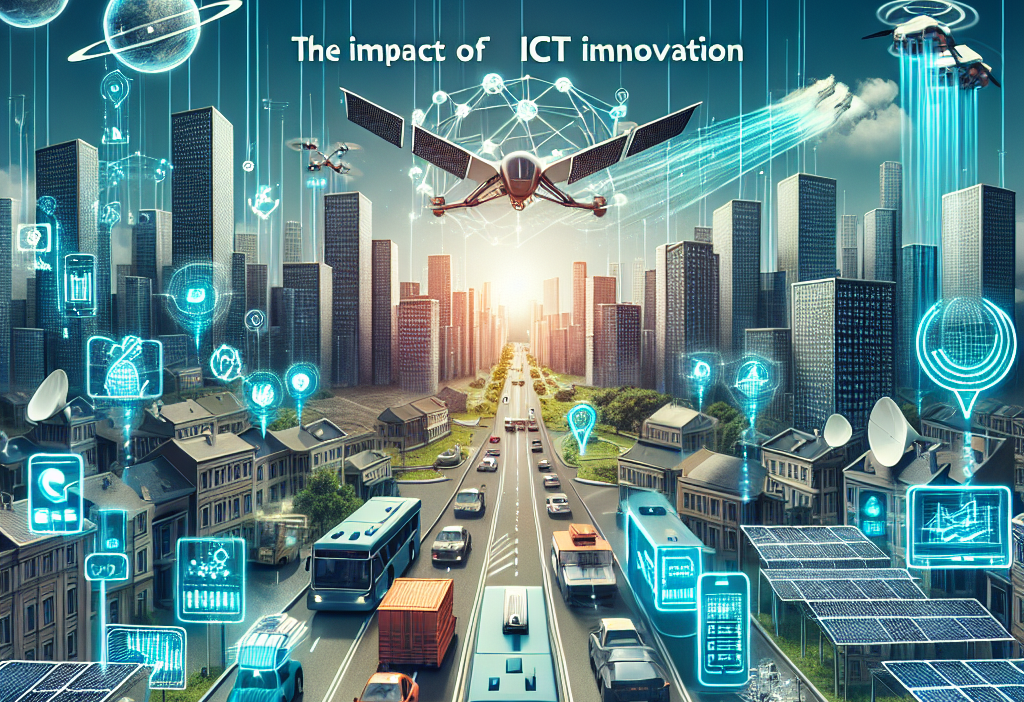
Revolutionizing Public Service Delivery: The Impact of ICT Innovation
In an increasingly complex world, the swift evolution of Information and Communication Technologies (ICT) is profoundly reshaping the landscape of public service delivery. Citizens today demand more efficient, transparent, and accessible services that are tailored to their unique needs. This article explores how Revolutionizing Public Service Delivery: The Impact of ICT Innovation is essential not just for improving government efficiency but for enhancing citizen engagement and trust.
Introduction
Consider a world where you can access government services from the comfort of your home with just a few clicks. Imagine a public service system that anticipates your needs and offers solutions before you even realize you have a problem. This is not the distant future—this is the exciting realm of ICT innovation in public service delivery.
As various sectors adopt innovative technologies, public service delivery is at the forefront of this transformation. In this comprehensive exploration, we will delve into how ICT innovations—from artificial intelligence (AI) to blockchain—are not only streamlining processes but are also enhancing transparency, accountability, and citizen satisfaction.
Why It Matters
The fundamental essence of public services is to serve the community efficiently and equitably. With rapid urbanization, population growth, and a shift toward digital communication, the need for innovative solutions has never been greater. This article will cover:
- The current landscape of public service delivery.
- Key ICT innovations transforming the sector.
- The benefits of these innovations.
- Real-world applications and case studies illustrating their impact.
- Future prospects for public service delivery.
Let’s embark on this journey of exploring how ICT innovation is revolutionizing the way we think about public service delivery. 🚀
Current Landscape of Public Service Delivery
Challenges Facing Traditional Public Services
Traditional public service systems often struggle with numerous challenges:
- Inefficiency: Bureaucratic red tape can slow down service delivery, leading to dissatisfaction among citizens.
- Limited Accessibility: Many services remain difficult to access, especially for marginalized groups.
- Lack of Transparency: Traditional systems often fall short in providing the necessary information to citizens.
These challenges have created a pressing demand for innovative solutions, making it imperative for governments to adapt and modernize their approach.
The Role of ICT in Transforming Public Services
That’s where ICT comes into play. By harnessing the capabilities of technology, governments can move towards more agile, responsive, and citizen-centric service delivery mechanisms. Through a strategic approach that integrates ICT into public services, enhancements such as improved data management, streamlined communication, and real-time feedback mechanisms can be achieved.
Key ICT Innovations Transforming Public Service Delivery
1. Artificial Intelligence and Machine Learning
AI is ushering in a new era in public service delivery, enabling predictive analytics that can forecast demand patterns for various services. For instance:
Chatbots: These are being employed in government websites to provide 24/7 assistance to citizens. Wouldn’t you appreciate getting answers to your queries without having to wait in line? 😊
- Predictive Analytics: Governments can analyze historical data to optimize resource allocation effectively, ensuring that services are available where they are most needed.
2. Blockchain Technology
Blockchain offers an unprecedented level of security and transparency in public sector transactions. By eliminating intermediaries, it can:
Enhance Trust: Citizens can access information about government projects and finances, increasing accountability.
- Streamline Processes: Blockchain can simplify the management of public resources, allowing for real-time tracking of transactions.
3. Cloud Computing
The advent of cloud computing has revolutionized how public services are delivered by allowing for scalable and flexible solutions. Key benefits include:
Cost Reduction: Instead of investing heavily in infrastructure, governments can leverage cloud services that offer pay-as-you-go models.
- Data Sharing and Accessibility: Cloud services facilitate data sharing among government departments, promoting inter-agency collaboration and efficiency.
4. Mobile Technology
In an age where smartphones dominate, mobile technology has made public services more accessible than ever. Mobile applications can:
Provide Real-Time Notifications: Citizens can receive updates about services directly on their phones, such as roadwork in their area or changes to public transport schedules.
- Enable Online Payments: Mobile platforms facilitate seamless payment processes for permits, fines, and taxes.
5. Internet of Things (IoT)
The IoT is opening new avenues for monitoring and service delivery:
Smart City Initiatives: Sensors embedded throughout urban areas can monitor various factors such as traffic congestion or public resource usage in real-time.
- Data Collection: This technology allows for data-driven decision-making, ensuring that services are tailored to meet the specific needs of communities.
Benefits of ICT Innovations in Public Services Delivery
1. Enhanced Efficiency and Responsiveness
One of the most significant advantages of ICT is the speed at which services can be delivered. By automating routine tasks and employing self-service options, citizens benefit from quicker responses and reduced processing times.
2. Increased Transparency and Accountability
Transparency is vital for maintaining public trust. Technologies like blockchain and real-time data dashboards enable citizens to track services and expenditures, thereby improving accountability.
3. Improved Citizen Engagement
Innovative feedback mechanisms, such as online surveys or social media platforms, allow governments to fine-tune services based on direct input from citizens. This leads to higher satisfaction levels and stronger community ties.
4. Cost Savings
Governments can significantly reduce operational costs by transitioning to digital solutions. Less paper usage, fewer physical storefronts, and reduced man-hours translate directly to cost savings for public institutions.
Real-World Applications and Case Studies
1. Estonia’s E-Government
Estonia is often cited as a pioneer in ICT-driven public services. Their e-government system allows citizens to conduct nearly all governmental transactions online. With a population of just over 1.3 million, their innovations serve as a scalable model for other nations to emulate.
2. Singapore’s Smart Nation Initiative
Singapore has embraced technology through its Smart Nation Initiative, implementing IoT devices across the city. This infrastructure collects real-time data that supports vital services such as transportation planning, waste management, and healthcare.
3. Rwanda’s Digital Health Services
Rwanda has successfully utilized mobile technology to enhance healthcare access. Their mHealth initiative enables healthcare workers to track and manage patient data using mobile applications, significantly reducing wait times in rural areas.
4. Dubai’s Blockchain Strategy
Dubai aims to be the first city fully powered by blockchain by 2020. The emirate has developed a Blockchain Strategy that eliminates paperwork in government services, creating smoother interactions for citizens and ensuring data security.
Future Prospects for Public Service Delivery
As we look to the future, the evolution of ICT in public services will only accelerate. Anticipate even greater reliance on technologies such as AI, machine learning, and big data analytics to offer personalized services. As public service delivery becomes increasingly integrated with emerging technologies, the possibilities for innovation are limitless.
Conclusion
In conclusion, we stand on the brink of a technological revolution that is reshaping public service delivery. The integration of ICT innovations is not merely an improvement; it represents a fundamental shift in how public institutions interact with citizens. By embracing these changes, governments can provide faster, more transparent, and citizen-focused services.
As citizens, we are empowered to advocate for these changes. Be the voice that calls for innovation in your local public services—because an engaged citizen is a catalyst for meaningful transformation.
FAQs
1. How does ICT improve public service delivery?
ICT improves public service delivery through automation, enhancing access to services, providing real-time data, and facilitating communication between governments and citizens.
2. What are some challenges in implementing ICT in public services?
Challenges can include resistance to change within government institutions, digital literacy gaps among citizens, and cybersecurity risks.
3. Is ICT innovation only beneficial for larger cities?
No, ICT innovations can be tailored to meet the needs of urban and rural areas alike, enhancing service delivery regardless of population size.
4. Can blockchain technology be applied in all public service sectors?
Yes, blockchain has applications across various sectors, including finance, healthcare, transportation, and social services, enhancing transparency and trust.
5. What should citizens do to promote ICT innovation in public services?
Citizens can engage with local governments, share their experiences, advocate for digital initiatives, and participate in community discussions about service improvements.
By creating a vibrant ecosystem where technology and public administration intersect, we are not just enhancing public services, but also forging pathways to a more connected and engaged society. Embrace the change; it’s time we revolutionize public service delivery! 💡