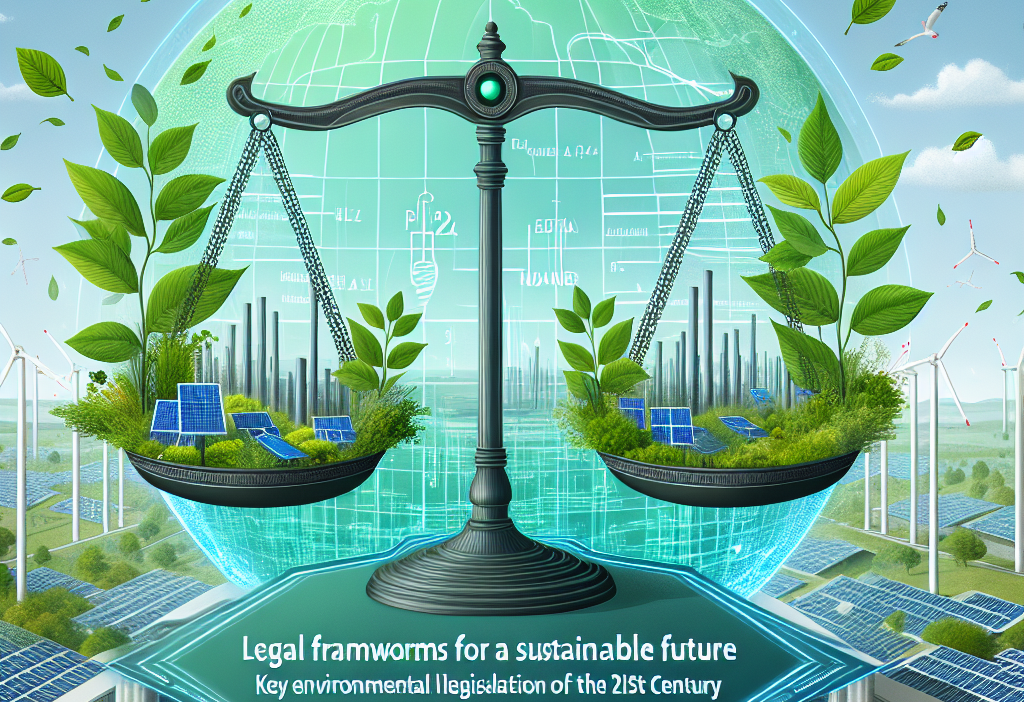
In today’s world, the urgency for sustainable practices has never been more critical. Climate change, pollution, and biodiversity loss loom large over global stability and human health. Finding a sustainable path forward requires not only innovation and cooperation across sectors but also robust legal frameworks. The importance of environmental legislation cannot be overstated; it lays the groundwork for transitioning to a sustainable future. In this article, we will delve into Legal Frameworks for a Sustainable Future: Key Environmental Legislation of the 21st Century, highlighting pivotal laws, their impact, and the ways they guide us toward environmental sustainability.
Introduction
Environmental legislation of the 21st century represents a seismic shift in the way we approach ecological issues. The global recognition of climate change challenges has led to several groundbreaking laws aimed at addressing these concerns. This article will explore key legislative measures that frame our sustainable future, examining their historical context, their objectives, and the results they aim to achieve.
Why This Matters
As we face unprecedented environmental challenges, understanding the legal frameworks that guide sustainability is essential for policymakers, businesses, and individuals alike. These legislative measures serve as both a roadmap and a call to action—a means to ensure that our planet remains habitable for future generations.
The Role of Environmental Legislation
Before diving into specific laws, it’s vital to recognize the role of legislation in shaping environmental policy. Laws create standards and obligations that compel companies and governments to take action, fostering accountability and enforcement. Here’s how:
- Establishing Guidelines: Environmental laws set clear guidelines for pollution control, resource management, and land use.
- Promoting Renewable Energy: By creating incentives for cleaner energy sources, legislation can accelerate the transition away from fossil fuels.
- Protecting Biodiversity: Laws safeguard ecosystems and species that are vital to the planet’s health, thus promoting overall ecological balance.
Key Environmental Legislation of the 21st Century
Let’s explore some of the most significant pieces of environmental legislation that have emerged in the 21st century:
1. The Paris Agreement (2015)
The Paris Agreement is perhaps the most transformative global treaty aimed at combating climate change. Adopted by 196 countries, it has several key objectives:
- Global Temperature Goals: Aim to limit global warming to well below 2 degrees Celsius compared to pre-industrial levels.
- National Contributions: Each country must outline its climate action plans, known as Nationally Determined Contributions (NDCs).
Impact: The agreement spurred countries into action and fostered collaboration on climate issues. 🌍
2. The Clean Power Plan (2015)
The Clean Power Plan, introduced in the United States, aimed to reduce greenhouse gas emissions from power plants. Its backbone is the following:
- State Targets: Each state is assigned a target for reducing emissions, encouraging innovation in renewable energy.
- Transition Incentives: Offers various incentives and assistance to facilitate the transition to clean energy.
Impact: This plan symbolized a substantial policy shift in the U.S. towards renewable energy sources. ⚡
3. The European Green Deal (2019)
The European Green Deal is a comprehensive roadmap aimed at making Europe the first climate-neutral continent by 2050. Major components include:
- Investment in Green Technologies: It emphasizes creating sustainable industries and prioritizes zero-emission transportation.
- Biodiversity Protection: Stresses the importance of protecting natural habitats and ecosystems.
Impact: This ambitious plan serves as a blueprint for other regions to follow in their pursuit of sustainability.
Environmental Justice and Equity
The 21st century has seen a growing recognition of the need for Environmental Justice. Laws addressing environmental racism and equity concerns are becoming increasingly vital.
The Environmental Justice Movement
Inspired by social justice movements, the Environmental Justice movement advocates for the fair treatment of all people concerning environmental laws and policies. Key legislative measures often linked include:
- Civil Rights Act: Originally not environmental legislation, it has been leveraged to combat unfair pollution distributions.
- Executive Order 12898 (1994): Mandates federal agencies to consider environmental justice in their programs.
Importance of Green and Just Transitions
This shift towards recognizing environmental equity acknowledges that low-income communities often bear the brunt of pollution and climate impacts. Legal frameworks now increasingly incorporate measures to ensure equitable access to clean air, water, and land.
Corporate Responsibility and Sustainability Legislation
The past decade has witnessed a surge in legislation aimed at increasing corporate accountability and encouraging sustainable business practices.
1. The California Transparency in Supply Chains Act (2010)
This act requires companies to disclose efforts to eradicate slavery and human trafficking in their supply chains.
- Impact: It pushes corporations toward more ethical practices and greater transparency.
2. The UK Modern Slavery Act (2015)
Similar in nature to California’s Act, the UK Modern Slavery Act also champions corporate responsibility by mandating companies to disclose their efforts in tackling slavery and human trafficking.
- Broader Implications: In encouraging responsible sourcing, the act indirectly promotes environmental health by advocating against exploitative resource extraction. 🌱
International Treaties and Agreements: A Global Perspective
While domestic legislation is crucial, international treaties and agreements are also vital for addressing transnational environmental issues.
1. The Convention on Biological Diversity (CBD)
Adopted in 1992 and continuously reinforced, the CBD works to protect biodiversity across the globe by:
- Setting Conservation Goals: Promotes the sustainable use of biological resources.
- Facilitating International Cooperation: Encourages countries to collaborate on biodiversity conservation.
Impact: The CBD has set vital frameworks for nations to develop their biodiversity strategies.
2. The Stockholm Convention on Persistent Organic Pollutants (2001)
This treaty aims to eliminate or restrict the production and use of hazardous chemicals. Key aspects include:
- Identification of Persistent Pollutants: Red list of chemicals that nations should commit to eliminating.
- National Implementation Plans: Countries must draft and follow plans to decrease reliance on these pollutants.
Impact: The convention serves as a critical tool for reducing toxic substances globally.
SEO Optimized Insights and Future Directions
How Can You Get Involved?
Understanding these legal frameworks is the first step. Here are actionable takeaways for individuals and businesses to contribute to a sustainable future:
- Advocate for Local Policies: Engage with local governments to promote sustainable legislation.
- Implement Green Practices: If you’re a business owner, adapt your practices to align with sustainability principles.
The Future of Environmental Legislation
As we look towards the future, several trends are likely to define the next wave of environmental legislation:
- Increased Emphasis on Circular Economies: Laws that promote recycling and reusability are on the rise.
- Technology-Driven Legislation: Drones and AI for monitoring compliance and environmental degradation.
By keeping a close eye on these trends, stakeholders can position themselves strategically for the evolving legislative landscape.
Conclusion
In summary, Legal Frameworks for a Sustainable Future: Key Environmental Legislation of the 21st Century reflect humanity’s increasing commitment to combating climate change and promoting environmental justice. The laws and treaties outlined in this article represent a significant step towards a sustainable future—one where our planet, its people, and its resources can thrive in harmony.
Empowerment Through Awareness
Staying informed and engaged with environmental legislation is crucial. Together, we can shape a future that not only meets the needs of today but also preserves the world for tomorrow. 🌟
FAQs
What is the Paris Agreement?
- The Paris Agreement is a global treaty focused on reducing greenhouse gas emissions to combat climate change.
How does the Clean Power Plan influence renewable energy?
- The plan sets state-specific targets for reducing emissions, encouraging the adoption of renewable energy sources.
Why is Environmental Justice important?
- It ensures that vulnerable communities are not disproportionately affected by environmental policies and practices.
How do international agreements impact local laws?
- International treaties set frameworks that countries adopt into their legal systems, influencing domestic policy.
- What can businesses do to comply with environmental legislation?
- Companies can adopt sustainable practices, ensure supply chain transparency, and engage in corporate social responsibility.
By weaving together a comprehensive understanding of critical environmental legislation, this article aims to serve as a valuable resource for those seeking to grasp the legal underpinnings essential for a sustainable future. Remember, active engagement and informed action are crucial to creating the change we wish to see.