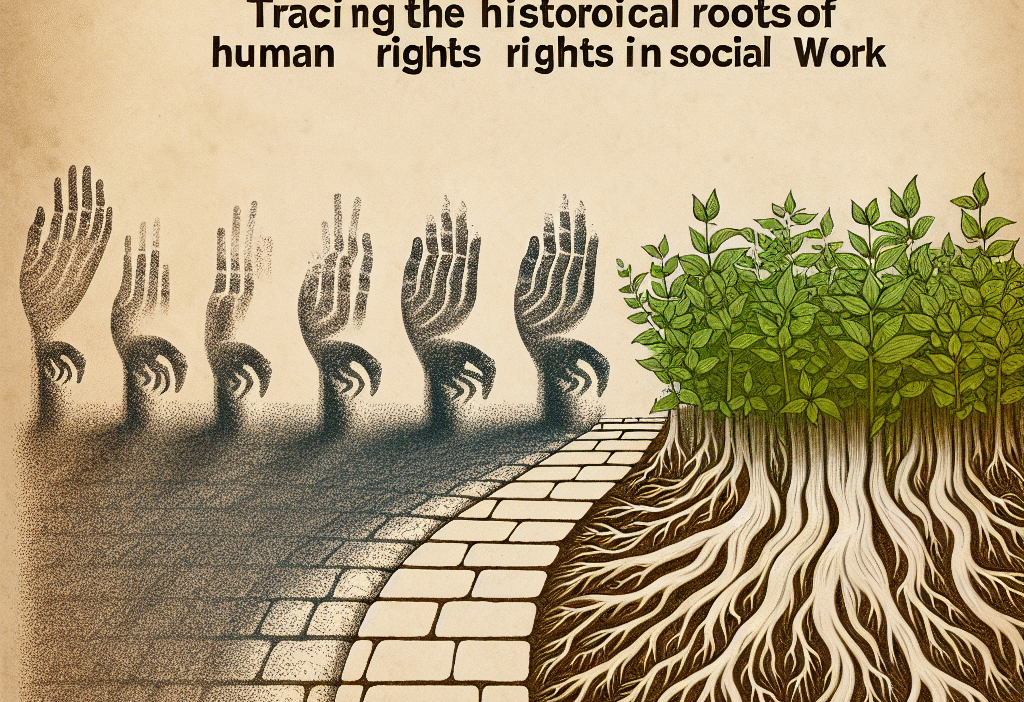
From Charity to Rights: Tracing the Historical Roots of Human Rights in Social Work
Introduction
In a world continually striving for equality and justice, understanding the evolution of human rights within social work is paramount. 🌍 The transition from mere charity to a rights-based framework marks a profound shift in how we view individuals and communities in need. This article, From Charity to Rights: Tracing the Historical Roots of Human Rights in Social Work, serves to elucidate this transformation and highlight the vital role social work plays in advocating for human rights.
We’ll explore the historical foundations of human rights, the significant milestones in social work, and the continuing challenges faced in this essential field. This comprehensive analysis will not only inform you but also inspire you to think critically about the social work practice today.
The Historical Context of Human Rights
Origins of Human Rights
The concept of human rights can be traced back to ancient civilizations, but it gained substantial traction during the Enlightenment in the 17th and 18th centuries. Philosophers such as John Locke and Jean-Jacques Rousseau laid the groundwork for modern human rights by positing that certain rights are inherent and should be universally recognized.
Table 1: Key Thinkers in the Development of Human Rights
| Philosopher | Key Contributions | Era |
|---|---|---|
| John Locke | Natural rights theory (life, liberty, property) | 17th Century |
| Jean-Jacques Rousseau | Social contract theory | 18th Century |
| Mary Wollstonecraft | Advocacy for women’s rights | 18th Century |
| Karl Marx | Focus on social and economic rights | 19th Century |
Early Charity Work
Prior to recognizing human rights as a fundamental aspect of society, efforts to aid the disadvantaged were often framed as charitable acts. Organizations like the Society of St. Vincent de Paul (founded in the 1830s) focused on helping the poor, viewing assistance as a moral obligation rather than a societal right. 💖
While these charitable efforts were beneficial, they often perpetuated the idea that poverty and suffering were personal failings, rather than societal issues requiring collective responsibility.
Shift to Rights-Based Approaches
The early 20th century witnessed a significant cultural shift. The aftermath of World War I and the Great Depression underscored the need for social change and justice. Social work began to transform from a charitable approach, focused on individual assistance, to advocating for systemic change and human rights.
Figure 1: Timeline of Human Rights Milestones in Social Work
[Insert a timeline graphic illustrating key events that shaped human rights in social work, e.g., establishment of the United Nations in 1945, Convention on the Rights of the Child in 1989]
The Role of Social Work in Advancing Human Rights
Defining Social Work and Its Values
Social work is predicated on the principles of social justice, human dignity, and the importance of human relationships. The National Association of Social Workers (NASW) asserts that social workers are advocates for the rights of marginalized individuals, striving to promote equality and justice.
Key Milestones in Social Work and Human Rights
The Formation of the United Nations
In 1945, the establishment of the United Nations marked a pivotal turn in international human rights. The Universal Declaration of Human Rights (UDHR), adopted in 1948, set forth a comprehensive list of rights for all individuals, regardless of race, gender, or social status.
The Rise of the Social Work Profession
The formation of professional organizations in the early 20th century played a crucial role in cementing social work as a vital profession in the human rights landscape. The International Federation of Social Workers (IFSW), established in 1956, emphasized the importance of human rights in advancing social justice.
Advocacy for Marginalized Groups
Social workers have historically been at the forefront of advocating for marginalized groups, including racial minorities, women, and the LGBTQ+ community. By recognizing these groups’ rights, social work has emphasized that equality is not merely aspirational but a fundamental human right.
Table 2: Milestones in Social Work Human Rights Advocacy
| Year | Milestone | Impact |
|---|---|---|
| 1948 | Adoption of UDHR | Established universal human rights |
| 1963 | Civil Rights Act (USA) | Ended legal segregation and discrimination |
| 1989 | Convention on the Rights of the Child | Recognized children’s rights globally |
| 2011 | UN Declaration on the Rights of Indigenous Peoples | Affirmed rights for indigenous populations |
Contemporary Challenges in Social Work and Human Rights
While significant progress has been made, several challenges persist in integrating human rights into social work practice.
Economic Inequality
Despite advancements, economic inequality remains a pressing issue. Social workers are faced with the daunting task of addressing systemic issues that continue to oppress marginalized communities. Many advocate for policy changes that address economic disparities, recognizing that true human rights cannot exist without equitable resources.
Globalization and Migration
The rise of globalization has increased migration, bringing to light the need for comprehensive human rights protections for refugees and migrants. Social workers play a crucial role in addressing these challenges, advocating for inclusive policies while providing direct services to displaced individuals.
Intersectionality in Human Rights
Recent discussions surrounding human rights have emphasized intersectionality—the idea that individuals are affected by multiple, overlapping social identities, such as race, gender, and socioeconomic status. Social workers must prioritize an intersectional approach to address complex issues faced by diverse populations.
The Future of Human Rights in Social Work
Advocacy and Education
Moving forward, continued advocacy and education are essential components of social work. Organizations can improve outreach and awareness campaigns to foster dialogue about human rights issues, empowering communities to assert their rights.
Collaboration with Other Fields
The integration of human rights into social work will require collaboration across disciplines, including law, education, and public health. By working together, professionals can develop comprehensive strategies to address systemic issues that perpetuate inequality.
Technology and Social Work
In an increasingly digital world, technology can serve as a powerful tool for social work. Social media platforms enable advocates to share information, mobilize communities, and campaign for human rights more effectively than ever before. 💻
Ethical Considerations
As the field progresses, social workers must remain vigilant in upholding ethical standards. This involves critically reflecting on practices to ensure they align with the core values of social justice and human rights.
Conclusion
The journey from charity to rights in social work has been long and complex. Through historical analysis, we’ve seen how the field evolved from charitable acts to a robust advocacy for human rights. Social workers are not merely service providers; they are champions of justice, equality, and human dignity. 🌟
As this article highlights, the continued importance of human rights advocacy in social work cannot be overstated. Empowered with knowledge and insights, every reader has the potential to contribute positively to this essential cause.
Let us remember: Human rights are not just privileges; they are fundamental to our shared humanity.
FAQs
1. What are human rights, and why are they important in social work?
Human rights are fundamental rights inherent to all human beings, regardless of nationality, gender, ethnicity, or any other status. In social work, they are essential because they guide practices advocating for equality, fairness, and dignity.
2. How did charity work influence social work’s role in human rights?
Initial charity work focused on individual assistance and moral obligation, leading to the recognition of societal responsibility. This laid the groundwork for the rights-based frameworks in modern social work.
3. What are some recent trends in social work and human rights?
Recent trends include a focus on intersectionality, increased advocacy for marginalized populations, and utilizing technology for outreach and education.
4. How can individuals contribute to human rights in social work?
Individuals can support human rights by educating themselves, volunteering with organizations that advocate for social justice, and participating in community awareness campaigns.
5. What is the future of human rights in social work?
The future involves a focus on education, collaboration across various disciplines, leveraging technology, and maintaining ethical considerations to adapt to evolving societal needs.
By navigating the rich historical context of human rights and its integration into social work, we can all take steps toward fostering a world that prioritizes dignity, respect, and justice for every individual. 🌈
Explore Related Resources at MyJRF for further reading and insights into social work and human rights advocacy.